

What is a fume cupboard? How it works, types, and uses
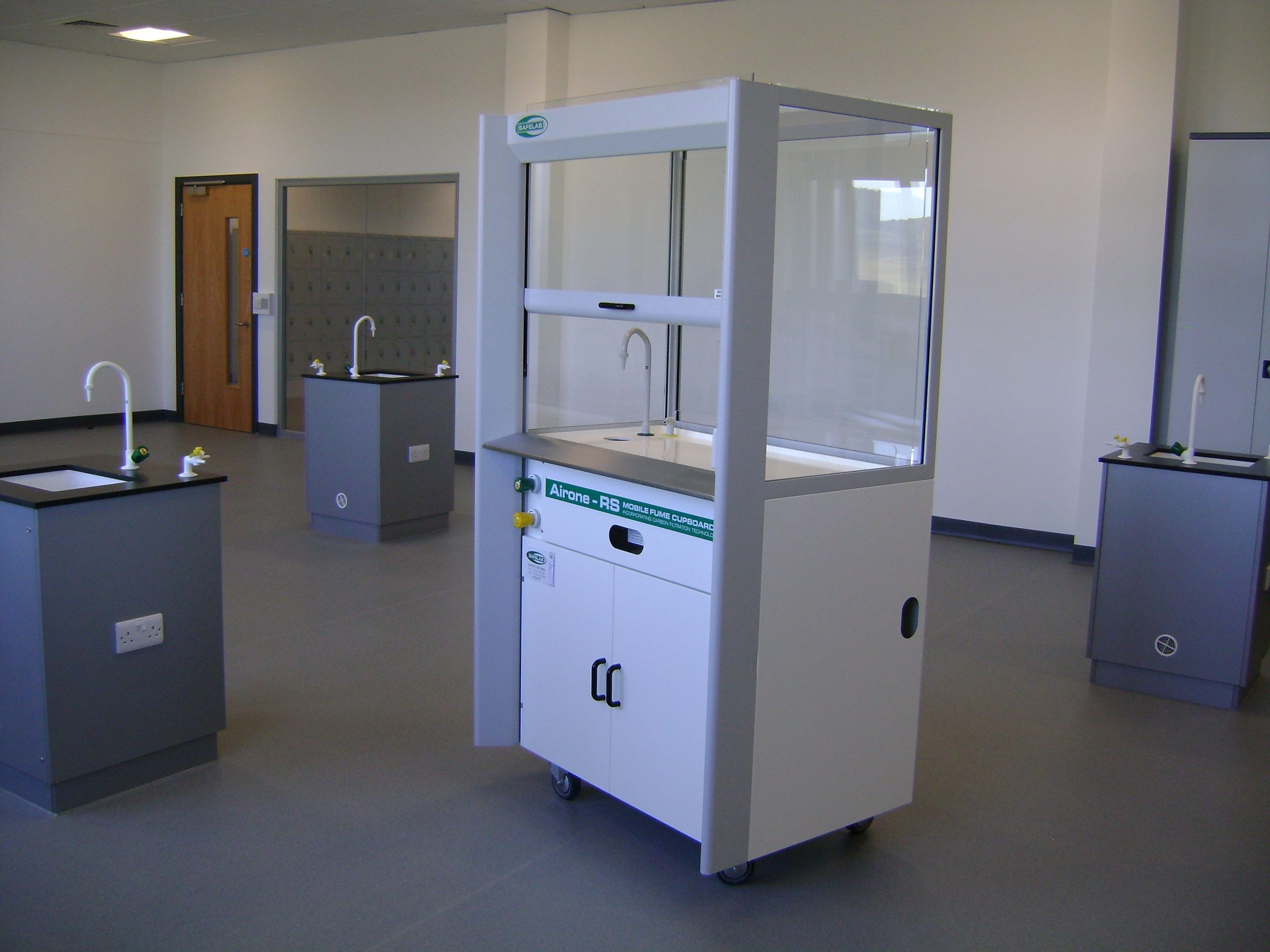
Fume cupboards are among the most important forms of exposure control in laboratories. They are used in schools, universities, research facilities, and industrial environments to help protect people from hazardous fumes, vapours, gases, aerosols, and airborne particles produced during laboratory work.
However, a fume cupboard is more than an enclosed workbench with an extract fan. Its effectiveness depends on the right system being selected for the application, stable airflow through the opening, correct installation and commissioning, appropriate user behaviour, and ongoing testing and maintenance.
This guide explains what a fume cupboard is, how it works, the main types available, when one should be used, and the UK requirements that apply throughout its working life.
Quick answer: What is a fume cupboard?
A fume cupboard is a ventilated enclosure designed to help protect the user from hazardous airborne contaminants generated during laboratory work.
Air is drawn into the cupboard through the front opening, carrying fumes, vapours, gases, aerosols, or particles away from the user’s breathing zone. The contaminated air is then either discharged safely outside through ductwork or passed through suitable filters before being returned to the room.
In the UK, a fume cupboard used to control exposure to hazardous substances is a form of local exhaust ventilation, or LEV. It must be suitable for the substances and processes involved, used correctly, and maintained and tested so that it continues to control exposure effectively.
In this guide
- What a fume cupboard is designed to do
- How a fume cupboard works
- The main parts of a fume cupboard
- What fume cupboards are used for
- Ducted and ductless fume cupboards
- How fume cupboards differ from other laboratory cabinets
- How to choose the right type
- UK standards, commissioning, and testing
- Safe use and common mistakes
- When to seek specialist advice
What is a fume cupboard designed to do?
The primary purpose of a fume cupboard is to reduce the risk of a laboratory user inhaling hazardous airborne substances.
It achieves this by combining two forms of protection:
- a physical enclosure around the process; and
- controlled airflow that draws contaminants away from the user.
The sash—the moveable screen at the front of the cupboard—helps separate the user from the work area while leaving enough access to carry out the task. Air entering through the sash opening helps contain contaminants inside the cabinet and directs them towards the extract or filtration system.
A fume cupboard should therefore be treated as a complete control system, not simply a piece of laboratory furniture. The cabinet, airflow, ductwork or filters, room ventilation, installation position, controls, alarms, and way the unit is used all affect its performance.
How does a fume cupboard work?
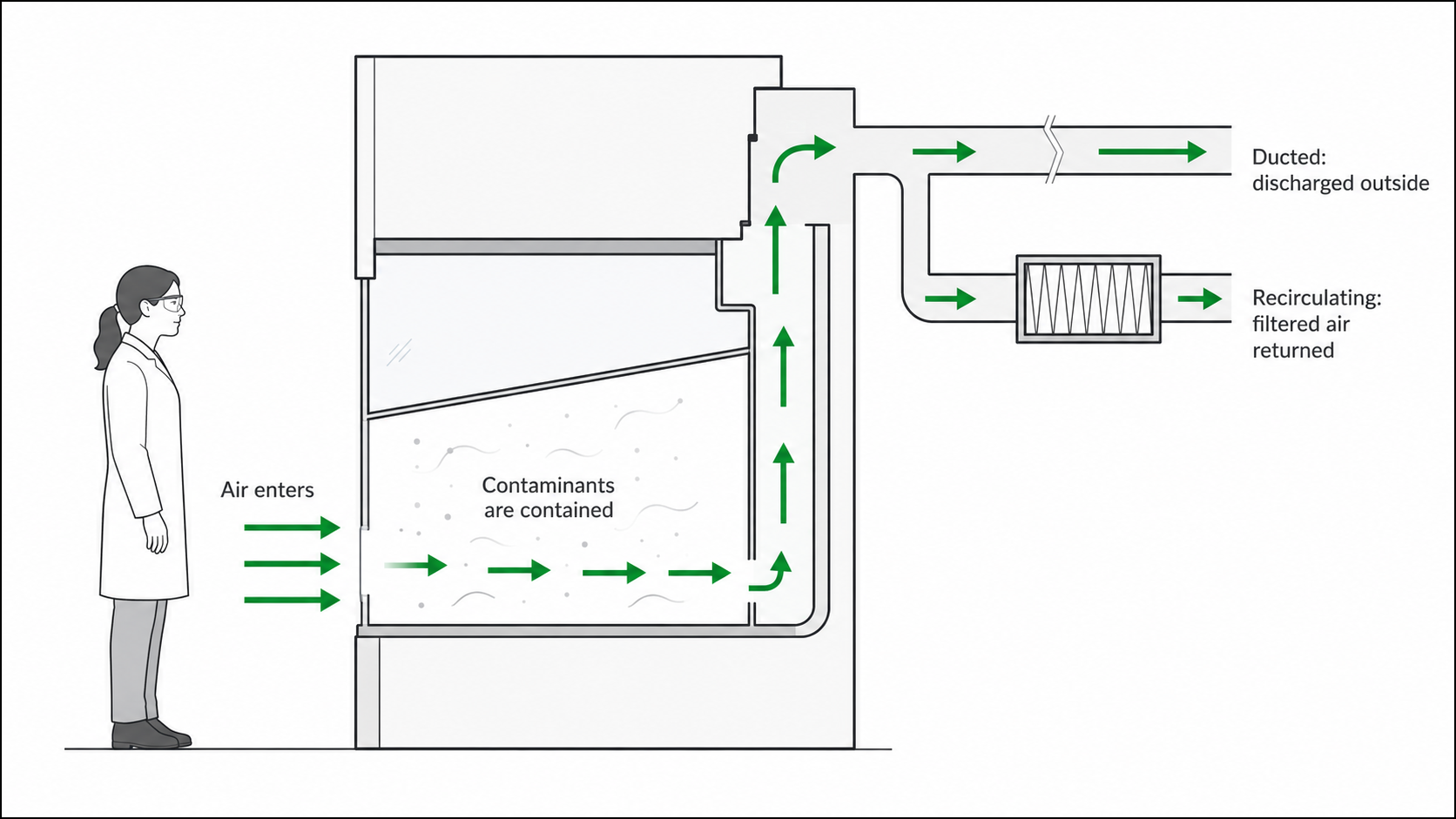
A fume cupboard works by creating a controlled inward flow of air through the front opening.
The basic process has three stages.
1. Air is drawn into the cupboard
A fan or integrated airflow system draws room air through the open area beneath the sash. This inward airflow helps prevent contaminants generated inside the cupboard from moving towards the user.
The air must enter steadily. Draughts from doors, windows, ventilation grilles, or people walking past can disturb the airflow and affect containment, even when the cupboard itself is functioning correctly.
2. Contaminated air is contained and moved away
Fumes, vapours, gases, aerosols, or particles released by the process are carried towards the rear of the cupboard. Internal baffles or air paths help distribute the extract and reduce areas of poor airflow.
Containment depends on more than a single face-velocity reading. The shape of the cupboard, sash position, equipment placed inside, room conditions, and movement of the user can all affect how air behaves at the opening.
3. Air is discharged or filtered
What happens next depends on the type of fume cupboard:
- a ducted fume cupboard carries contaminated air through ductwork and discharges it outside the building at an appropriate location; or
- a ductless or recirculating fume cupboard passes the air through filters selected for the substances being used before returning the filtered air to the room.
This difference is fundamental. Ducted and ductless systems are not interchangeable, and the right choice must be based on the application and risk assessment rather than installation convenience alone.
What are the main parts of a fume cupboard?
Designs vary, but a typical laboratory fume cupboard includes:
- The cabinet or enclosure: The working chamber in which the process takes place.
- The sash: The adjustable glazed screen at the front of the cabinet. It provides a physical barrier and helps define the working opening.
- The work surface: The area on which equipment and materials are placed. Its material must be suitable for the substances and processes involved.
- Baffles or internal air paths: Features that help direct air through the cabinet and towards the extract.
- An extract or filtration system: External ductwork and a fan for a ducted system, or correctly selected filters and an integrated fan for a recirculating system.
- An airflow indicator and alarm: A visible indication of system status, with a warning if airflow moves outside the intended operating range.
- Services and controls: Depending on the application, these may include lighting, electrical sockets, water, gas, drainage, and control interfaces.
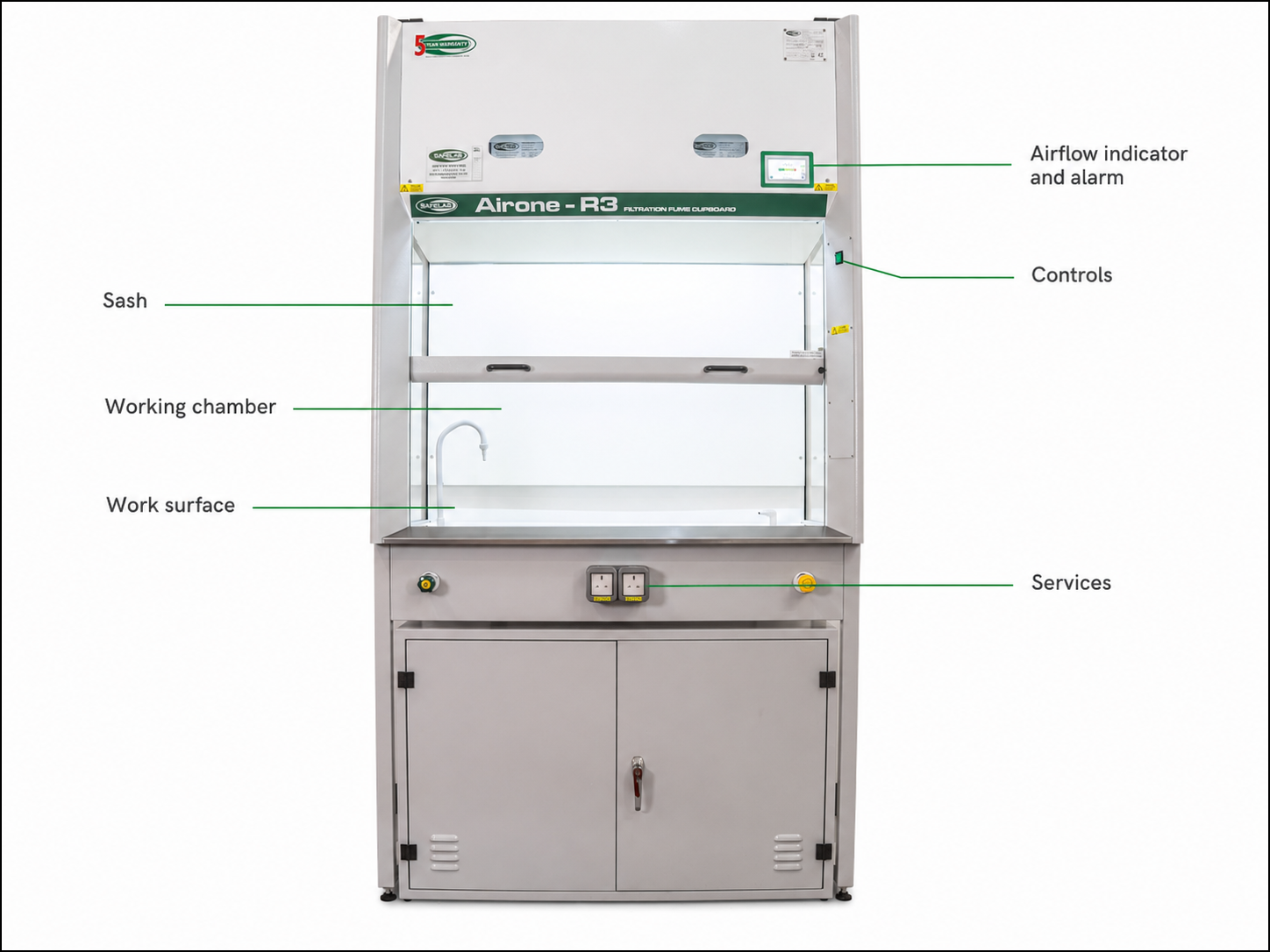
Each component must work as part of the wider system. A high-quality cabinet cannot compensate for unsuitable ductwork, incorrect filters, poor room positioning, or inadequate commissioning.
What is a fume cupboard used for?
Fume cupboards are used for laboratory processes that may release hazardous airborne contaminants and where the risk assessment identifies local containment and extraction as an appropriate control measure.
Typical applications can include:
- handling volatile or harmful chemicals;
- transferring, mixing, or diluting substances that release vapours;
- chemical reactions that may generate fumes or gases;
- work involving certain powders, dusts, or aerosols;
- heating substances that may produce airborne contaminants; and
- small-scale laboratory processes requiring controlled containment.
Fume cupboards are widely used in:
- school and college science laboratories;
- university teaching and research laboratories;
- pharmaceutical and healthcare research;
- industrial research and development;
- quality-control laboratories; and
- specialist testing and analytical facilities.
The presence of a fume cupboard does not automatically make every substance or process safe. The application, quantities, temperature, frequency of use, chemical compatibility, and possible future changes must all be considered.
What should not be done in a fume cupboard?
A fume cupboard should not be used as a substitute for a suitable risk assessment or safe working procedure.
It should not normally be treated as:
- permanent chemical storage;
- a general-purpose ventilated bench for any hazardous process;
- a microbiological safety cabinet;
- a laminar flow cabinet for sterile product protection;
- a waste-disposal route; or
- protection against every possible fire, explosion, or uncontrolled reaction.
Storing bottles and equipment inside the working chamber can also obstruct airflow, reduce usable space, and make safe working more difficult. Where chemicals need to be stored, use a cabinet designed and specified for that purpose.
What are the different types of fume cupboard?
The main distinction is between ducted and ductless systems.
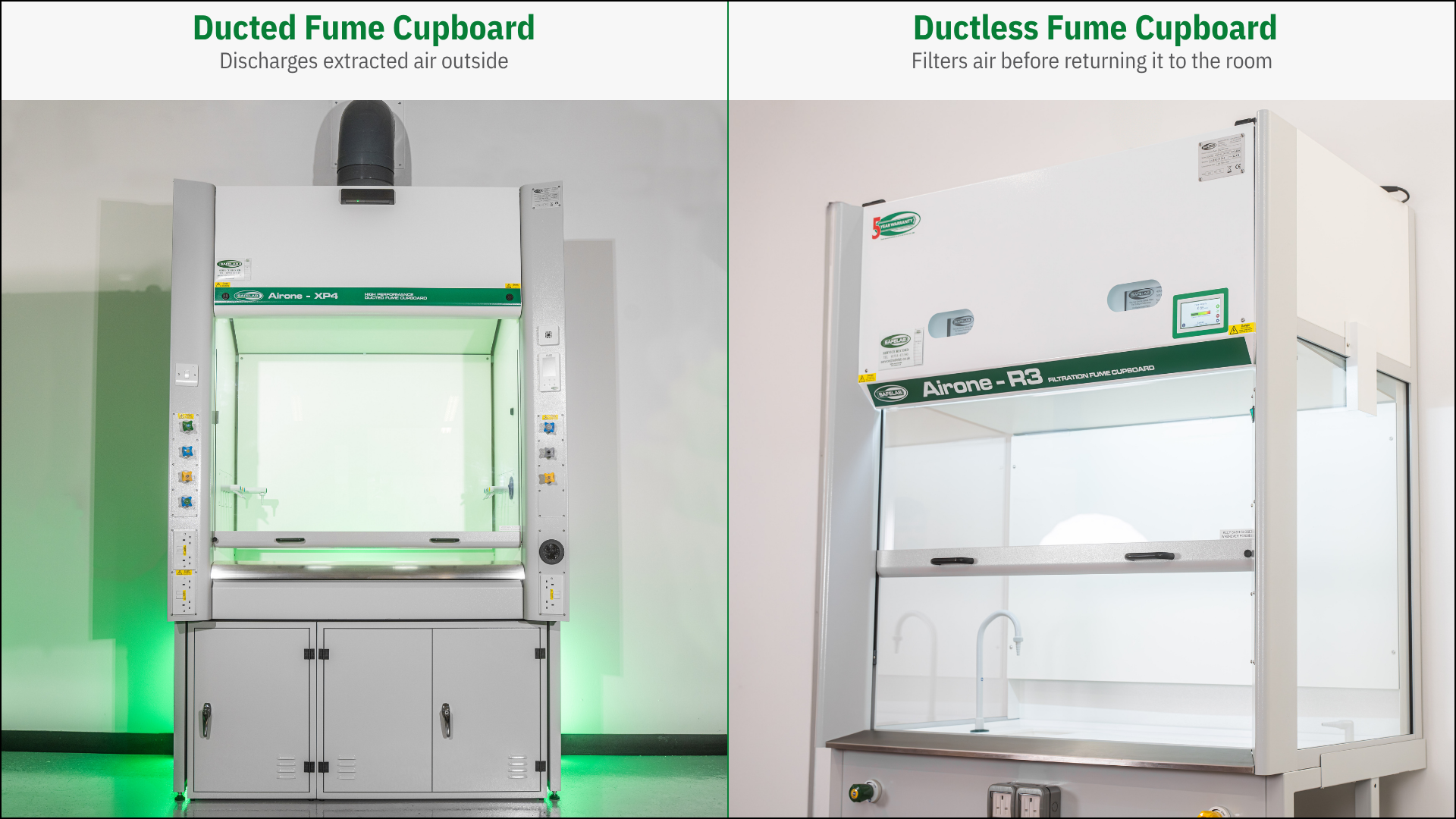
Ducted fume cupboards
A ducted fume cupboard removes contaminated air from the laboratory through an extract system and discharges it outside the building.
Ducted systems are often appropriate where:
- the range of substances may change;
- chemical use is varied or difficult to predict;
- processes produce a significant contaminant load;
- the application is demanding or frequent; or
- long-term flexibility is important.
They require carefully designed ductwork, an appropriate fan, a safe discharge position, suitable make-up air, and coordination with the building’s ventilation system. Installation can therefore be more complex, but a correctly designed system can support a broad range of applications.
The relevant performance framework for general-purpose ducted fume cupboards is the BS EN 14175 series. Safelab’s guide to BS EN 14175 ducted fume cupboards explains the standard, its different parts, and how it applies to UK laboratories.
Ductless or recirculating fume cabinets
A ductless fume cupboard/cabinet draws air through one or more filters and returns the filtered air to the room.
These systems can be suitable where:
- the substances and quantities are clearly defined;
- the contaminants can be filtered effectively;
- external ductwork is impractical;
- flexibility or mobility is valuable; and
- filter condition can be monitored and managed properly.
Filter selection is critical. A filter that is effective for one substance may be unsuitable for another, and filter capacity is finite. Ductless systems should not be selected simply because they are easier to install.
BS EN 17242 applies to recirculating filtration fume cabinets. Safelab’s BS EN 17242 ductless fume cupboards guide explains filtration, classification, monitoring, and testing in more detail.
 See also: Ducted vs ductless fume cupboards: Which should you choose?
Other configurations
Fume cupboards can also be configured around the space and application. Examples include fixed, mobile, semi-mobile, walk-in, constant air volume (CAV), and variable air volume (VAV) systems.
These descriptions do not replace the ducted-or-ductless decision. For example, a mobile unit will normally be recirculating because it cannot remain connected to fixed ductwork, while VAV describes how airflow is controlled within a ducted installation.
For a more detailed explanation of VAV, airflow, and operational efficiency, see Safelab’s guide to reducing fume cupboard energy costs.
Fume cupboard vs fume hood: What is the difference?
In most contexts, there is no practical difference.
Fume cupboard is the term commonly used in the UK. Fume hood is more common in the United States and some international markets. Both usually describe a ventilated laboratory enclosure intended to help protect the user from hazardous airborne contaminants.
The applicable standards, terminology, and common design conventions may differ between countries, so UK projects should be specified and assessed against the relevant UK requirements.
Fume cupboard vs laminar flow cabinet vs Class II cabinet
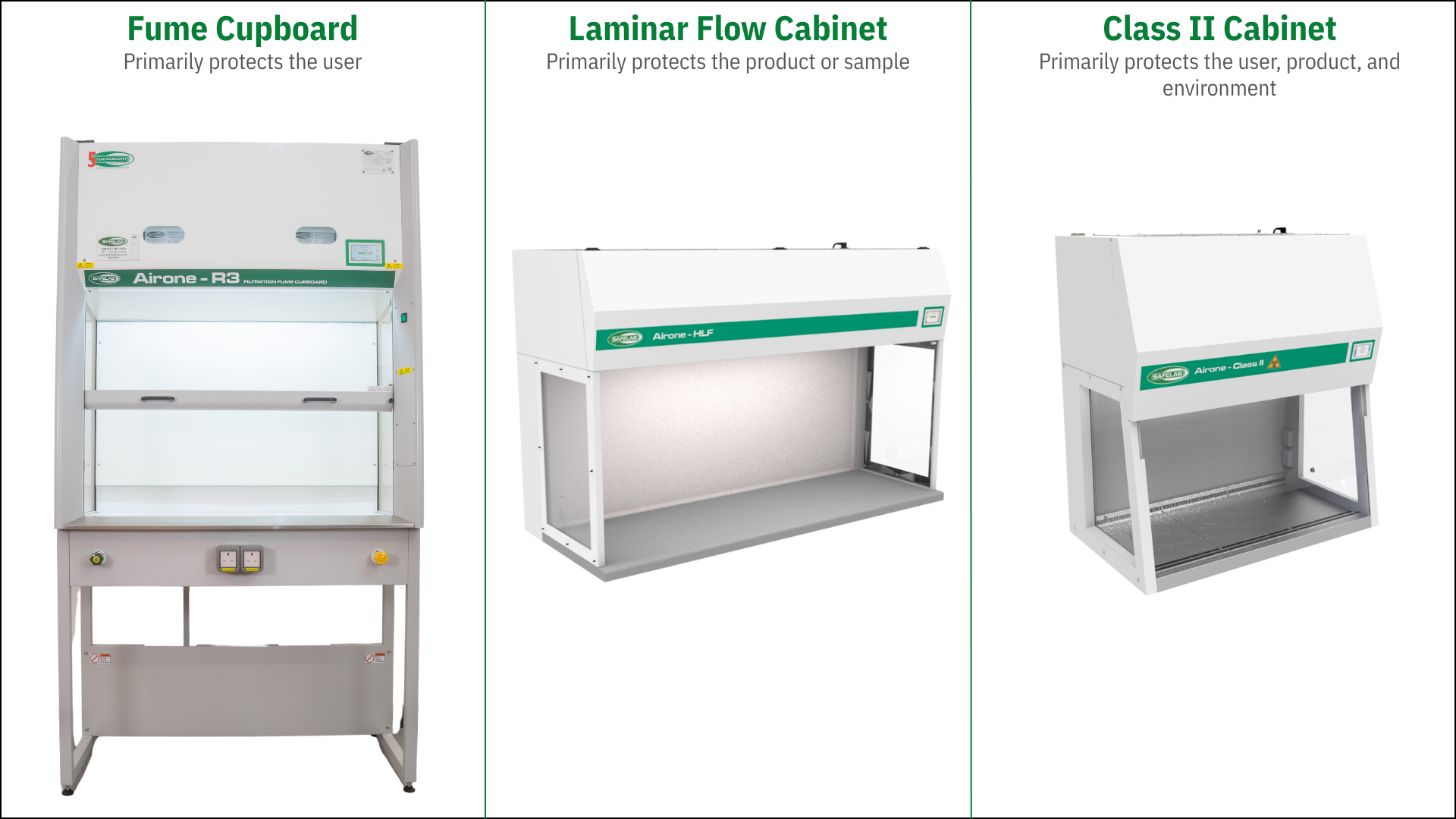
These cabinets can look similar, but they are designed for different hazards and forms of protection.
| Cabinet type | Primary purpose | Typically protects | Typical application |
|---|---|---|---|
| Fume cupboard | Contains and removes or filters chemical airborne contaminants | User | Work involving hazardous fumes, vapours, gases, aerosols, or particles |
| Laminar flow cabinet | Provides clean, filtered airflow across the work area | Product or sample | Suitable non-hazardous work requiring contamination control |
| Class II microbiological safety cabinet | Provides controlled biological containment and filtered airflow | User, product, and environment | Appropriate work involving biological agents or microbiological material |
A laminar flow cabinet should not be used as a substitute for a fume cupboard when hazardous chemical fumes or vapours are present. Equally, a standard fume cupboard is not a replacement for a microbiological safety cabinet where biological containment is required.
Safelab also manufactures laminar flow and Class II safety cabinets for applications requiring product or biological protection.
How do you choose the right fume cupboard?
Start with the application, not the cabinet.
The main questions are:
- What substances will be used?
- In what quantities and concentrations?
- Will the substances or processes change over time?
- Are fumes, vapours, gases, aerosols, heat, or particles produced?
- Is filtration demonstrably suitable?
- How often, and for how long, will the cupboard be used?
- What space, duct routes, ventilation, and services are available?
- What testing, maintenance, and filter-management arrangements will be needed?
The answers determine whether a ducted or recirculating system is appropriate, along with its size, materials, sash, services, controls, and installation requirements.
Safelab’s UK fume cupboard buyer’s guide provides a more detailed framework for choosing and specifying the right system.
Where a formal project specification is required, the guide to specifying a fume cupboard using BIM and NBS explains what information should be included.
👉 See also: Fume cupboard installation requirements in the UK
👉 Related: How much does a fume cupboard cost in the UK?
What UK standards and regulations apply?
Fume cupboard requirements depend on the type of system, its application, and the workplace in which it is used.
The main framework includes:
- COSHH: Employers must prevent or adequately control exposure to substances hazardous to health. Under COSHH Regulation 9, control measures must be maintained in an efficient state, in efficient working order, in good repair, and in a clean condition.
- HSG258: The Health and Safety Executive’s guidance on local exhaust ventilation covers the design, commissioning, use, maintenance, and testing of LEV systems.
- BS EN 14175: The relevant standards series for general-purpose fume cupboards connected to an extract system.
- BS EN 17242: The standard for recirculating filtration fume cabinets.
- CLEAPSS guidance: Schools and colleges should also consider the relevant CLEAPSS guidance for educational fume cupboards.
Safelab’s CLEAPSS G9 guide for school fume cupboards explains the main considerations for schools, colleges, science departments, and laboratory technicians.
Compliance is not achieved by buying a cabinet with a particular label. The complete installed system must be suitable, commissioned, used correctly, maintained, and tested.
Do new fume cupboards need commissioning?
A new or significantly altered fume cupboard should be commissioned before it is put into normal use.
Commissioning establishes whether the installed system performs as intended in its real environment. It can include airflow and containment checks, alarm verification, an assessment of the interaction with room ventilation, and the creation of benchmark information for future tests.
This is different from simply switching the unit on or checking that the fan operates. It provides evidence that the complete system—the cabinet, extract or filtration, controls, room, and installation—works together correctly.
👉 See also: Fume cupboard commissioning in the UK
How often should a fume cupboard be tested?
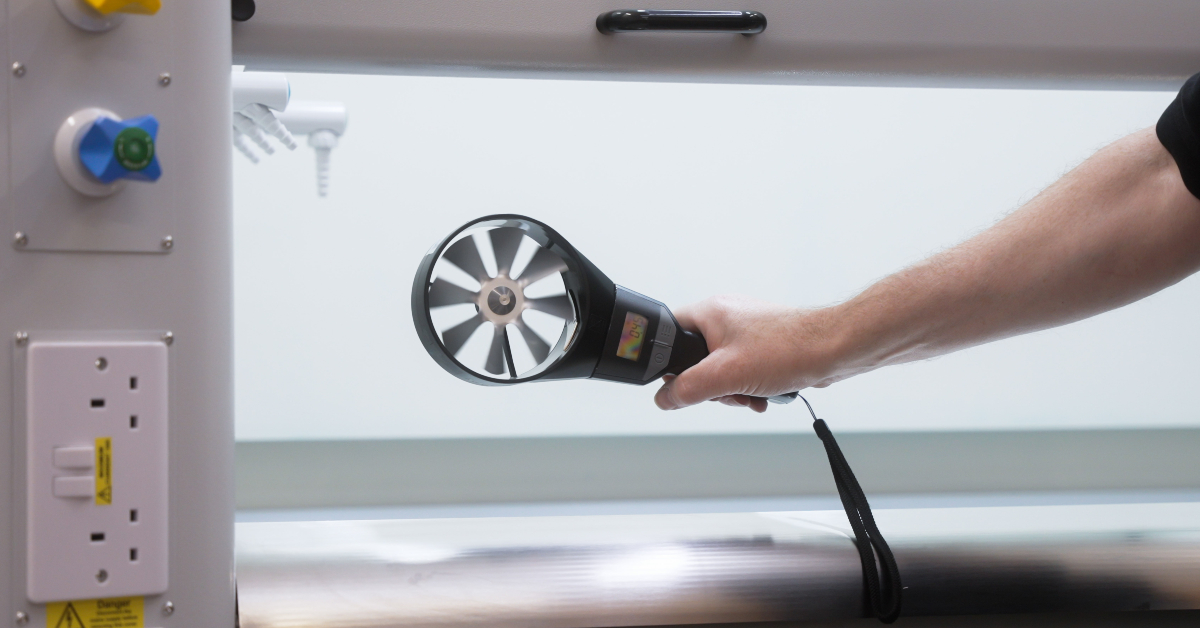
Where a fume cupboard is used as an LEV control measure under COSHH, it should undergo a thorough examination and test at intervals no longer than 14 months, unless the risk assessment or another applicable requirement calls for more frequent examination.
Many organisations arrange testing annually to keep the schedule simple and reduce the risk of becoming overdue.
A thorough examination and test should assess whether the system continues to control exposure effectively. Depending on the system, this may include airflow measurements, containment assessment, checks of alarms and indicators, physical inspection, filter-related checks, and formal reporting by a competent person.
Safelab’s fume cupboard testing requirements guide provides a detailed explanation of testing frequency, what a compliant examination involves, record keeping, and the applicable UK requirements.
👉 Related: Why fume cupboards fail testing
How should a fume cupboard be used safely?
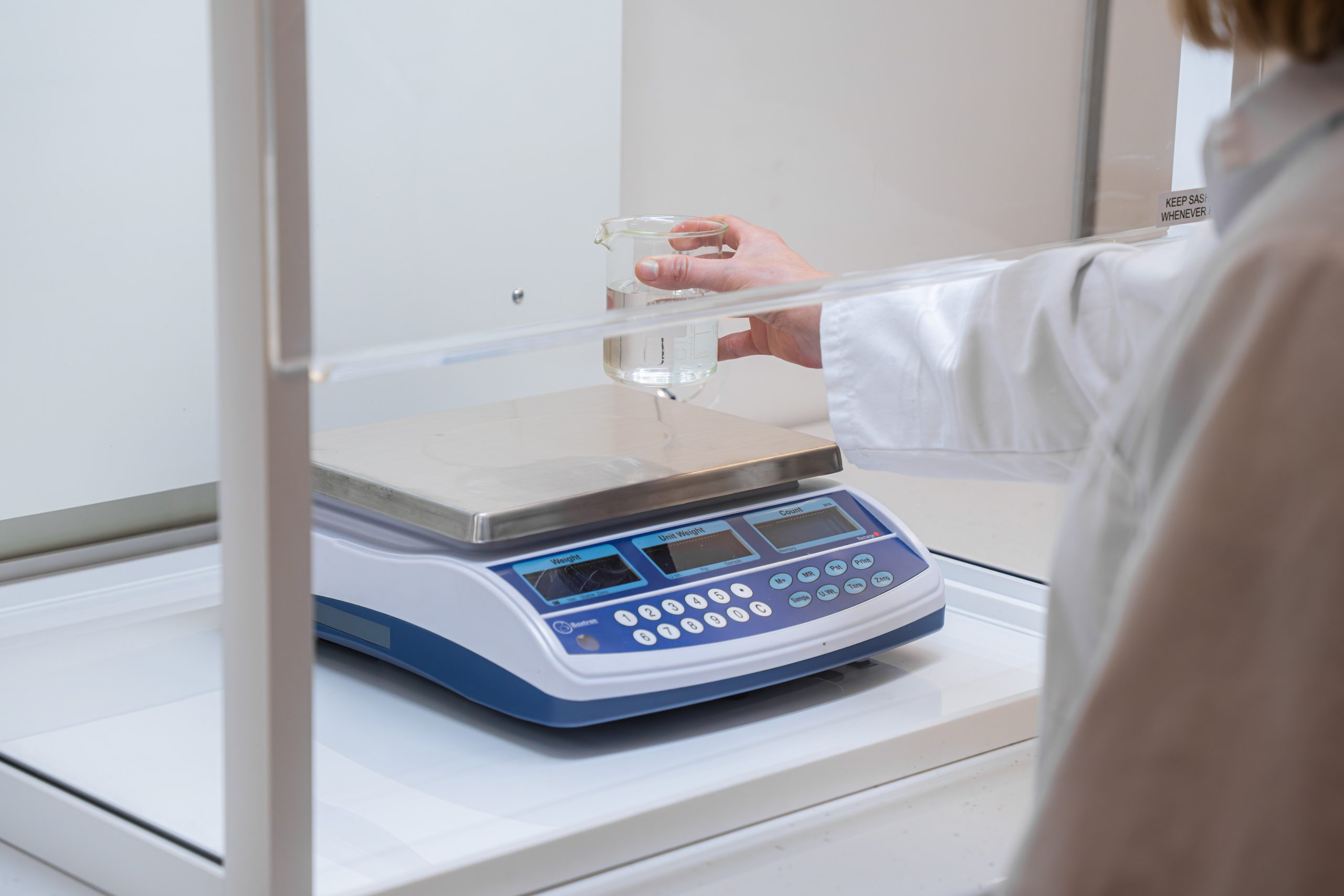
Correct use is essential because everyday behaviour can disturb airflow and reduce containment.
Users should:
- keep the sash at the marked working height;
- work well inside the cabinet rather than at the front edge;
- avoid overcrowding the work area;
- keep equipment away from baffles and air paths;
- make slow, controlled movements through the opening;
- avoid creating draughts near the cupboard;
- check the airflow indicator before starting work;
- respond to alarms and unusual changes in performance; and
- lower or close the sash when the cupboard is not in use, where appropriate.
Users should also understand the limits of the particular cabinet. A ductless system, for example, remains suitable only for substances compatible with its filters and within the assessed operating conditions.
For more practical day-to-day advice, read Safe use of fume cupboards: Best practice guidance for UK laboratories.
Common fume cupboard misconceptions
“If the fan is running, the cupboard is safe”
A running fan does not prove containment. Airflow can be too high, too low, unstable, or disrupted by the room or objects inside the cabinet.
“A higher face velocity is always better”
Not necessarily. Excessive velocity can increase turbulence and impair containment. Performance should be assessed against the design and commissioning information, not a universal assumption that more airflow is safer.
“Any chemical can be used in a ductless cupboard”
No. The filters must be suitable for the substances, quantities, and usage pattern. Some applications should not be carried out in a recirculating system.
“Passing a test means the cupboard is safe until the next test”
A test records performance at a point in time. Changes to the room, process, ductwork, filters, equipment, or way the cupboard is used can affect performance between formal examinations.
Position matters. Doors, windows, supply-air grilles, walkways, ceiling height, duct routes, and access for maintenance can all influence performance and installation feasibility.
When should you seek specialist advice?
Specialist advice is particularly important when:
- the substances or risks are uncertain;
- choosing between ducted and ductless systems;
- planning a new laboratory or refurbishment;
- replacing an existing cupboard;
- ductwork or room ventilation may be difficult;
- a cupboard has failed testing;
- energy use needs to be reduced; or
- the application may change in future.
Early input can prevent an unsuitable system being specified, reduce changes during installation, and ensure that commissioning, testing, and maintenance are considered from the outset.
Need help choosing, installing, or maintaining a fume cupboard?
Safelab designs, manufactures, installs, commissions, tests, and maintains fume cupboards for schools, universities, research facilities, and industrial laboratories across the UK.
With more than 40 years of experience, Safelab can help you understand the application, choose the right system, plan the installation, and maintain safe performance throughout its working life.
Frequently Asked Questions
What does a fume cupboard do?
A fume cupboard helps protect the user by containing hazardous airborne contaminants and drawing them away from the breathing zone. The air is then discharged outside through ductwork or filtered before being returned to the room.
Is a fume cupboard the same as a fume hood?
Usually, yes. “Fume cupboard” is the common UK term, while “fume hood” is more widely used in the United States.
Does every fume cupboard need ducting?
No. Ducted fume cupboards discharge air outside, while ductless or recirculating cupboards filter air and return it to the room. Ductless systems are only suitable where the application and filter compatibility have been properly assessed.
What is the difference between a fume cupboard and a laminar flow cabinet?
A fume cupboard is primarily designed to protect the user from hazardous airborne contaminants. A laminar flow cabinet is primarily designed to protect a non-hazardous product or sample from airborne contamination and should not be used as a substitute for a fume cupboard.
How often must a fume cupboard be tested in the UK?
Where it is used as an LEV control measure under COSHH, a fume cupboard should normally undergo a thorough examination and test at intervals no longer than 14 months. More frequent testing may be required by the risk assessment or application.
Can chemicals be stored in a fume cupboard?
A working fume cupboard should not normally be used for permanent chemical storage. Stored containers can obstruct airflow, take up working space, and introduce unnecessary hazards. Use an appropriately specified chemical storage cabinet instead.
Does face velocity prove that a fume cupboard is safe?
No. Face velocity is an important measurement, but containment also depends on airflow stability, cabinet design, sash position, room conditions, and how the cupboard is used.