
BS EN 14175 ducted fume cupboards: UK guide
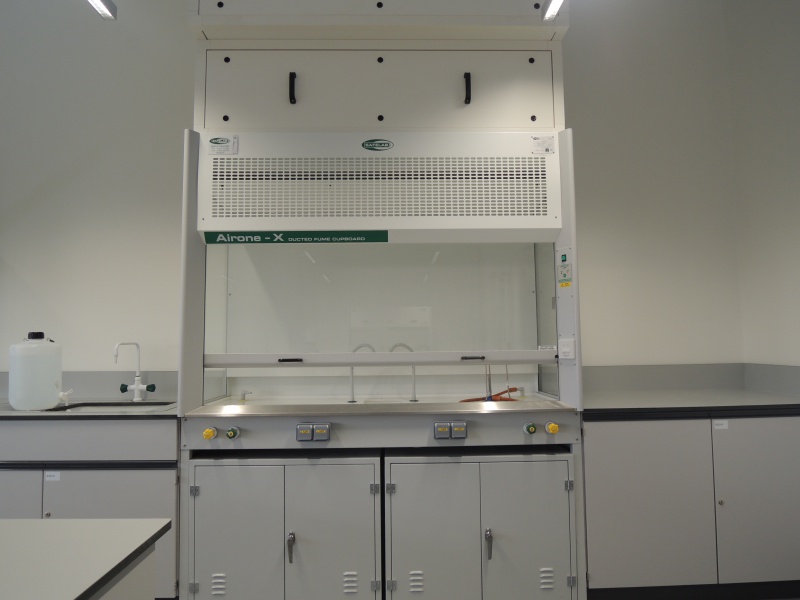
BS EN 14175 is the primary European standard governing the design, performance, and testing of ducted fume cupboards.
In the UK, it forms the technical foundation for specifying and assessing ducted systems in laboratories across education, research, healthcare, and industry. While COSHH Regulation 9 defines the requirement for ongoing testing and maintenance, BS EN 14175 defines how a fume cupboard should perform in the first place.
Understanding this standard is essential for anyone involved in laboratory design, specification, or compliance. It provides a framework for ensuring that fume cupboards achieve effective containment, maintain stable airflow, and perform reliably under real-world conditions.
This guide explains what BS EN 14175 covers, how it applies in practice, and what it means for selecting and managing ducted fume cupboards in the UK.
Quick answer: What is BS EN 14175?
BS EN 14175 is a European standard that defines the requirements, testing methods, and performance criteria for ducted fume cupboards.
It covers:
- design and construction requirements
- airflow and containment performance
- type testing and performance verification
- installation and commissioning considerations
In practical terms, it ensures that a ducted fume cupboard can safely contain hazardous substances when used correctly.
In this guide
- What BS EN 14175 is and how it is structured
- What “ducted” means in practice
- Key performance requirements and testing methods
- Face velocity and containment explained
- Installation and commissioning considerations
- How BS EN 14175 links to COSHH compliance
- Common misconceptions about the standard
- How to specify compliant systems
What BS EN 14175 is and how it is structured
BS EN 14175 is divided into multiple parts, each covering a different aspect of fume cupboard performance and testing.
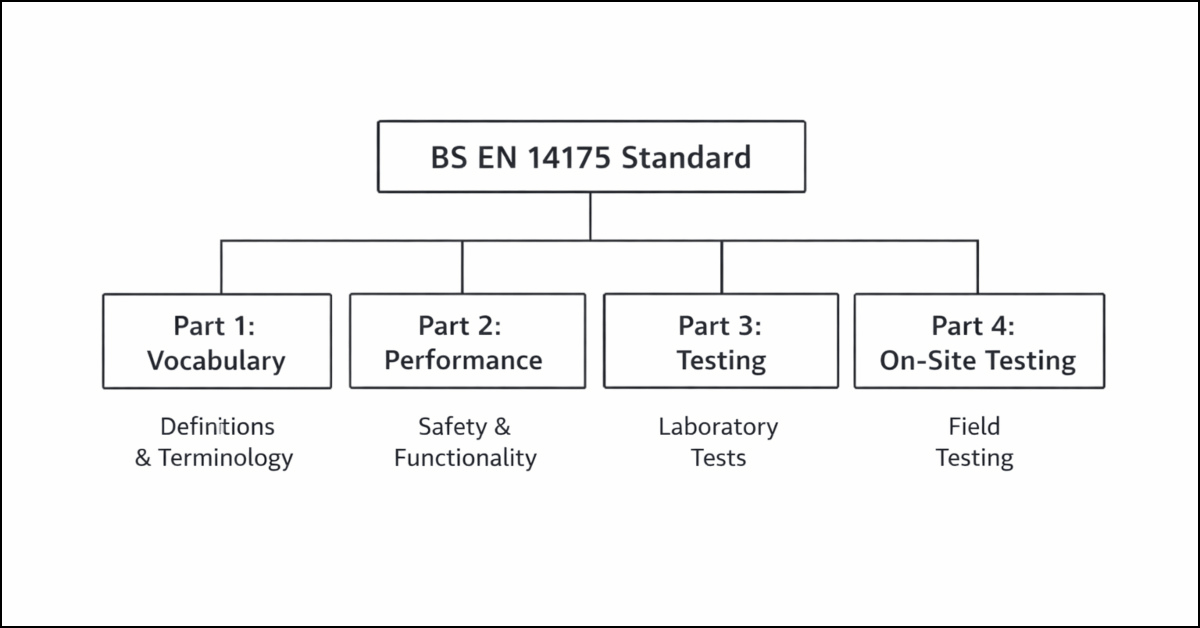
Key sections include:
- Part 1 – Vocabulary
- Part 2 – Safety and performance requirements
- Part 3 – Type testing methods
- Part 4 – On-site testing methods
- Part 5 – Recommendations for installation and maintenance
- Part 6 – Variable air volume (VAV) systems
Together, these define both how a fume cupboard should be designed and how it should be tested.
The standard focuses heavily on containment performance, recognising that airflow alone is not sufficient to ensure safety.
What “ducted” means in practice
A ducted fume cupboard extracts air from the laboratory and discharges it outside the building through a ductwork system.
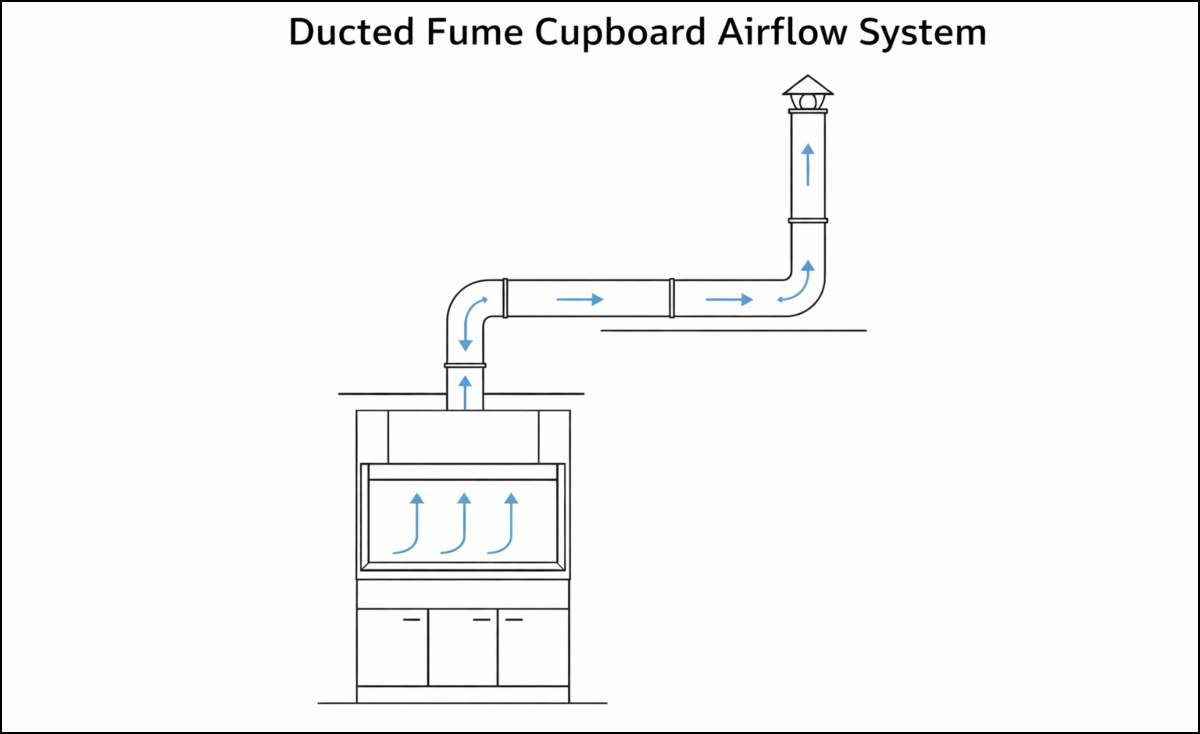
This means:
- contaminants are removed from the space entirely
- airflow is driven by an external fan and ventilation system
- performance depends on the wider extraction infrastructure
Ducted systems are typically used for:
- higher-risk applications
- unknown or variable substances
- environments requiring maximum containment reliability
For industrial, university and research laboratories, Safelab’s Airone XP4 is a double-walled ducted fume cupboard designed for demanding containment applications.
Ducted cupboards therefore rely heavily on correct extract-system design, installation, and system balancing.
 See also: Ducted vs Ductless Fume Cupboards Guide
Related: What Is a Fume Cupboard? How It Works, Types, and Uses(opens in new tab)
Key performance requirements and testing methods
BS EN 14175 places strong emphasis on measurable performance, particularly in relation to containment.
This is why fume cupboard design and manufacture should be considered early in a project, alongside the extraction system, laboratory layout and intended use.
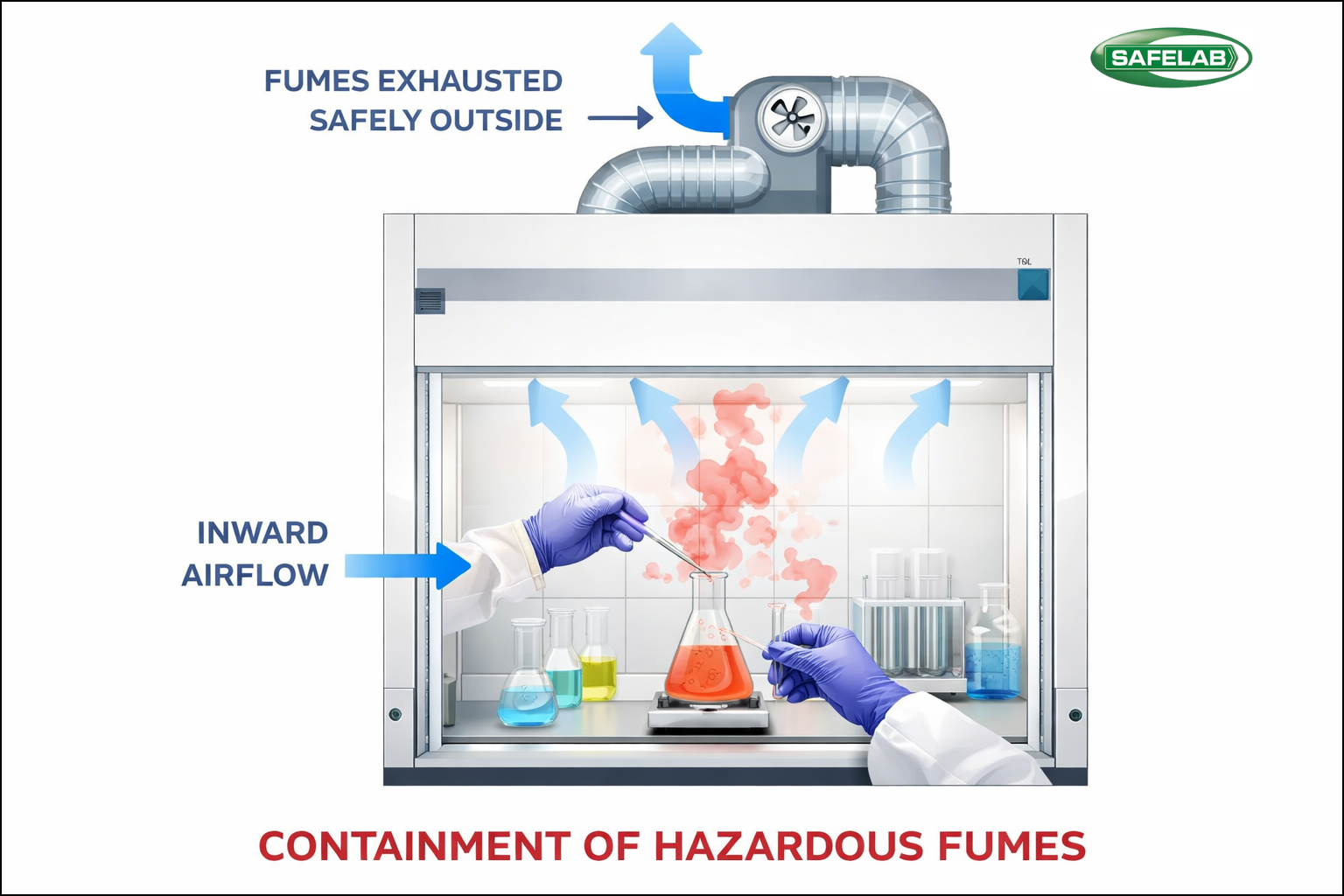
Key performance elements include:
Containment testing
This evaluates how effectively the cupboard prevents contaminants from escaping into the laboratory.
It is typically assessed using tracer gas tests under controlled conditions.
Airflow performance
While airflow is important, it is not the only measure of effectiveness.
The standard recognises that:
- correct airflow does not always guarantee containment
- turbulence and environmental factors can affect performance
Type testing
Conducted under laboratory conditions to verify that a design meets performance requirements.
On-site testing
Carried out after installation to ensure the cupboard performs correctly in its actual environment.
Related: Fume Cupboard Commissioning Guide
Face velocity and containment explained
Face velocity refers to the speed at which air is drawn into the front opening of the fume cupboard.
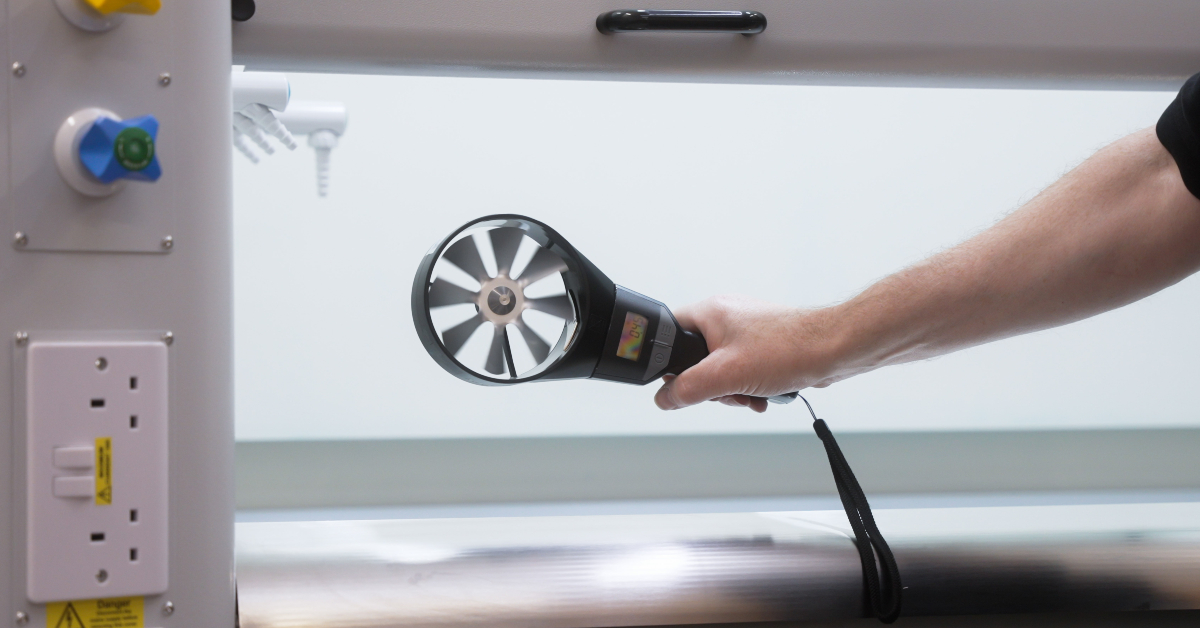
It is often used as a simple indicator of performance, but BS EN 14175 makes it clear that:
- face velocity alone is not sufficient
- containment testing provides a more accurate measure
In practice:
- too low → contaminants may escape
- too high → turbulence may reduce containment
Maintaining stable, appropriate airflow is critical.
See also: Why Fume Cupboards Fail Testing
Installation and commissioning considerations
Even a fully compliant design can fail to perform if it is not installed correctly.
Key considerations include:
- ductwork design and routing
- fan performance and system balancing
- interaction with room ventilation
- positioning within the laboratory
For a practical overview of these project-stage considerations, see our guide to fume cupboard installation requirements in the UK.
Commissioning ensures that the system performs as intended once installed.
Safelab works closely with project teams to ensure that systems are not only compliant on paper, but perform reliably in practice.
Safelab’s fume cupboard design and manufacture capability helps align product selection, installation requirements, commissioning, and compliance expectations from the start of a project.
How BS EN 14175 links to COSHH compliance
BS EN 14175 and COSHH Regulation 9 are closely related but serve different purposes.
- BS EN 14175 defines how a cupboard should perform
- COSHH Regulation 9 requires ongoing testing and maintenance
Related: Fume Cupboard Testing Requirements in the UK (COSHH Compliance Guide)
Together, they ensure that:
- systems are designed correctly
- performance is verified at installation
- performance is maintained over time
Understanding both is essential for full compliance.
Common misconceptions about BS EN 14175
There are several common misunderstandings around the standard.
“If it meets face velocity requirements, it is compliant”
Not necessarily. Containment performance is more important.
“Type testing guarantees real-world performance”
Type testing is controlled. Real environments introduce additional variables.
“All ducted cupboards perform the same”
Performance depends on design, installation, and environment.
For example, a single-wall ducted fume cupboard may suit some laboratory applications, while higher-specification environments may require a double-walled or more configurable system.
“Compliance is a one-off exercise”
Ongoing testing is required under COSHH.
How to specify BS EN 14175 compliant systems
Specification should go beyond simply referencing the standard.
Key considerations include:
- defining performance requirements clearly
- ensuring compatibility with HVAC systems
- specifying testing and commissioning requirements
- considering long-term operation and maintenance
For schools and colleges, a school ducted fume cupboard should also be specified around teaching use, supervision, robustness and long-term maintenance requirements.
See also: How to Specify a Fume Cupboard (UK BIM & NBS Guide)
Working with experienced suppliers helps ensure that specification aligns with real-world performance.
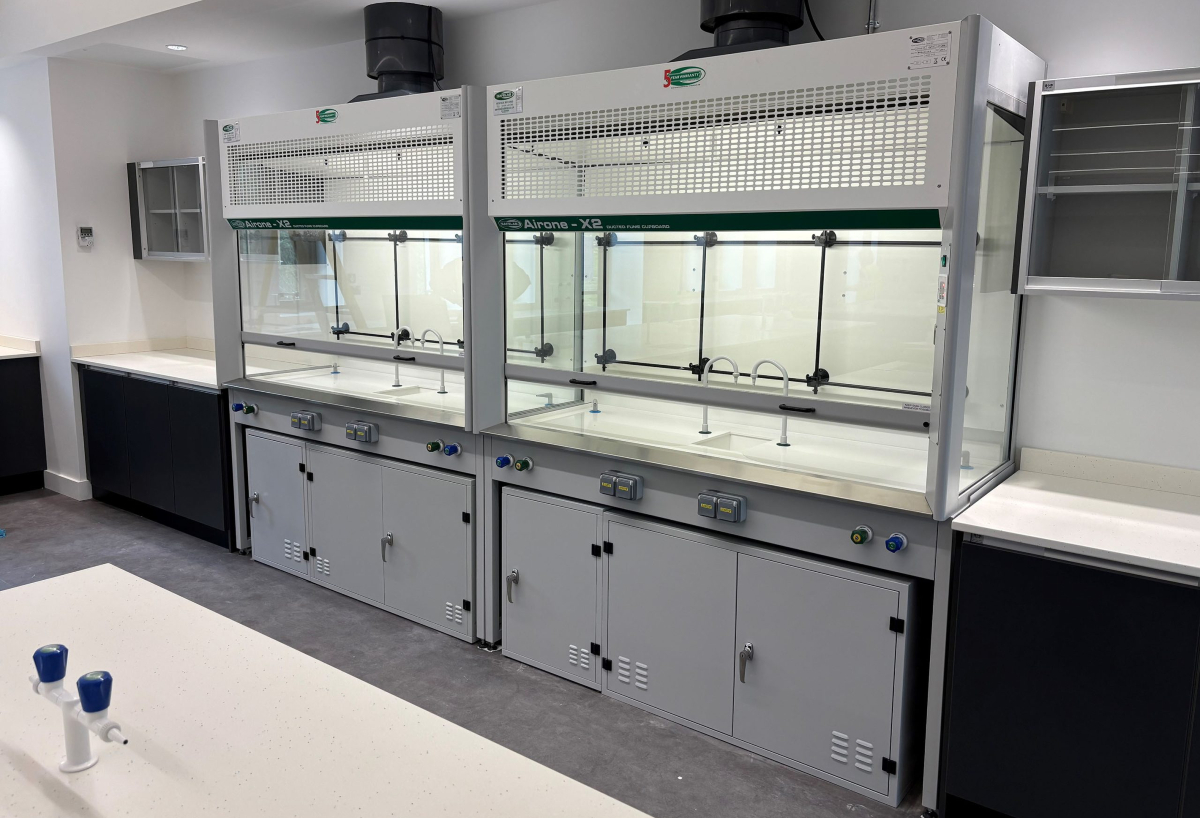
Safelab supports consultants and project teams across the UK, providing guidance on system selection, compliance, and integration with laboratory environments. If you're specifying a new system, it's important to choose a fume cupboard designed and tested in accordance with BS EN 14175. You can explore examples of compliant ducted fume cupboards to see how these standards are applied in practice.
Need support with BS EN 14175 systems or compliance?
Understanding the standard is one thing. Applying it effectively in a real project is another.
Safelab supports laboratories with:
- specification of ducted fume cupboard systems
- commissioning and performance verification
- COSHH testing and compliance
- resolving performance issues
If you are working with ducted systems and want to ensure they meet BS EN 14175 requirements in practice, it is worth reviewing both design and installation.
Frequently Asked Questions
What does BS EN 14175 cover?
It defines the design, performance, and testing requirements for ducted fume cupboards.
Is BS EN 14175 required in the UK?
It is the recognised standard used across the UK for ducted systems.
What is the difference between BS EN 14175 and COSHH?
BS EN 14175 defines performance; COSHH requires ongoing testing and maintenance.
Does face velocity guarantee safety?
No. Containment testing is a more reliable indicator.
Do all ducted fume cupboards meet BS EN 14175?
No. Systems must be designed, tested, and installed correctly to comply.