


How much does a fume cupboard cost in the UK?
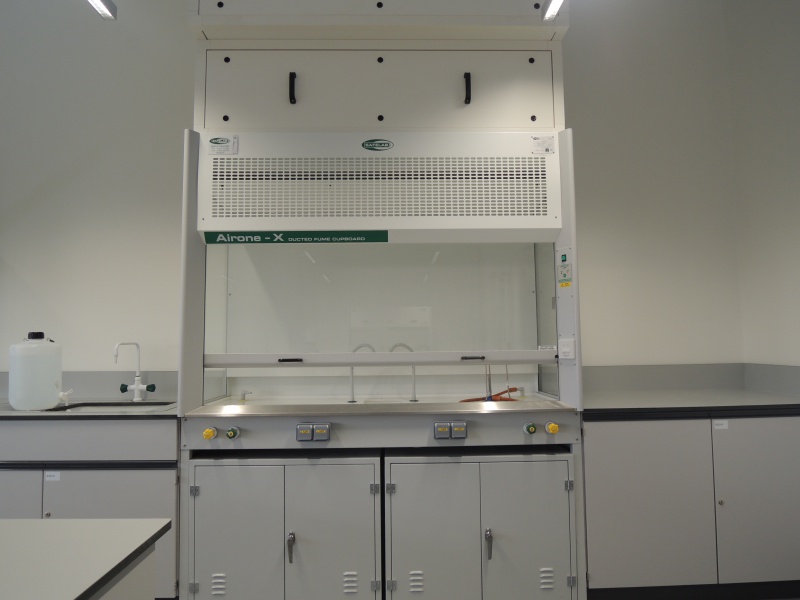
Fume cupboard costs in the UK can vary significantly.
A simple ductless unit for a defined, low-risk application will usually have a very different cost profile from a fully ducted fume cupboard installed as part of a laboratory refurbishment. Add ductwork, extract fans, controls, services, commissioning, testing, and long-term running costs, and the final budget can change quickly.
That is why asking “How much does a fume cupboard cost?” rarely has a single neat answer.
The better question is:
What will the right fume cupboard cost for this laboratory, this application, and this building?
This guide explains the main factors that affect fume cupboard prices in the UK, including ducted vs ductless systems, installation costs, filters, controls, commissioning, compliance testing, and lifetime energy use.
It is written for schools, colleges, universities, consultants, estates teams, procurement managers, and laboratory managers who need to understand what drives cost before requesting quotes or writing a specification.
At Safelab, we work with schools, universities, research facilities, and industrial laboratories across the UK. That experience matters because two fume cupboards that look similar on paper can involve very different installation requirements, compliance considerations, and long-term costs.
Quick answer: How much does a fume cupboard cost?
There is no single standard price for a fume cupboard in the UK. The final cost depends on the system type, size, materials, services, controls, installation complexity, ductwork or filtration, commissioning and ongoing operating requirements. Two fume cupboards of a similar size can therefore have substantially different project costs.
In general:
- Ductless fume cupboards often have lower installation costs because they do not require external ductwork.
- Ducted fume cupboards may cost more to install because they need ductwork, fans, external discharge routes, and integration with the building.
- Specialist or bespoke systems cost more because they are designed around specific hazards, dimensions, services, or workflows.
- Whole-life cost is more important than purchase price alone, especially where energy use, filter replacement, servicing, and testing are significant.
For this reason, Safelab prices each project against its application and installation requirements rather than publishing a single figure that may not represent the system a laboratory actually needs.
👉 Related: What Is a Fume Cupboard? How It Works, Types, and Uses(opens in new tab)
In this guide
- What does a fume cupboard price include?
- Fume cupboard price factors: what affects the total cost?
- Ducted vs ductless fume cupboard costs
- Installation, ductwork, and building constraints
- Controls, alarms, sinks, taps, and services
- Testing, commissioning, and compliance costs
- Energy and lifetime running costs
- Why cheapest is not always best
- How to budget for the right system
What does a fume cupboard price include?
When researching fume cupboard prices, it is important to establish what a quoted figure represents. The fume cupboard itself may be only one part of the complete project.
| Type of price | What it may cover |
|---|---|
| Unit-only price | The fume cupboard itself, potentially without delivery, installation, or extract equipment. |
| Installed price | The cupboard, delivery, and the installation work specifically included within the quotation. |
| Complete project price | The cupboard, extract system, controls, services, installation, commissioning, testing, and any agreed associated work. |
| Whole-life cost | The initial project cost together with energy use, servicing, testing, filter replacement, and future maintenance. |
A unit-only price should not be compared directly with a complete installed-project quotation. Buyers should review the scope, inclusions, exclusions, and ongoing costs alongside the headline figure.
Fume cupboard price factors: what affects the total cost?
Fume cupboard pricing is influenced by more than the cabinet itself.
A realistic budget should consider the full system, including the unit, installation, ventilation, services, controls, testing, and ongoing maintenance.
The main cost factors are:
- system type: ducted or ductless
- size and working area
- materials and chemical resistance
- sash configuration and visibility
- internal services such as gas, water, power, and sinks
- airflow controls and alarms
- ductwork and extract fans
- filtration requirements
- installation complexity
- commissioning and testing
- servicing, filter replacement, and energy use
A low-cost unit can become expensive if installation is complex. Equally, a higher-quality system may deliver better value if it is easier to maintain, more energy efficient, and better suited to the application.
This is why fume cupboard cost should always be considered as part of a specification process, not as a standalone product price.
👉 See also: UK Fume Cupboard Buyer’s Guide: How to Choose and Specify the Right System
Ducted vs ductless fume cupboard costs
One of the biggest cost decisions is whether to choose a ducted or ductless fume cupboard.
The difference is not just technical. It affects installation cost, maintenance cost, energy use, and long-term suitability.
Ducted fume cupboards
Ducted fume cupboards extract contaminated air from the laboratory and discharge it outside through ductwork.
They are often the preferred option where:
- chemical use is varied or uncertain
- higher-risk substances are handled
- long-term flexibility is required
- the laboratory needs a robust, established system
However, ducted systems typically involve more installation work. Costs may include:
- ductwork
- extract fans
- roof or wall penetrations
- discharge stacks
- system balancing
- integration with building ventilation
- commissioning and testing
That does not mean ducted systems are poor value. In many laboratories, they are the safest and most practical long-term option. But the true cost is rarely just the cupboard itself.
Ductless fume cupboards
Ductless fume cupboards, also known as recirculating fume cupboards, filter contaminated air and return it to the room.
They can reduce installation complexity because they do not require an external duct route. That can make them attractive in:
- existing buildings
- listed or difficult-to-modify premises
- schools and teaching spaces
- temporary or flexible laboratory layouts
- applications with clearly defined substances
The key cost consideration is filter management.
Ductless systems depend on correct filtration, monitoring, replacement, and ongoing suitability checks. A system that appears cheaper at installation may not always be cheaper over its full working life if filters need frequent replacement or if the application changes.
👉 Related: Ducted vs Ductless Fume Cupboards: Which Should You Choose?
How much does a ducted fume cupboard cost?
A ducted fume cupboard project usually includes three main cost areas:
- the fume cupboard itself
- the extract system
- installation, commissioning, and testing
The fume cupboard cost will depend on size, construction, sash type, visibility requirements, worktop material, internal lining, and services.
The extract system can have an even greater impact.
A relatively straightforward installation with a short duct route will usually be less expensive than a system requiring long duct runs, roof works, complex routing, or integration with existing building ventilation. Public UK supplier guidance also reflects this, noting that ducted installation costs vary heavily with fan positioning, duct runs, shared extract systems, and site layout.
Ducted systems are often the right choice where performance, flexibility, and long-term containment are the priority. They are particularly common in universities, research facilities, industrial laboratories, and more demanding school science environments.
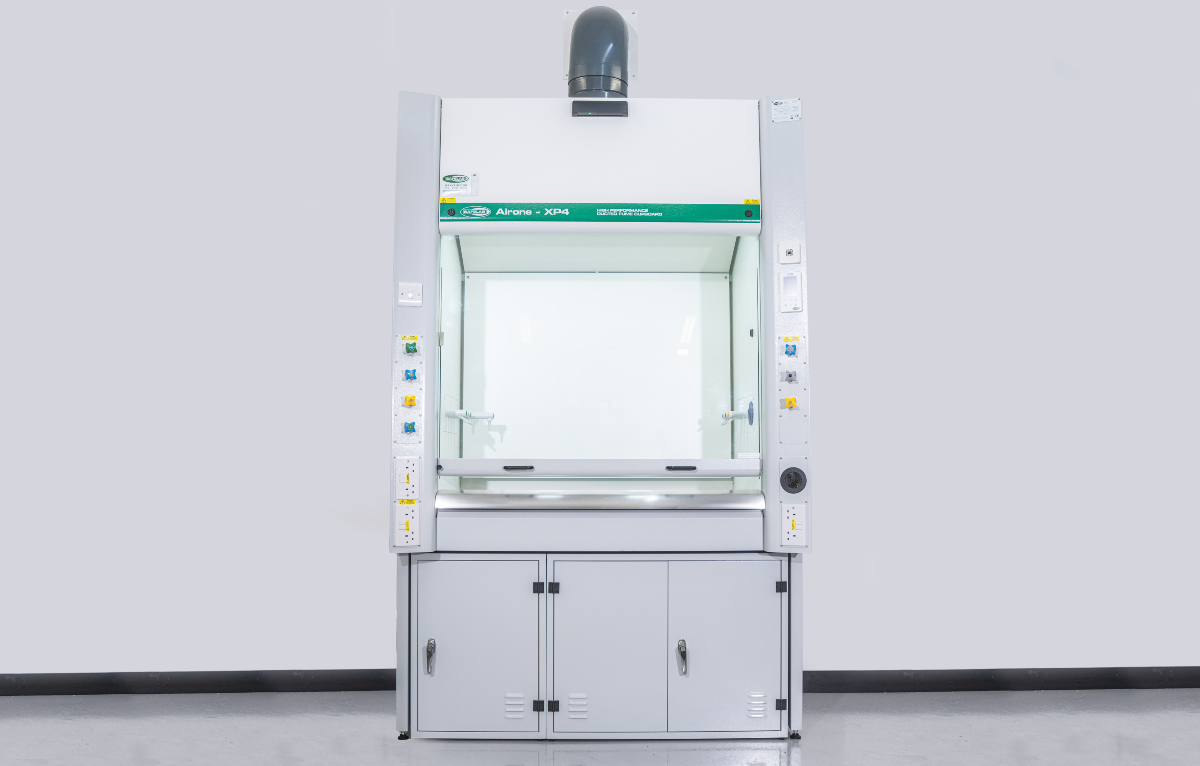
For higher-specification projects, the Airone XP4 provides a robust ducted fume cupboard option for universities, research facilities, and industrial laboratories.
How much does a ductless fume cupboard cost?
Ductless systems often have a simpler installation route because there is no external ductwork.
This can reduce disruption and make budgeting easier, especially where:
- the building cannot easily accommodate ductwork
- the system is used for defined substances
- mobility or flexibility is required
- the project needs a faster installation route
However, the cost of a ductless fume cupboard should never be assessed on purchase price alone.
You also need to consider:
- filter type
- filter replacement frequency
- monitoring systems
- chemical compatibility
- testing requirements
- user training
- long-term suitability
The most important question is not whether a ductless system is cheaper. It is whether filtration is appropriate for the substances being used.
If the application is tightly defined, ductless systems can offer strong value. If the application is uncertain or likely to change, a ducted system may be more suitable.
Safelab’s ductless fume cupboards can be suitable where the application is clearly defined, the chemicals are known, and the correct filtration can be specified.
Installation costs: Ductwork, fans, and building constraints
Installation is often where fume cupboard budgets change most.
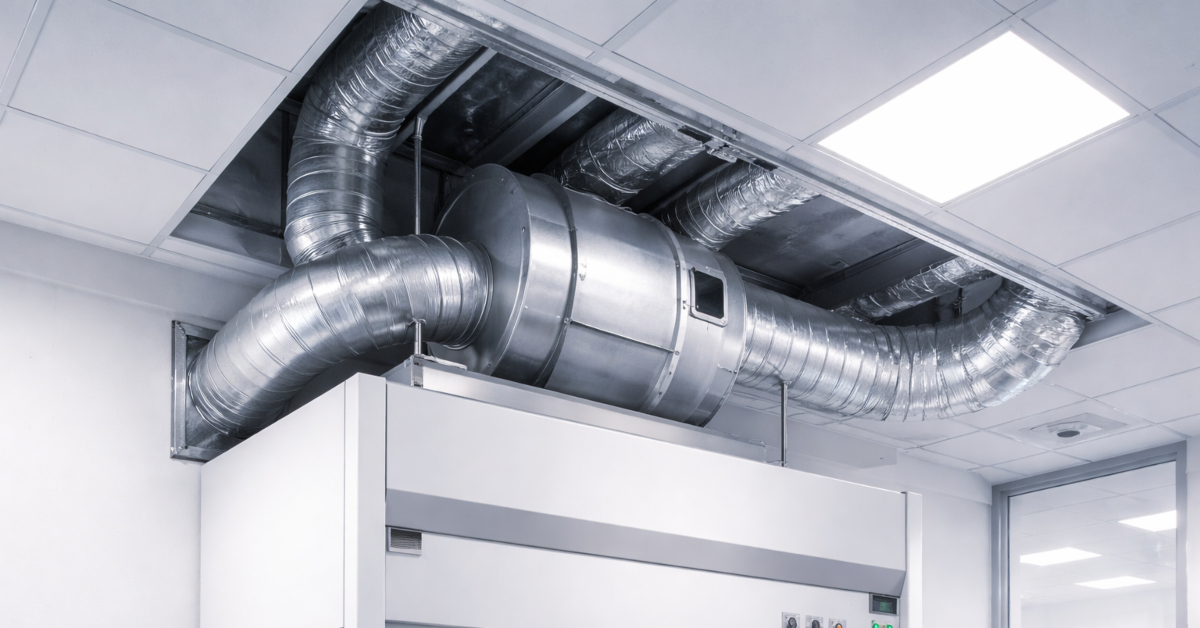
A simple replacement in an existing location may be relatively straightforward. A new installation in a difficult room may require additional design work, builders’ work, roof access, electrical services, ventilation coordination, and specialist commissioning.
Key installation cost factors include:
- distance to external discharge
- roof or wall access
- duct route complexity
- fan location
- existing ventilation infrastructure
- ceiling voids and service routes
- access restrictions
- whether works must happen outside normal hours
- whether the laboratory remains operational during installation
For schools, colleges, and universities, disruption can also have a cost. A project carried out during a holiday window may need different planning from one in an active teaching or research environment.
This is where early advice helps. A site review can identify whether a like-for-like replacement is realistic, or whether a different system type would offer better long-term value.
Controls, alarms, sinks, taps, and services
The base unit is only part of the final cost.
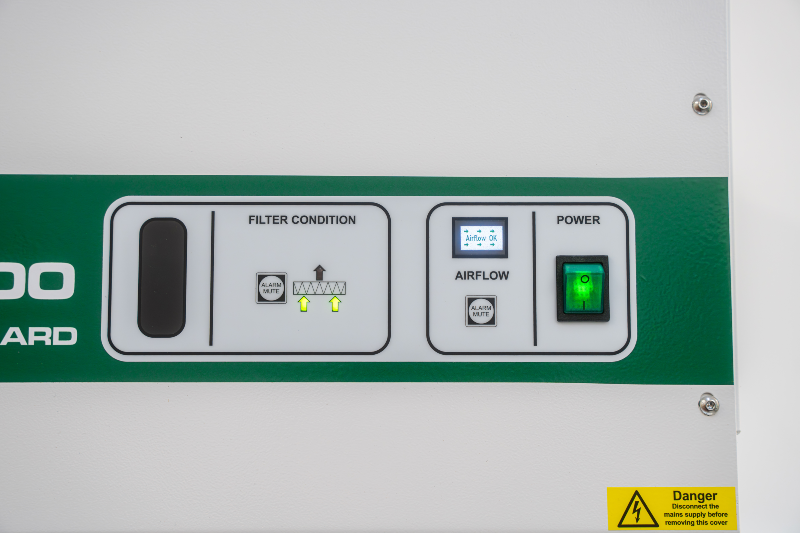
Many laboratories require additional services and features, such as:
- gas taps
- water taps
- sinks
- power sockets
- airflow alarms
- lighting
- extract controls
- automatic sash systems
- VAV controls
- specialist work surfaces
- chemical-resistant linings
Some of these are essential. Others depend on how the fume cupboard will be used.
It is easy to over-specify. It is also easy to under-specify and create problems later.
A school demonstration cupboard, for example, may need good visibility and simple controls. A research or industrial cupboard may need more robust materials, additional services, or integration with a wider laboratory ventilation system.
Where standard configurations do not meet the project brief, Safelab’s bespoke fume cupboard design and manufacture capability can help match services, materials, dimensions, and controls to the application.
The right specification should support the actual work being carried out.
Testing, commissioning, and compliance costs
A fume cupboard is not finished once it is installed.
It needs to be commissioned, tested, documented, and then maintained over time.
Commissioning verifies that the system performs as intended in the actual room. This is important because fume cupboard performance depends not only on the unit, but also on room airflow, ductwork, extract performance, and user conditions.
Ongoing testing is also a legal and safety consideration. HSE guidance on local exhaust ventilation describes the principles of deciding on, designing, commissioning and testing effective LEV, as well as responsibilities, documentation, maintenance schedules, and defective equipment marking.
Budgeting should therefore include:
- commissioning
- initial performance checks
- COSHH Thorough Examination and Test
- future routine testing
- servicing
- remedial work if issues are found
- record keeping
The cheapest installation is not good value if it leads to failed testing, expensive remedial work, or unsafe operation.
👉 See also: Fume Cupboard Commissioning in the UK
👉 Related: Fume Cupboard Testing Requirements in the UK

Energy and lifetime running costs
For ducted systems, energy use can be a major cost over time.
A ducted fume cupboard removes air from the laboratory. That air has usually been heated or cooled. When it is extracted, replacement air must be supplied and conditioned.
This means the real running cost includes:
- fan energy
- heating replacement air
- cooling replacement air
- ventilation system load
- operating hours
- user behaviour, especially sash position
A cheaper system with poor airflow control may cost more in the long term than a better-designed system with appropriate controls.
Variable Air Volume systems can help reduce energy use by adjusting airflow based on sash position and operating conditions. They are not suitable for every project, but they can be valuable where multiple cupboards operate for long periods.
For suitable projects, the Airone XP4 can be configured as a VAV ducted fume cupboard to support airflow control, reduced extract volumes, and long-term energy performance.
For ductless systems, energy costs may be lower because air is recirculated rather than discharged outside. However, filter replacement and monitoring must still be included in lifecycle cost.
 See also: Reducing Fume Cupboard Energy Costs: VAV & Airflow Guide
Why cheapest is not always best
Cost matters. But choosing a fume cupboard purely on price is one of the most common buying mistakes.
The lowest initial quote may not include:
- difficult installation work
- sufficient ductwork
- commissioning
- testing
- suitable materials
- service connections
- filter management
- future maintenance
- energy implications
That can lead to unpleasant surprises later.
A better approach is to compare systems on whole-life value.
Ask:
- Is the system suitable for the substances being used?
- Is it appropriate for the room?
- Will it pass commissioning and testing?
- Can it be maintained properly?
- What will it cost to run?
- What happens if the laboratory use changes?
- Is it compliant with the relevant standard?
For ducted systems, BS EN 14175 is an important reference point. For ductless systems, BS EN 17242 is central to specification and testing. The right standard depends on the system type.
Good value does not always mean the lowest cost. It means the system is safe, suitable, compliant, and manageable over its working life.
Repair, replace, or install new?
If you already have a fume cupboard, the cost question may not be “how much is a new one?”
It may be:
Should we repair, replace, or redesign?
Repair may be appropriate where:
- the unit is fundamentally suitable
- performance issues are minor
- records are clear
- the system can be restored safely
Replacement may be better where:
- the cupboard repeatedly fails testing
- components are obsolete
- the system no longer matches the application
- ductwork or controls are inadequate
- the laboratory layout has changed
- compliance confidence is low
A new installation may be required where the laboratory is being refurbished, repurposed, or expanded.
This is where a review of the existing system can save money. Replacing like-for-like is not always the right answer. Sometimes it is. Sometimes a different configuration, better control strategy, or ductless option will make more sense.
👉 Related: Why Fume Cupboards Fail Testing
How to budget for a fume cupboard project
A practical budget should include more than the cupboard.
Use this checklist:
1. Define the application
List the substances, processes, frequency of use, and user groups.
2. Decide whether ducted or ductless is suitable
This should be based on risk and application, not just installation convenience.
3. Identify building constraints
Consider duct routes, ceiling voids, roof access, service routes, room layout, and disruption.
4. Specify required services
Include gas, water, power, sinks, alarms, lighting, controls, and specialist finishes.
5. Plan for commissioning and testing
Build these into the project from the start.
6. Consider whole-life cost
Include servicing, filter replacement, energy use, maintenance access, and future flexibility.
7. Get expert input early
A short conversation at the start of a project can prevent a costly mistake later.
Safelab supports laboratories across the UK with fume cupboard selection, specification, installation advice, compliance considerations, and ongoing servicing. Our experience includes schools, colleges, universities, industrial laboratories, and large multi-cupboard projects, with Safelab’s own site noting work across ductless school installations, mixed ducted and ductless school projects, and large university installations.
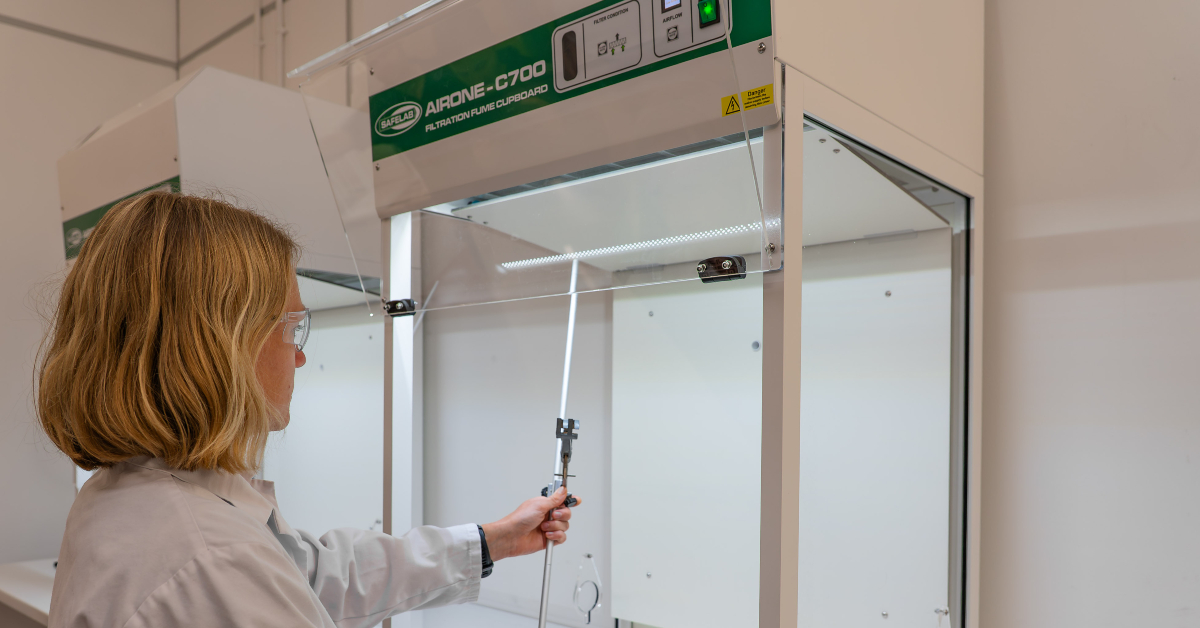
Need an accurate fume cupboard price for your project?
Fume cupboard cost depends on the system, the room, the application, and the level of installation work required.
Safelab can help you assess:
- whether ducted or ductless is appropriate
- what specification your laboratory needs
- what installation factors may affect cost
- how testing, commissioning, and maintenance fit into the budget
- how to think about whole-life value, not just upfront price
If you are budgeting for a new fume cupboard, replacing an older system, or planning a laboratory project, it is worth getting advice before committing to a specification.
Frequently Asked Questions
How much does a fume cupboard cost in the UK?
The cost depends on the system type, size, specification, installation complexity, services, ductwork or filtration, commissioning, testing, and long-term running costs. A site-specific specification is usually needed for an accurate price.
Are ductless fume cupboards cheaper than ducted fume cupboards?
They can be cheaper to install because they do not require external ductwork. However, filter replacement, monitoring, and suitability checks must be considered over the full life of the system.
Why are ducted fume cupboards more expensive to install?
Ducted systems require extract routes, fans, external discharge, system balancing, and integration with the building. The final cost depends heavily on the room and building layout.
What costs are often forgotten?
Commonly missed costs include commissioning, testing, servicing, filter replacement, energy use, ductwork complexity, service connections, and future maintenance access.
Is the cheapest fume cupboard a good option?
Not necessarily. A low upfront price can become expensive if the system is unsuitable, difficult to maintain, energy inefficient, or fails testing.
Do schools and universities need different fume cupboard budgets?
Often, yes. Schools may prioritise teaching visibility, safe demonstration use, and CLEAPSS guidance. Universities and research laboratories may need greater flexibility, higher performance, or more complex services.
How do I get an accurate fume cupboard cost?
Start by defining the application, substances, room conditions, and system type. A supplier or specialist can then assess the specification and installation requirements to provide a realistic cost.