Fume cupboard testing requirements in the UK (COSHH compliance guide)
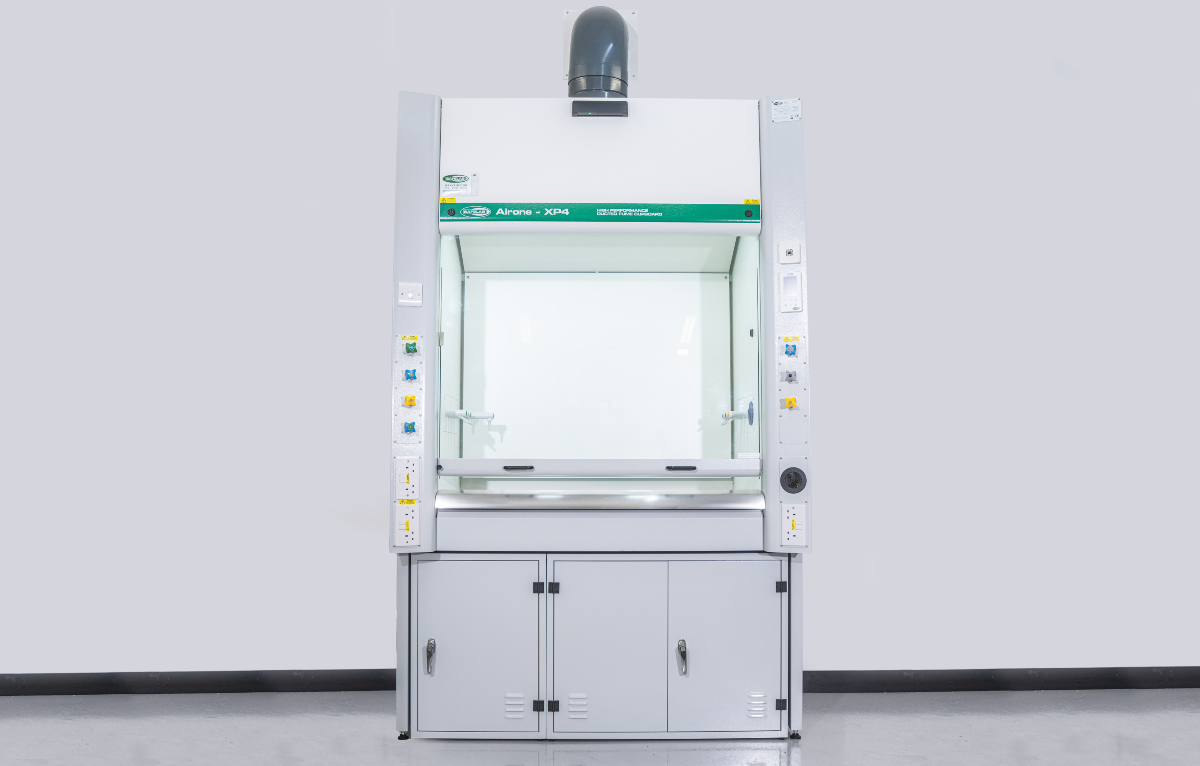
Fume cupboards are a critical safety control in laboratories where hazardous substances are used. Their role is to capture, contain, and remove airborne contaminants before exposure can occur, protecting both users and the wider environment.
In the United Kingdom, fume cupboards are legally classified as Local Exhaust Ventilation (LEV) systems under the Control of Substances Hazardous to Health Regulations (COSHH). This means they must be regularly examined, tested, and maintained to ensure they continue to perform effectively.
Despite this, fume cupboard testing is often treated as a routine compliance task rather than a vital safety process. In reality, performance can degrade over time due to airflow issues, system wear, or incorrect use, often without visible signs.
This guide explains the fume cupboard testing requirements in the UK, including COSHH Regulation 9, testing frequency, what a compliant examination involves, applicable standards, and how to maintain ongoing compliance.
Quick answer: Fume cupboard testing requirements in the UK
In the UK, fume cupboards must be tested at least every 14 months under COSHH Regulation 9.
A compliant test includes airflow measurement, containment assessment, system checks, and formal reporting by a competent person.
Additional testing may be required depending on risk, usage, and system performance.
👉 Related: What Is a Fume Cupboard? How It Works, Types, and Uses(opens in new tab)
In this guide
COSHH Regulation 9 and legal requirements for fume cupboard testing
Under COSHH, employers have a legal duty to prevent or adequately control exposure to hazardous substances. Where engineering controls such as fume cupboards are used, they must be proven to be effective.
Fume cupboards are classified as LEV systems, which brings them under COSHH Regulation 9. This requires that systems are:
- Maintained in an efficient state
- Kept in good repair
- Subject to thorough examination and testing
This is a legal requirement, not guidance or best practice. Duty holders are responsible for ensuring that testing is carried out and that systems continue to perform as intended.
Testing is also essential for demonstrating compliance during:
- HSE inspections
- internal audits
- accreditation processes
 See also: Fume Cupboard Commissioning in the UK
Related: Why Fume Cupboards Fail Testing
Why fume cupboard testing is essential (beyond compliance)
While COSHH defines the legal requirement, the underlying reason for testing is safety.
Fume cupboards do not maintain consistent performance indefinitely. Over time:
- airflow can reduce gradually
- filters can lose effectiveness
- fans and duct systems can deteriorate
These issues are rarely obvious in day-to-day use. A cupboard may appear to function normally while failing to provide adequate containment.
This creates a false sense of security, where users believe they are protected when they are not.
Testing provides:
- objective verification of performance
- early identification of faults
- assurance that exposure is being controlled
How often should fume cupboards be tested in the UK?
COSHH requires that LEV systems undergo a thorough examination and test at least every 14 months.
This is the legal minimum.
In practice, most organisations adopt a 12-month testing schedule, which:
- simplifies compliance management
- aligns with internal audit cycles
- reduces the risk of overdue testing
When more frequent testing may be required
More frequent testing may be necessary where:
- highly hazardous substances are used
- processes generate significant airborne contaminants
- cupboards are heavily used
- previous failures or performance issues have occurred
Any change in testing frequency should be based on a documented risk assessment.
What does a COSHH-compliant fume cupboard test involve?
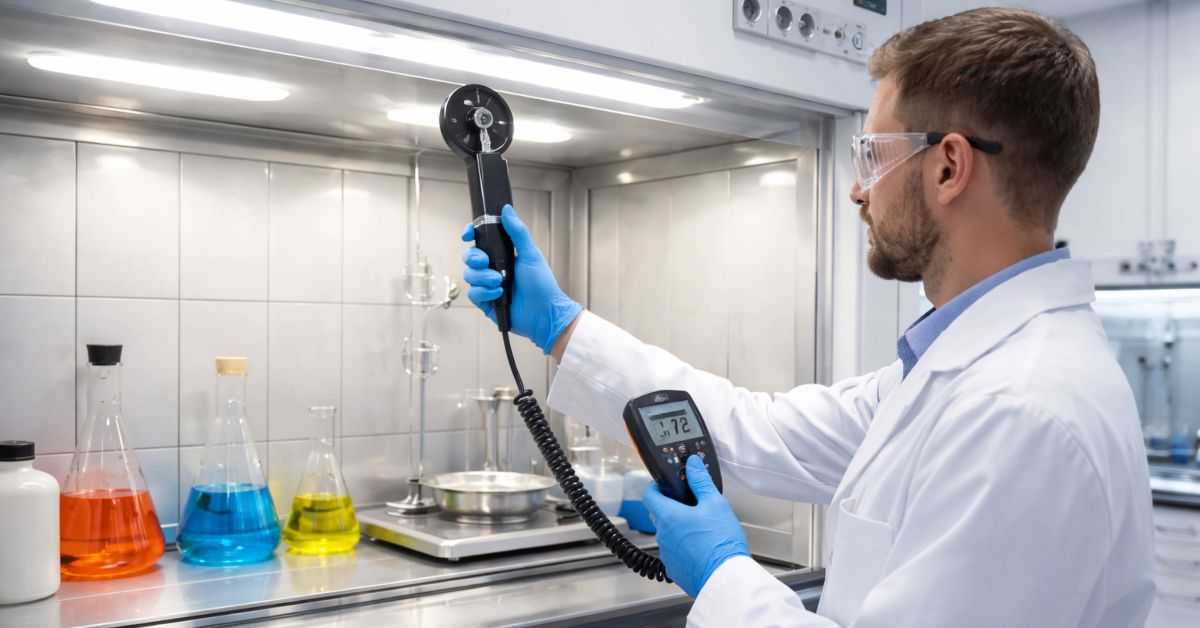
A compliant test is a detailed technical assessment of performance, not just a visual check.
Airflow (Face Velocity) testing
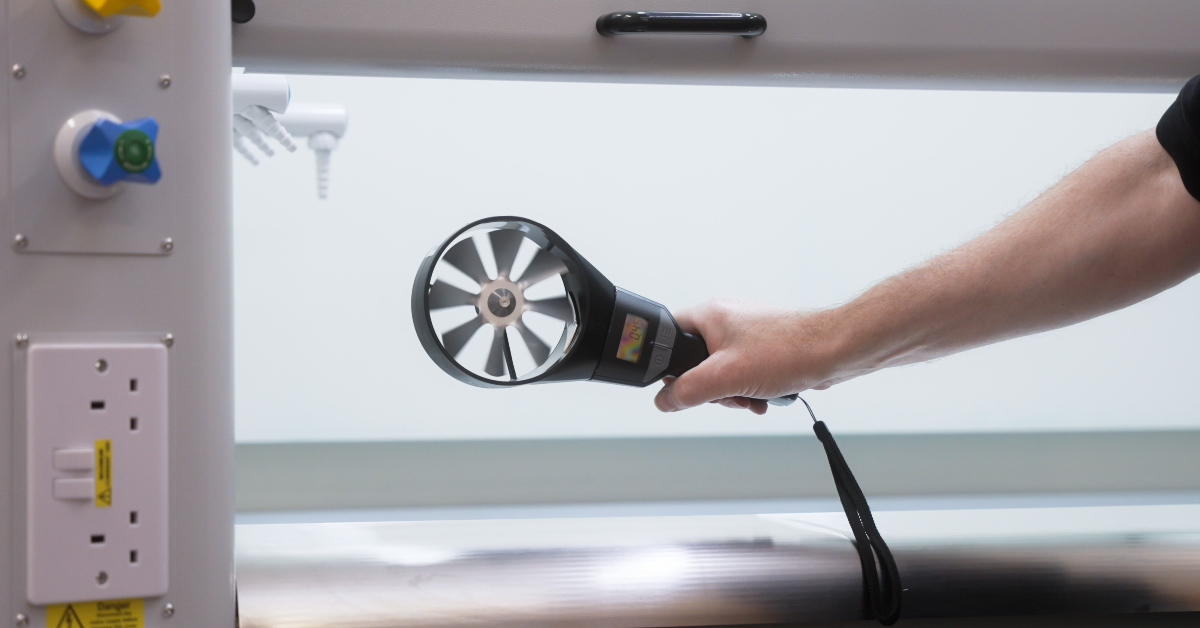
Face velocity is measured across the sash opening to assess how effectively air is drawn into the cupboard. Measurements are taken at multiple points to ensure accuracy.
Containment testing
Airflow alone does not guarantee safety.
Containment testing assesses whether hazardous substances are effectively contained within the working area. This is typically carried out using:
- smoke visualisation
- airflow pattern observation
This helps identify turbulence or areas where contaminants may escape.
Physical condition assessment
The condition of the cupboard directly affects performance. Testing includes checks on:
- sash operation and stability
- seals and structural integrity
- internal surfaces
System performance (LEV system)
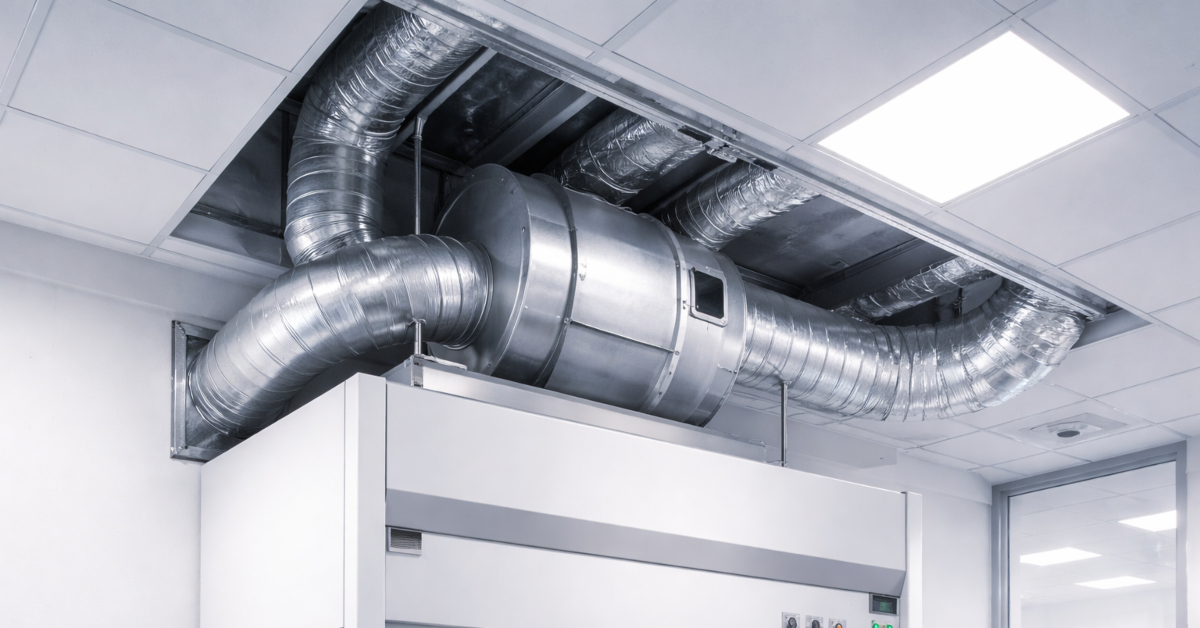
Fume cupboard performance depends on the wider system, including:
- ductwork
- fans
- extract systems
A fault elsewhere can reduce effectiveness at the cupboard. For new or modified systems, our guide to fume cupboard installation requirements in the UK explains how ductwork, fans, services, and room layout should be considered before the system is put into use.
Safety systems
Safety features must be tested, including:
- airflow alarms
- monitoring systems
- interlocks
Test reporting
The results are documented in a formal report, which includes:
- measurements and observations
- pass/fail outcome
- required corrective actions
UK standards for fume cupboard testing (BS EN 14175 & BS EN 17242)
COSHH defines the legal obligation to test, but standards define how testing should be carried out.
Ducted fume cupboards - BS EN 14175
This standard covers:
- airflow performance
- containment testing
- evaluation criteria
It provides a consistent framework for assessing ducted systems.
For new ducted installations, selecting a BS EN 14175 ducted fume cupboard helps ensure the system is designed around the relevant performance, containment, and testing framework from the outset.
Ductless / Recirculating fume cabinets - BS EN 17242
For recirculating systems, BS EN 17242 applies.
This focuses on:
- filtration performance
- safe recirculation of air
- ensuring contaminants are effectively removed
Safelab’s ductless fume cupboards are designed for applications where filtration performance, monitoring, maintenance, and correct use are central to safe operation.
HSE Guidance (HSG258)
HSG258 provides practical guidance on:
- LEV testing methods
- reporting requirements
- competence expectations
It is widely regarded as the benchmark for implementing COSHH requirements.
COSHH record keeping requirements

COSHH requires that records of testing are kept for at least five years.
What must be included in a test report?
A compliant report includes:
- system identification
- test date
- methods used
- results and findings
- required actions
- details of the competent person
Why record keeping matters
Accurate records:
- demonstrate compliance
- support audits and inspections
- allow performance tracking over time
By reviewing historical data, organisations can identify trends and address issues proactively.
Common fume cupboard compliance failures
Most compliance failures are procedural rather than technical.
Common issues include:
- missed or delayed testing
- poor scheduling systems
- reliance on informal checks
- incomplete or missing documentation
- failure to act on minor issues
Small issues such as reduced airflow can indicate larger underlying problems.
Regular fume cupboard servicing and maintenance can help identify minor issues before they become failed tests, compliance gaps, or safety risks.
Competence requirements for LEV testing
COSHH requires testing to be carried out by a competent person.
Competence involves:
- technical knowledge of LEV systems
- appropriate training
- practical experience
Testing is not just about taking measurements. It requires understanding:
- airflow behaviour
- system interactions
- how to interpret results
Without this expertise, systems may be incorrectly assessed, creating significant risk.
Maintaining compliance between tests

Testing provides a snapshot of performance, but compliance must be maintained continuously.
Key requirements include:
- regular maintenance and servicing
- filter replacement where applicable
- inspection of components
The role of user training
User behaviour has a direct impact on performance.
Incorrect use can reduce containment, even if the system is functioning correctly. Training should cover:
- correct sash positioning
- safe working practices
- avoiding airflow disruption
See: Safe Use of Fume Cupboards: Best Practice Guidance for UK Laboratories
What happens if a fume cupboard fails testing?
If a fume cupboard fails testing, it must not be used.
The correct process is:
- Remove the cupboard from service
- Implement alternative control measures if required
- Carry out repairs or adjustments
- Re-test the system before returning it to use
Even where a cupboard passes, any recommendations should be addressed promptly.
Ducted vs ductless fume cupboards: Testing considerations
Testing requirements differ depending on system type.
Ducted systems:
- rely on external extraction
- assessed primarily on airflow and containment
Ductless systems:
- rely on filtration
- require verification of filter performance
Understanding these differences is essential for applying the correct standards and ensuring compliance.
See: Ducted vs Ductless Fume Cupboards: Which Should You Choose?
Summary: Ensuring COSHH compliance for fume cupboards
Fume cupboard testing is a legal requirement under COSHH, but it is also a critical part of maintaining a safe laboratory environment.
A compliant approach includes:
- regular, scheduled testing
- competent testing personnel
- accurate record keeping
- ongoing maintenance
- effective user training
When these elements are in place, fume cupboards can provide reliable protection and support safe laboratory operation.

Fume cupboard testing and COSHH compliance support
Ensuring compliance with COSHH and maintaining effective fume cupboard performance requires a structured, professional approach.
Safelab Systems can support with:
- COSHH-compliant LEV testing
- performance assessments and reporting
- troubleshooting and system optimisation
- ongoing compliance support
Frequently Asked Questions
How often should fume cupboards be tested in the UK?
Fume cupboards must be tested at least every 14 months under COSHH. In practice, most organisations adopt annual testing.
What is COSHH Regulation 9?
COSHH Regulation 9 requires that LEV systems, including fume cupboards, are maintained, kept in good repair, and subject to thorough examination and testing.
What happens if a fume cupboard fails testing?
It must be taken out of service immediately, repaired, and re-tested before it can be used again.
Who can carry out fume cupboard testing?
Testing must be carried out by a competent person with the appropriate knowledge, training, and experience in LEV systems.
What is the difference between BS EN 14175 and BS EN 17242?
BS EN 14175 applies to ducted fume cupboards, while BS EN 17242 applies to ductless (recirculating) systems and focuses on filtration performance.