

Fume cupboard installation requirements in the UK
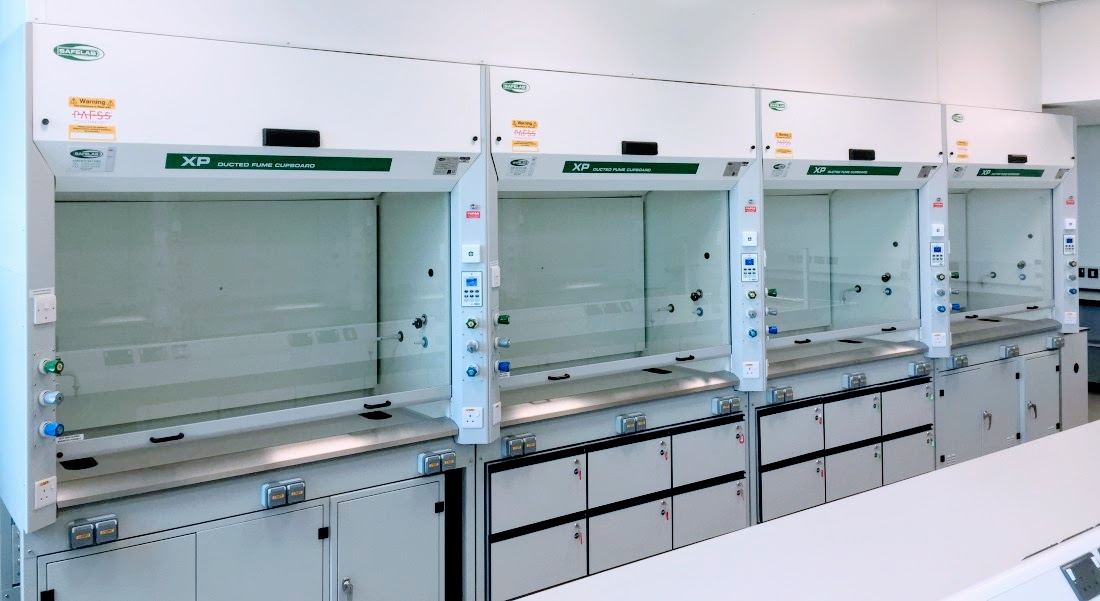
Installing a fume cupboard is not simply a case of choosing a unit, placing it in a laboratory, and connecting it to services.
A fume cupboard is a safety-critical system. Its performance depends on the cupboard itself, the room it sits in, the ventilation strategy, the substances being handled, the quality of the installation, and the commissioning process that follows. When one of these elements is overlooked, the result can be poor containment, difficult maintenance, unnecessary energy use, failed testing, or a system that is not suitable for the work being carried out.
For UK laboratories, installation decisions also sit within a wider compliance framework. COSHH requirements, Local Exhaust Ventilation guidance, system testing, safe use, and relevant standards such as BS EN 14175 and BS EN 17242 all need to be considered. The exact requirements will depend on whether the system is ducted or ductless, the type of laboratory, and the application.
This guide explains the main fume cupboard installation requirements in the UK, including ductwork, services, airflow, room layout, commissioning, and common mistakes to avoid. It is written for schools, colleges, universities, consultants, facilities teams, laboratory managers, and anyone planning a new installation, replacement, or refurbishment project.
Safelab supports laboratories across the UK with fume cupboard specification, installation planning, compliance considerations, and ongoing servicing. That practical experience matters, because successful installations are rarely about one product in isolation. They depend on getting the whole system right.
Safelab’s fume cupboard design and manufacture capability supports this process by considering the cupboard, services, ventilation strategy, and installation environment together.
Quick answer: What are the main fume cupboard installation requirements?
Fume cupboard installation requirements depend on the system type, application, room layout, ventilation strategy, and services required.
A ducted fume cupboard usually needs:
- a suitable duct route
- an extract fan
- safe external discharge
- correct airflow design
- integration with the room ventilation system
- commissioning and testing before use
A ductless fume cupboard usually needs:
- correct filter selection
- suitability assessment for the substances being used
- appropriate room positioning
- monitoring and maintenance arrangements
- testing and user guidance
In both cases, the system must be suitable for the intended work, installed correctly, commissioned before use, and maintained over time.
👉 Related: What Is a Fume Cupboard? How It Works, Types, and Uses(opens in new tab)
In this guide
- What affects fume cupboard installation requirements
- Ducted fume cupboard installation requirements
- Ductless fume cupboard installation requirements
- Ductwork, fans, and external discharge
- Water, gas, electrical, and drainage services
- Room layout, airflow, and positioning
- Installation in schools, universities, and industrial labs
- What happens after installation
- Common installation mistakes
- How to plan a successful installation
What affects fume cupboard installation requirements?
The right installation approach depends on the work being carried out in the laboratory.
Before thinking about duct routes, fan positions, filters, or services, it is important to define the application. A fume cupboard used occasionally for school demonstrations will not have the same requirements as a system used daily in a university research laboratory or industrial testing environment.
Key questions include:
- What substances will be used?
- Are the substances known and controlled?
- Are vapours, fumes, dusts, or particulates involved?
- How often will the cupboard be used?
- Who will use it?
- Is the installation part of a new build, refurbishment, or replacement?
- Is the building suitable for ductwork?
- Are there constraints around roof access, external discharge, or services?
- Is energy performance a key consideration?
These questions shape the system choice.
In some cases, a ducted system will be the most appropriate solution. In others, a ductless fume cupboard may be suitable, provided the application is well understood and the correct filtration is specified.
👉 See also: Ducted vs Ductless Fume Cupboards: Which Should You Choose?
Installation planning should begin with the risk and application, not with a product catalogue. That is the best way to avoid under-specification, over-specification, and avoidable project costs.
Ducted fume cupboard installation requirements
A ducted fume cupboard extracts air from the laboratory and discharges it outside the building through a ductwork system.
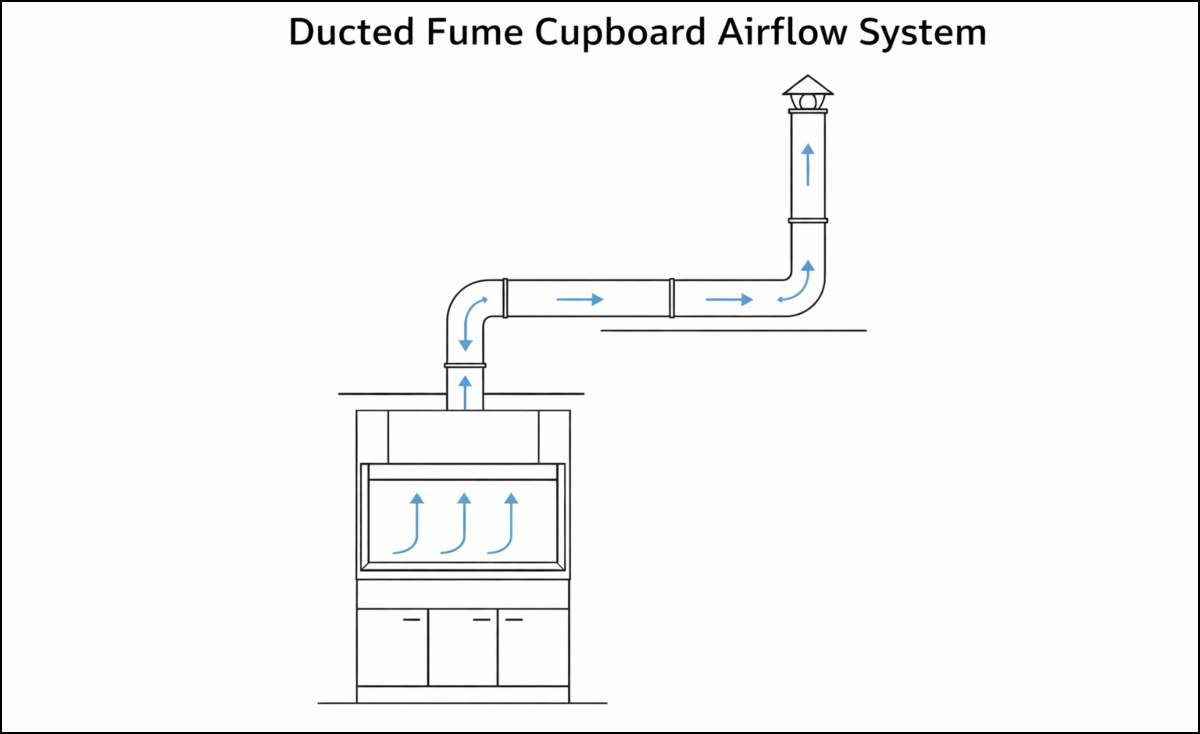
This type of installation is commonly used where:
- substances are varied or unknown
- higher-risk work is carried out
- external extraction is preferred
- long-term flexibility is required
- the laboratory has suitable infrastructure for ductwork
In industrial, university, and research laboratories, the Airone XP4 is a ducted fume cupboard option for projects where external extraction, containment performance, and long-term flexibility are important.
A ducted installation usually involves more building integration than a ductless system. The cupboard must connect to an extract route, which may pass through ceilings, walls, plant spaces, or roof areas before discharge.
The main requirements include:
- suitable ductwork design
- correct extract fan specification
- safe discharge location
- airflow balancing
- room make-up air
- electrical connections
- any required water, gas, or drainage services
- commissioning and performance testing
The duct route is often the factor that has the biggest impact on installation complexity. A short, simple route to atmosphere is very different from a long duct run through multiple spaces or a building with limited access.
For ducted systems, BS EN 14175 is an important reference point because it covers performance, safety, and testing requirements for ducted fume cupboards.
 Related: BS EN 14175 Ducted Fume Cupboards: UK Guide
A ducted system can be a robust long-term solution, but only when the cupboard, extract system, and room ventilation are designed as a complete system.
Ductless fume cupboard installation requirements
A ductless fume cupboard, also known as a recirculating fume cupboard, filters contaminated air and returns it to the room.
Safelab’s ductless fume cupboards can be considered where ductwork is impractical, the substances are known, and the application is suitable for recirculating filtration.
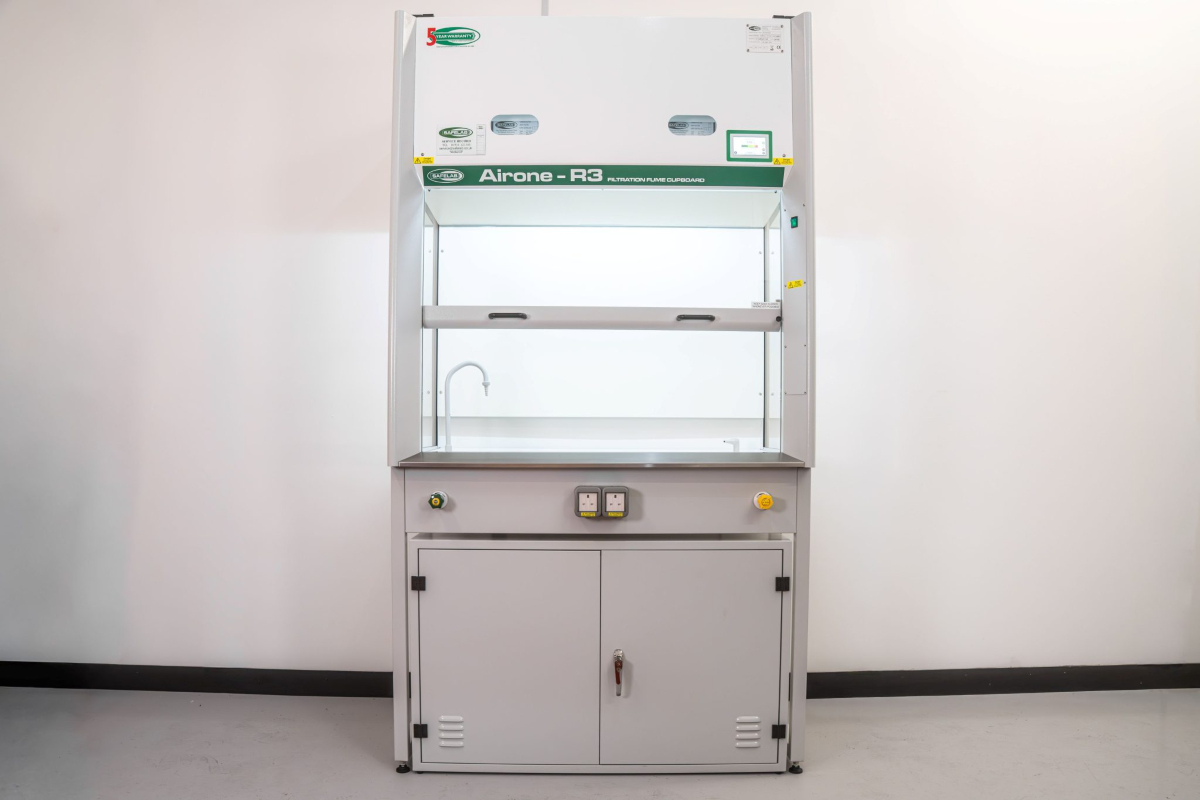
Because it does not need external ductwork, installation can be simpler and less disruptive. This can make ductless systems attractive in schools, temporary laboratories, existing buildings, retrofit projects, or rooms where external duct routes are difficult.
However, ductless does not mean “no installation requirements”.
A ductless system must still be suitable for the work being carried out. The key requirement is filtration suitability. Filters must be selected based on the substances being used, and the system must be operated within its intended limits.
Important considerations include:
- the chemicals or substances being handled
- filter compatibility
- filter capacity
- monitoring systems
- filter replacement procedures
- room size and ventilation
- user training
- maintenance arrangements
A ductless fume cupboard may be inappropriate where substances are unknown, highly hazardous, unsuitable for filtration, or likely to change significantly over time.
BS EN 17242 is the key standard for ductless filtration fume cupboards. It is particularly relevant when assessing performance, filtration, and safe operation.
See also: BS EN 17242 Ductless Fume Cupboards: UK Guide
Ductless systems can offer excellent flexibility, but they need careful specification. The installation may be physically simpler, but the application assessment is just as important.
Ductwork, fans, and external discharge
For ducted fume cupboards, ductwork is one of the most important installation considerations.
A poorly planned duct route can affect performance, increase noise, raise energy consumption, and make maintenance more difficult. It can also increase installation cost significantly.
Key ductwork considerations include:
- route length
- number of bends
- duct diameter
- material compatibility
- access for inspection and maintenance
- fan position
- discharge height
- proximity to windows, doors, air intakes, and occupied areas
External discharge must be considered carefully. Extracted air should not be discharged where it may re-enter the building, affect neighbouring spaces, or create a risk to people outside.
The fan must also be correctly specified. It needs to provide sufficient extraction while working with the duct route and maintaining suitable airflow at the fume cupboard face.
In some projects, the fume cupboard may connect to an existing extract system. That can be possible, but it should never be assumed. Existing systems need to be assessed to confirm whether they have sufficient capacity and whether changes could affect other connected equipment.
A ducted fume cupboard is not just a cabinet. It is part of a ventilation system. The ductwork and fan are central to whether it performs properly.
Water, gas, electrical, and drainage services
Many fume cupboards require services as part of the installation.
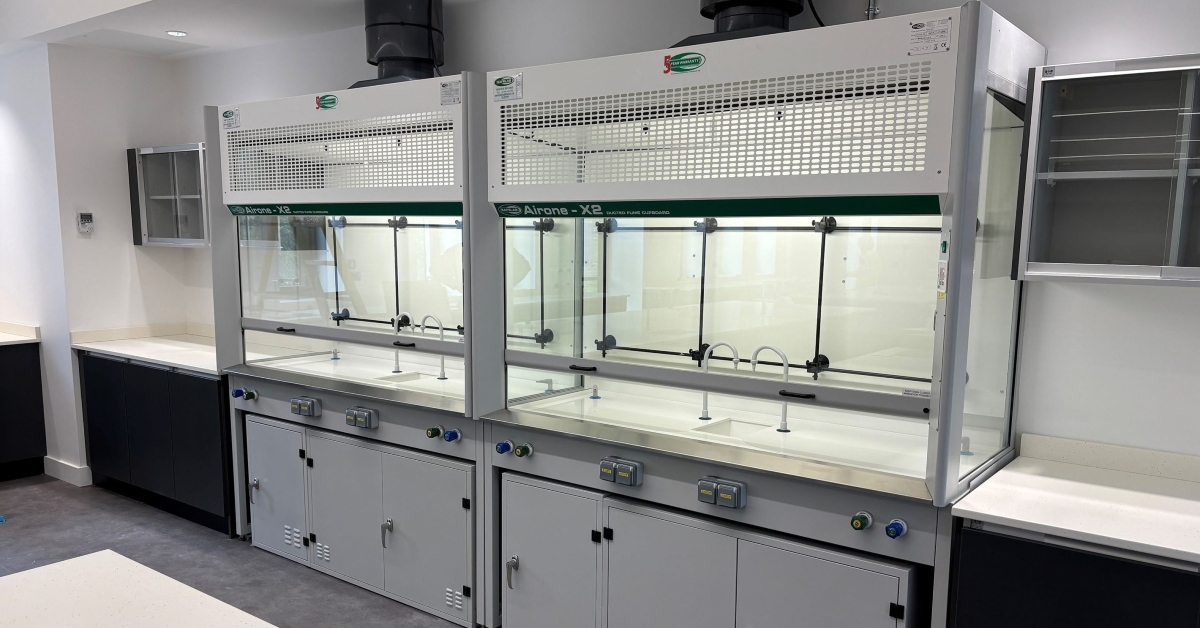
These can include:
- electrical sockets
- lighting
- airflow alarms
- fan controls
- water taps
- gas taps
- vacuum or compressed air
- sinks
- drainage
- data or monitoring connections
The exact services depend on the laboratory application.
A school fume cupboard may need gas and water for demonstrations. A research laboratory may need additional power outlets or specialist service connections. Some applications may require chemical-resistant sinks, specific worktop materials, or more robust internal linings.
Services need to be planned early because they affect:
- cupboard design
- installation time
- building works
- health and safety arrangements
- future usability
- maintenance access
Poor service planning can create problems later. A cupboard may be technically installed but difficult to use if taps are poorly positioned, sockets are insufficient, or drainage has not been properly considered.
This is also where specification and installation overlap. The most successful projects define service requirements before the cupboard is ordered, not during installation.
👉 Related: How to Specify a Fume Cupboard: UK BIM & NBS Guide
Room layout, airflow, and positioning
Where a fume cupboard is installed in the room matters.
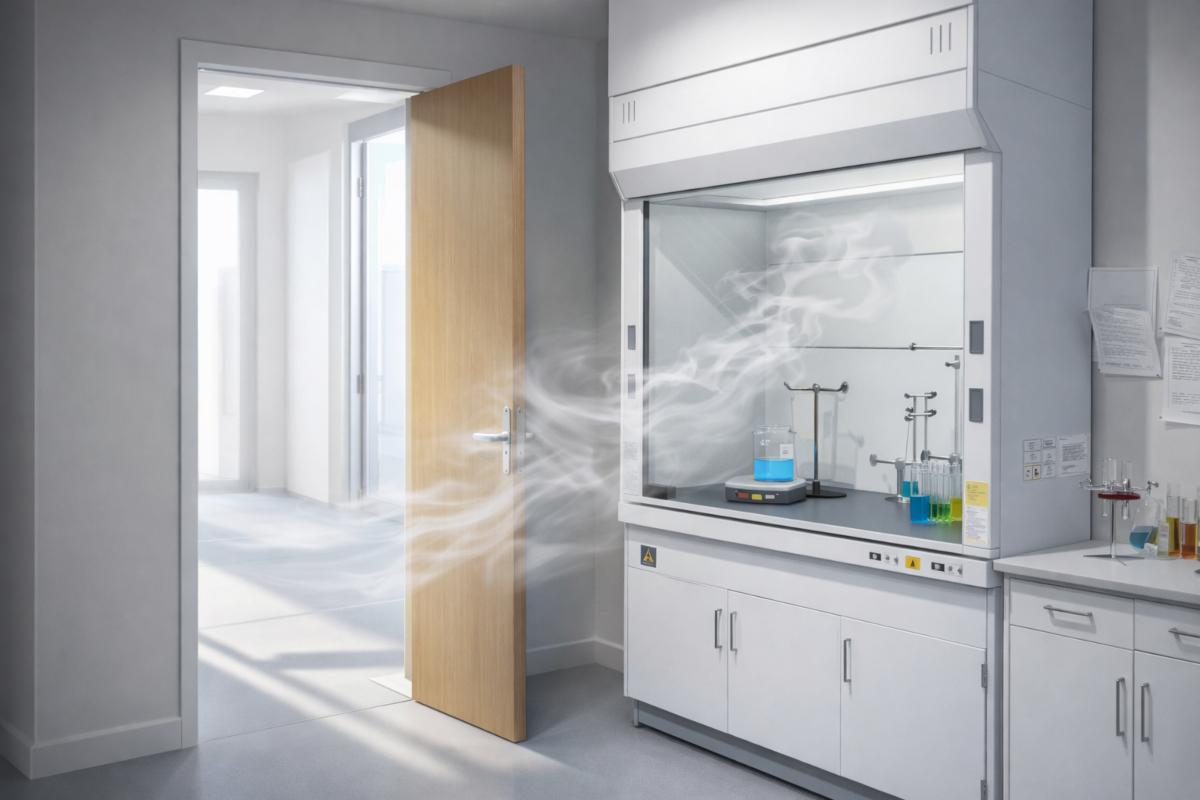
Fume cupboards rely on stable airflow. Even a well-designed cupboard can perform poorly if it is installed in a location affected by draughts, door movement, supply air grilles, or heavy foot traffic.
Good positioning should consider:
- distance from doors
- nearby walkways
- room air supply
- openable windows
- ceiling diffusers
- user access
- visibility
- emergency routes
- proximity to benches and services
- future changes to room layout
A common mistake is treating the cupboard as a standalone item. In reality, the room environment can affect containment.
For example, air moving across the face of the cupboard can create turbulence. People walking quickly past the opening can disturb airflow. Doors opening nearby can change pressure and affect capture performance. Supply air blowing directly at the cupboard can interfere with extraction.
These issues may only become obvious during commissioning or testing, which is why positioning should be considered early in the design process.
Related: Safe Use of Fume Cupboards: Best Practice Guidance for UK Laboratories
A good installation supports safe use. A poor location can make safe use harder, even if the cupboard itself is suitable.
Installation in schools, universities, and industrial laboratories
Different environments have different installation priorities.
Schools and colleges
In schools and colleges, fume cupboards are often used for demonstrations, teaching, and controlled practical work. Installations need to support safe supervision, visibility, ease of use, and compliance with relevant education-sector guidance such as CLEAPSS G9.
Key considerations include:
- suitability for student environments
- teacher visibility
- robust construction
- simple controls
- safe working height
- regular testing and maintenance
- clear user instructions
A system that is technically suitable for one environment may not be right for a school laboratory if it is too complex, difficult to supervise, or poorly matched to teaching needs.
👉 See also: Fume Cupboards for Schools: CLEAPSS G9 Compliance Guide
Universities and higher education
Universities often have a wider range of applications. Teaching laboratories, research spaces, and specialist facilities may all require different approaches.
Key considerations include:
- varied chemical use
- higher usage levels
- multiple users
- research flexibility
- integration with building services
- long-term maintenance strategy
- energy performance
Higher education installations often benefit from early coordination between estates teams, consultants, end users, and suppliers.
Industrial laboratories
Industrial environments may involve more demanding processes, higher-risk substances, or stricter operational requirements.
Key considerations include:
- chemical resistance
- process compatibility
- system durability
- extraction reliability
- testing access
- downtime planning
- integration with wider safety systems
In these environments, installation decisions often have long-term operational consequences. A poorly specified or poorly positioned system may affect productivity, safety, and compliance.
What happens after installation?
A fume cupboard should not be put into routine use simply because it has been physically installed.
After installation, the system should be commissioned and tested.
Commissioning confirms that the cupboard and associated systems are working as intended in the actual laboratory environment. This may include checks on airflow, alarms, controls, ductwork, fan operation, sash movement, and interaction with the room.
For ducted systems, commissioning may also involve system balancing and verification of extract performance. For ductless systems, it may include filter checks, airflow checks, and confirmation that the system is suitable for the intended application.
After commissioning, the system enters its normal testing and maintenance cycle.
Under COSHH, Local Exhaust Ventilation systems require regular examination and testing to ensure they continue to perform effectively. This is not just a paperwork exercise. It helps confirm that the system still protects users and controls exposure.
👉 See also: Fume Cupboard Commissioning in the UK
👉 Related: Fume Cupboard Testing Requirements in the UK
Installation is therefore only one stage in the lifecycle. A properly installed fume cupboard still needs ongoing inspection, maintenance, and safe use.
Common fume cupboard installation mistakes
Many installation problems are avoidable.
Some of the most common mistakes include:
Choosing the wrong system type
A ductless system may be selected because ductwork is difficult, even when the application is not suitable for filtration. Equally, a ducted system may be specified where a ductless option would have provided a more efficient and flexible solution.
The decision should always be based on risk, substances, building constraints, and long-term use.
Ignoring the duct route
For ducted systems, the duct route can make or break the project. Long or complex duct runs can affect cost, performance, noise, and maintenance.
Ductwork should be considered before the cupboard is ordered.
Poor room positioning
This checks how well the cabinet prevents contaminants from escaping into the room during use.
Both matter. A system with good containment but poor filtration is still a problem, and vice versa.
Forgetting services
Water, gas, power, drainage, alarms, and controls all need to be planned. Retrofitting services later can add cost and disruption.
Not allowing for commissioning
Commissioning should not be treated as optional. It is the step that confirms whether the installed system performs correctly.
Thinking only about upfront cost
A lower-cost installation may become more expensive if it leads to high energy use, poor performance, filter issues, or failed testing.
👉 Related: How Much Does a Fume Cupboard Cost in the UK?
The best installations are planned around suitability, compliance, usability, and whole-life value.
How to plan a successful fume cupboard installation
A successful installation starts before the cupboard is ordered.
Use this practical process:
1. Define the application
Identify the substances, processes, frequency of use, user groups, and risk level.
2. Decide whether ducted or ductless is appropriate
Consider both safety and practicality. Do not choose based on installation convenience alone.
3. Assess the room
Look at airflow, layout, services, access, doors, supply air, and future flexibility.
4. Review building constraints
For ducted systems, confirm duct routes, fan locations, roof access, discharge points, and building integration.
5. Define service requirements
Confirm gas, water, power, drainage, lighting, alarms, and control requirements.
6. Consider energy and lifecycle costs
Think beyond the purchase price. Include energy use, filter replacement, testing, servicing, and maintenance access.
7. Plan commissioning and testing
Make sure the system is verified before it is used.
8. Get specialist input early
Early advice can prevent expensive changes later. It can also help ensure the final system is suitable, compliant, and practical for everyday use.
Safelab supports fume cupboard projects across the UK, including system selection, installation planning, specification advice, commissioning considerations, compliance support, and ongoing servicing. Whether you are planning a single replacement or a wider laboratory refurbishment, getting the installation requirements right at the start will help reduce risk and improve long-term performance.
Need help with fume cupboard installation?
Fume cupboard installation requirements depend on the system, the room, the building, and the application.
Safelab can help you assess:
- whether ducted or ductless is suitable
- what installation route is practical
- what services are required
- how building constraints affect specification
- how commissioning and testing should be planned
- how to avoid unnecessary cost or complexity
If you are planning a new fume cupboard installation, replacing an existing system, or refurbishing a laboratory, it is worth getting expert advice before committing to a specification.
Frequently Asked Questions
Do all fume cupboards need ductwork?
No. Ducted fume cupboards require external ductwork, but ductless fume cupboards use filtration and recirculate air back into the room. The right choice depends on the application, substances, room, and compliance requirements.
Can a fume cupboard be installed anywhere in a laboratory?
No. Positioning matters. Doors, walkways, air supply grilles, windows, and room airflow can all affect performance. A suitable location should be chosen before installation.
What services are needed for a fume cupboard?
This depends on the application. Some cupboards require gas, water, drainage, power, lighting, alarms, or specialist controls. These requirements should be defined during specification.
Is a ductless fume cupboard easier to install?
Usually, yes, because it does not require external ductwork. However, filtration suitability, monitoring, maintenance, and user requirements must still be assessed carefully.
What happens after a fume cupboard is installed?
The system should be commissioned and tested before use. This confirms that it performs correctly in the laboratory environment and provides a baseline for future maintenance and testing.
Can an existing fume cupboard be replaced like-for-like?
Sometimes, but it should not be assumed. Changes in use, standards, ventilation, services, or room layout may mean a different specification is more suitable.
Who should install a fume cupboard?
A fume cupboard should be installed by competent specialists with experience in laboratory systems, ventilation, services, commissioning, and compliance requirements.