

Ducted vs ductless fume cupboards: Which should you choose?
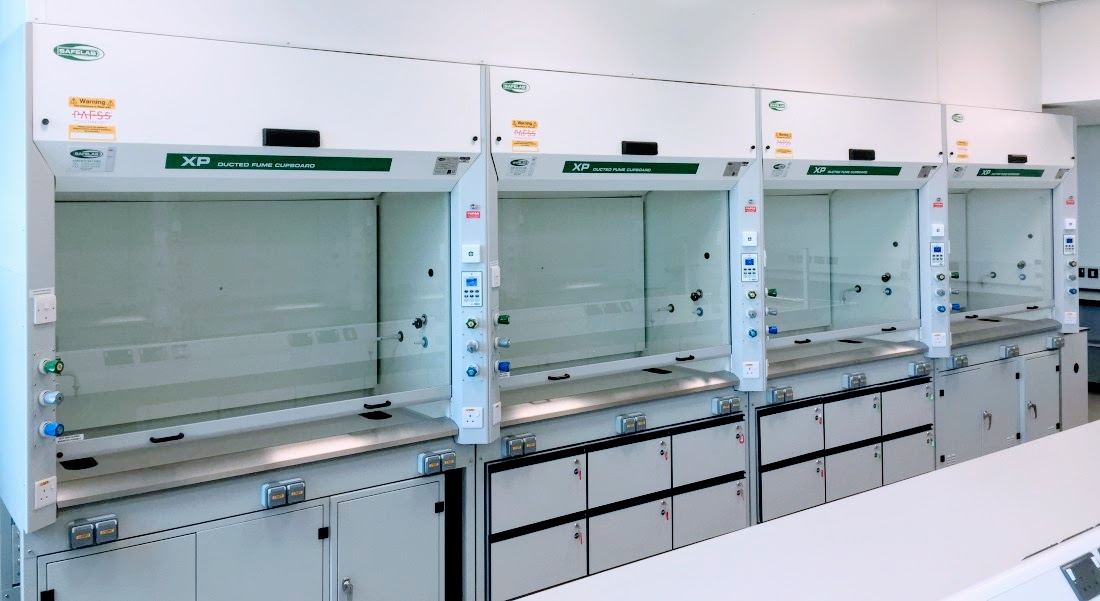
Choosing between ducted and ductless fume cupboards is one of the most important decisions in laboratory design and specification.
Both systems are widely used across UK laboratories, but they operate in fundamentally different ways. The right choice depends on factors such as application, risk level, building constraints, energy use, and long-term operational requirements. In practice, the most appropriate solution often depends on how these systems perform in real laboratory environments, not just how they compare on paper.
While ducted systems are traditionally seen as the default option, ductless (filtration-based) systems have become increasingly viable for many applications when correctly specified.
This guide explains the differences between ducted and ductless fume cupboards, outlines the advantages and limitations of each, and helps you determine which solution is most appropriate for your laboratory.
Quick answer: Ducted vs ductless
- Ducted fume cupboards extract air from the laboratory and discharge it outside via ductwork
- Ductless fume cupboards filter contaminated air and recirculate it back into the room
In simple terms:
- ducted = remove contaminants completely
- ductless = capture and filter contaminants internally
👉 Related: What Is a Fume Cupboard? How It Works, Types, and Uses(opens in new tab)
In this guide
- What is a ducted fume cupboard?
- What is a ductless fume cupboard?
- Key differences between ducted and ductless systems
- Advantages of ducted fume cupboards
- Limitations of ducted fume cupboards
- Advantages of ductless fume cupboards
- Limitations of ductless fume cupboards
- Safety and compliance considerations
- Energy and cost considerations
- When should you choose a ducted fume cupboard?
- When should you choose a ductless fume cupboard?
- How to choose the right system
What is a ducted fume cupboard?
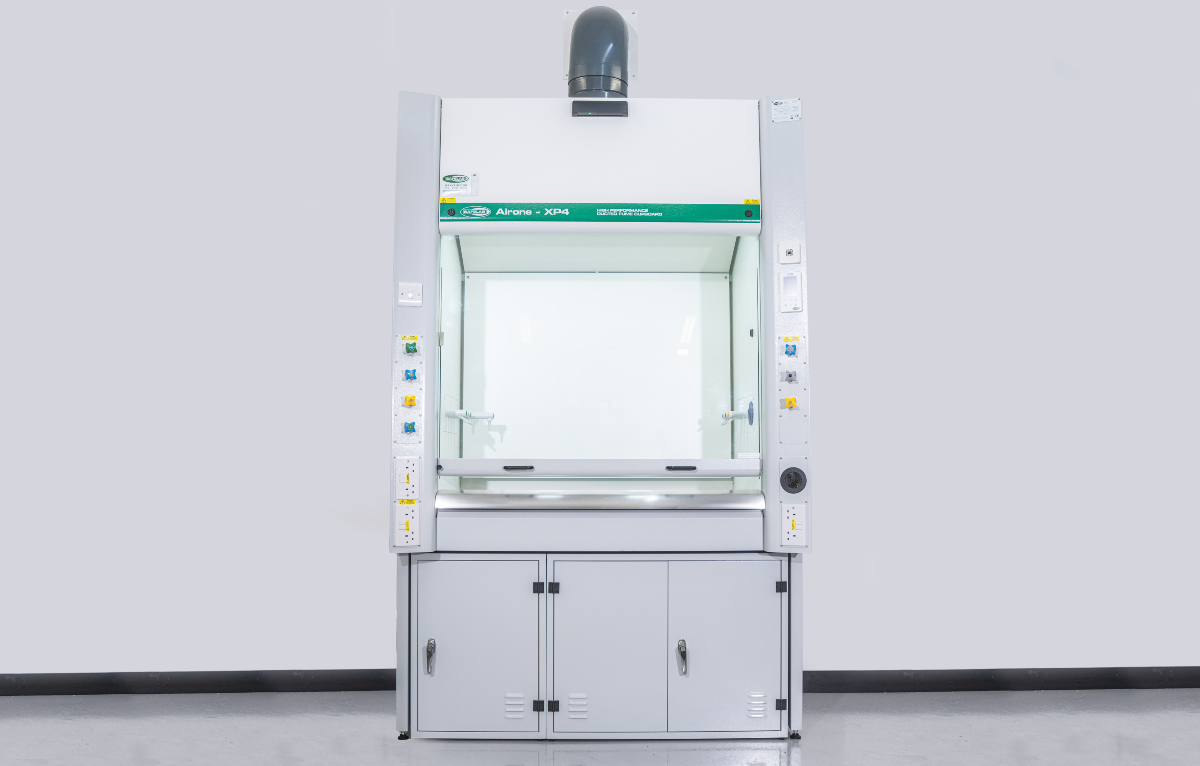
A ducted fume cupboard extracts air from the laboratory through a connected ductwork system and discharges it outside the building.
This means:
- hazardous fumes are removed entirely from the space
- airflow is driven by external fans and ventilation systems
- performance depends on correct system design and installation
Ducted systems are typically used where:
- substances are unknown or highly hazardous
- high levels of containment are required
- long-term flexibility is needed
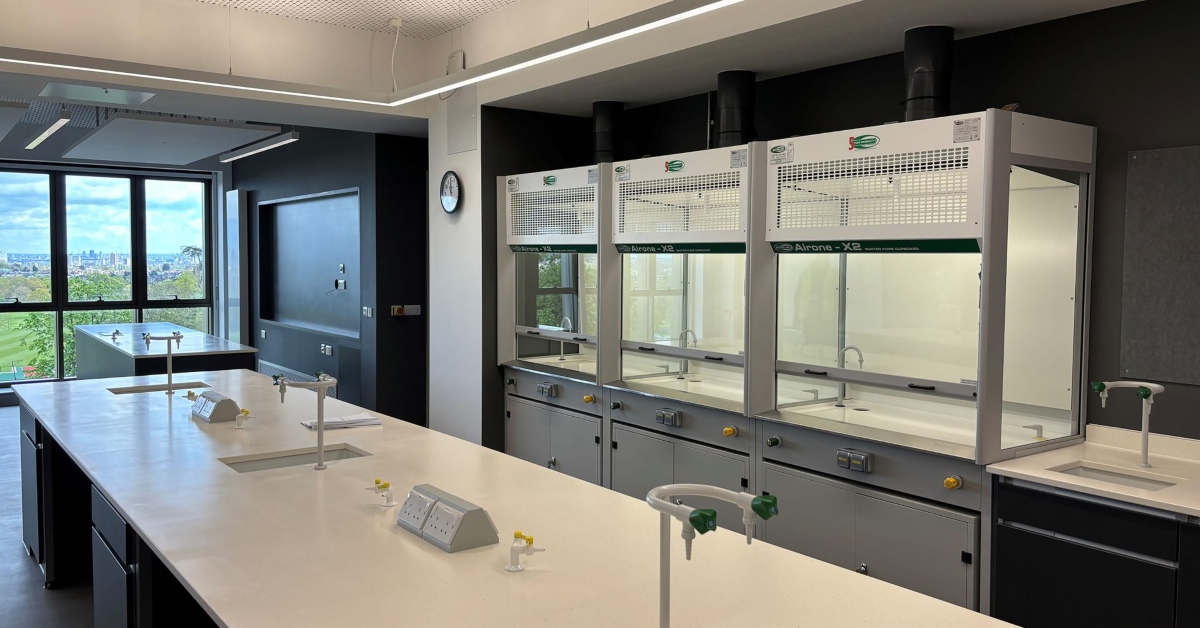
For research, university and industrial laboratories, Safelab’s Airone XP4 is a double-walled ducted fume cupboard suited to higher-demand applications.
What is a ductless fume cupboard?
A ductless fume cupboard uses high-efficiency filters (such as carbon or HEPA) to capture contaminants before recirculating air back into the laboratory.
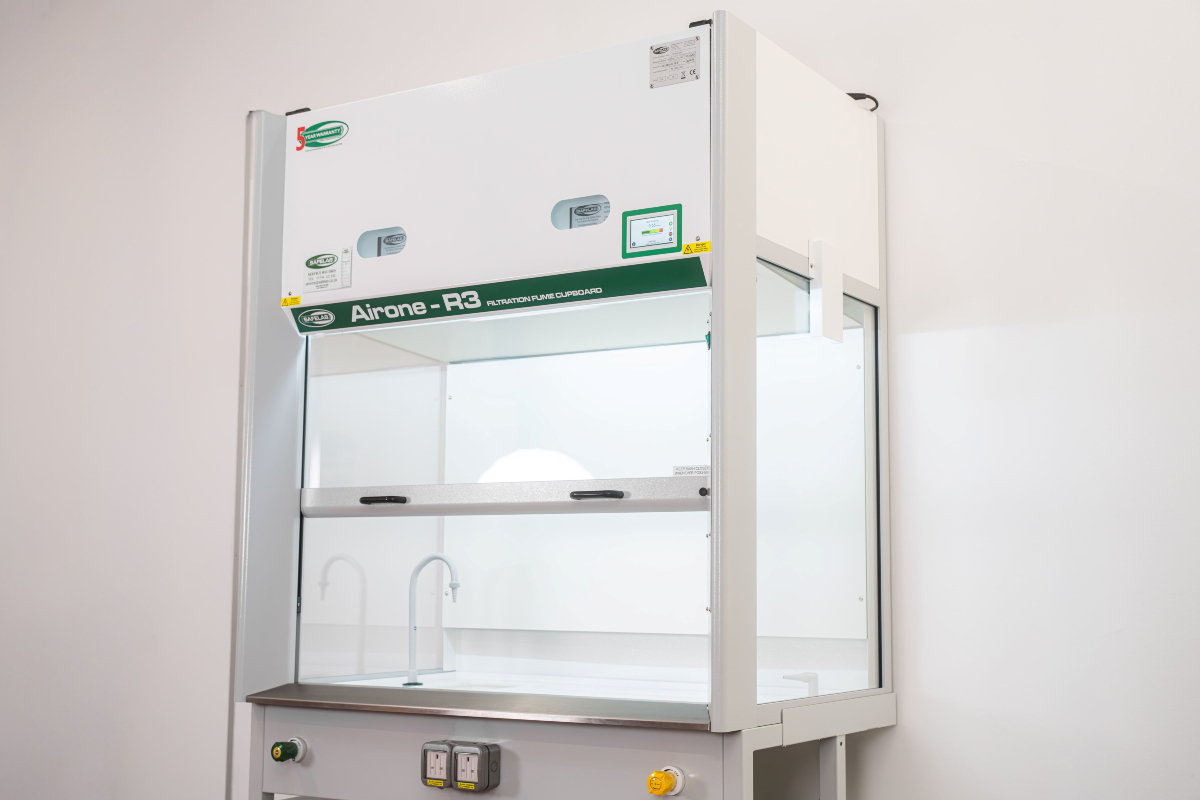
This means:
- no external ductwork is required
- installation is faster and less complex
- performance depends on correct filter selection
Ductless systems are typically used where:
- substances are known and controlled
- flexibility or mobility is required
- ducting is not practical or cost-effective
Safelab’s ductless fume cupboards are designed for defined applications where filtration suitability, monitoring and ongoing maintenance can be properly managed.
Key differences between ducted and ductless systems
Air handling
- ducted: air is extracted and discharged outside
- ductless: air is filtered and returned to the room
Installation
- ducted: requires ductwork, fans, and building integration
- ductless: standalone system with minimal installation
If you are planning a new system, our guide to fume cupboard installation requirements in the UK explains what to consider before deciding between ducted and ductless options.
Flexibility
- ducted: fixed installation
- ductless: can often be relocated or reconfigured
Performance dependency
- ducted: depends on ventilation system design
- ductless: depends on correct filter specification and maintenance
Advantages of ducted fume cupboards
Ducted systems remain the most widely used solution for many laboratories, particularly where safety and flexibility are critical.
They offer several key advantages:
✔ Maximum containment reliability
Hazardous substances are physically removed from the building, reducing reliance on internal filtration.
✔ Suitable for unknown or changing substances
There is no need to match filters to specific chemicals, making ducted systems more versatile.
✔ Established compliance framework
BS EN 14175 provides clear guidance on performance, testing, and verification.
✔ Well suited to high-risk environments
Particularly appropriate for research, industrial, and higher education laboratories.
Limitations of ducted fume cupboards
Despite their strengths, ducted systems come with some practical and operational drawbacks.
✖ Higher installation complexity and cost
Requires ductwork, extract fans, and integration with the building’s ventilation system.
✖ Energy intensive operation
Continuous extraction of conditioned air increases heating and cooling demand.
✖ Less flexibility
Once installed, systems are difficult to relocate or adapt.
✖ Dependent on system design and balance
Poor ductwork design or commissioning can significantly affect performance.
Advantages of ductless fume cupboards
Ductless systems offer a modern alternative where conditions allow for their safe use.
✔ Simpler installation
No ductwork required, making them easier to deploy in existing spaces.
✔ Improved energy efficiency
Air is filtered and recirculated rather than extracted, reducing HVAC demand.
✔ Greater flexibility
Units can often be repositioned or reconfigured as requirements change.
✔ Faster implementation
Suitable for retrofit projects or temporary laboratory setups.
Limitations of ductless fume cupboards
Ductless systems must be carefully specified to ensure safe and effective operation.
✖ Dependent on known substances
Filters must be compatible with the chemicals being used.
✖ Ongoing filter management required
Regular monitoring and replacement are essential to maintain performance.
✖ Not suitable for all applications
High-risk or unknown substances typically require ducted extraction.
✖ Performance linked to maintenance
Incorrect or neglected filter management can compromise safety.
Safety and compliance considerations
Both systems must meet relevant UK standards and regulations.
- ducted systems → BS EN 14175
- ductless systems → BS EN 17242
- both → COSHH Regulation 9 (testing and maintenance)
 Related: Fume Cupboard Testing Requirements in the UK (COSHH Compliance Guide)
Compliance depends not just on the system type, but on:
- correct specification
- proper installation
- ongoing testing and maintenance
Energy and cost considerations
Energy use is a major factor in system selection.
Ducted systems
- continuously extract conditioned air
- increase heating and cooling demand
- higher long-term energy costs
Ductless systems
- recirculate filtered air
- significantly reduce energy consumption
- lower operational costs in suitable applications
For a broader budgeting view, our guide to fume cupboard costs in the UK explains how purchase, installation, energy, and lifetime costs can vary between systems.
When should you choose a ducted fume cupboard?
Ducted systems are typically the best option when:
- working with unknown or variable chemicals
- handling highly hazardous substances
- maximum containment is required
- long-term flexibility is needed
They remain the preferred solution for many:
- universities
- research facilities
- industrial laboratories
When should you choose a ductless fume cupboard?
Ductless systems are suitable when:
- substances are well-defined and compatible with filters
- ducting is not feasible
- energy efficiency is a priority
- flexibility or mobility is required
They are increasingly used in:
- teaching laboratories
- controlled research environments
- retrofit projects
How to choose the right fume cupboard
Selecting the right solution requires a clear understanding of:
- application and risk level
- substances being handled
- building constraints
- energy and sustainability goals
- compliance requirements
There is no one-size-fits-all answer.
In many cases, a combination of systems may be appropriate within the same facility.
In education settings, Safelab’s school fume cupboard range includes ducted and ductless options for teaching laboratories, prep rooms, and demonstration use.
Related: How to Specify a Fume Cupboard (UK BIM & NBS Guide)
Why working with a specialist matters
The choice between ducted and ductless systems is not purely technical—it is project-specific.
Incorrect specification can lead to:
- failed testing
- poor containment
- unnecessary energy costs
- compliance issues
Safelab supports laboratories across the UK with:
- system selection and specification
- compliance with BS EN 14175 and BS EN 17242
- commissioning and performance testing
- long-term support and maintenance
Need help choosing between ducted and ductless?
If you are planning a laboratory project or reviewing existing systems, it is important to ensure that the chosen solution aligns with both safety requirements and operational needs.
Understanding the differences is the first step. Applying them correctly in a real environment is what ensures performance.
Frequently Asked Questions
Is ducted always safer than ductless?
Not necessarily. Both can be safe when correctly specified and maintained.
Can ductless replace ducted systems?
In some applications, yes. But not where substances are unknown or highly hazardous.
Are ductless systems compliant in the UK?
Yes, when designed and tested in line with BS EN 17242.
Which is more energy efficient?
Ductless systems are generally more energy efficient due to reduced air extraction.
Can both systems be used in the same lab?
Yes. Many laboratories use a combination depending on application.