

Fume cupboards for schools: CLEAPSS G9 compliance guide
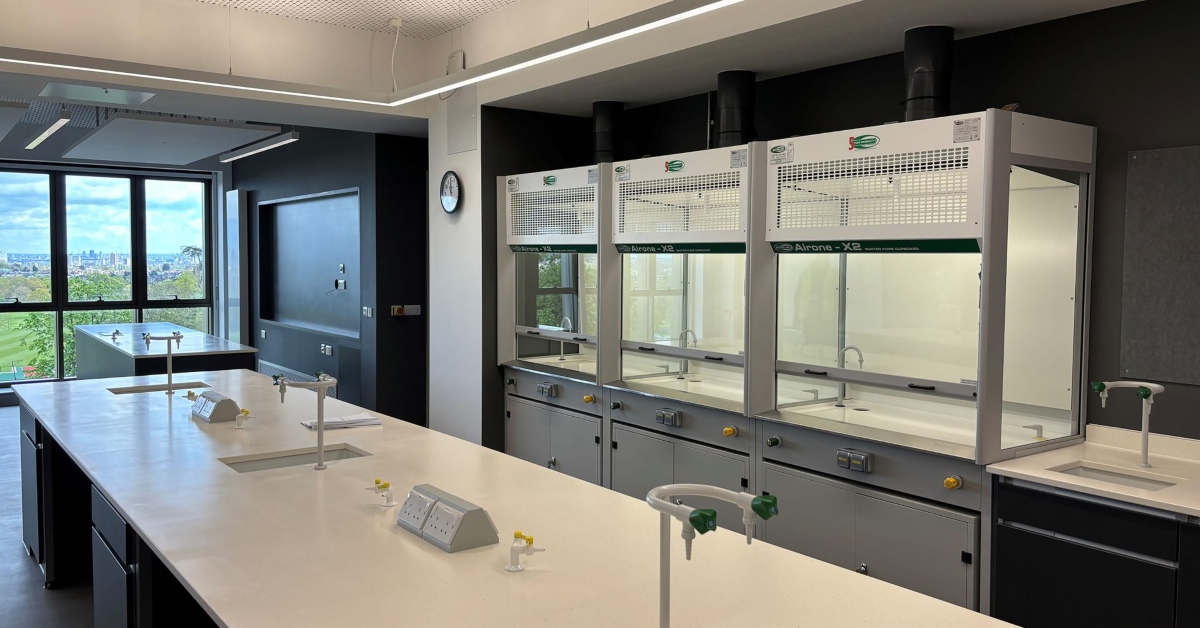
Fume cupboards in schools are more than pieces of laboratory furniture. They are safety-critical systems used to control exposure to hazardous fumes, vapours, and airborne contaminants during practical science. When a cupboard is suitable for the work, correctly installed, and properly maintained, it helps teachers and technicians carry out practical activities safely and confidently. When it is outdated, poorly positioned, badly maintained, or unsuitable for the application, it can create unnecessary risk, disruption, and cost.
CLEAPSS G9 provides school-specific guidance on selecting, using, maintaining, and testing fume cupboards. This is important because teaching laboratories and science prep rooms have distinct users, layouts, and patterns of use. A suitable school fume cupboard must support the curriculum while providing good visibility, straightforward operation, effective supervision, and long-term reliability.
Safelab’s fume cupboards for schools and colleges are designed around the practical requirements of teaching, technician use, supervision, and ongoing maintenance.
This guide is intended for science technicians, heads of science, school business managers, estates teams, multi-academy trusts, consultants, and other responsible bodies. It explains what CLEAPSS G9 means in practice, when a school may need a fume cupboard, how to choose an appropriate system, what to consider when replacing an older unit, and how testing, servicing, and record-keeping support ongoing safety and compliance responsibilities.
Among the questions covered are:
- does a UK school need a fume cupboard?
- what does CLEAPSS G9 say about school fume cupboards?
- how often should a school fume cupboard be tested?
- can a school use a ductless fume cupboard?
- how should a school choose the right fume cupboard?
- when should an older school fume cupboard be replaced?
- what should a school do if a fume cupboard fails its test?
If you are reviewing an ageing cupboard, planning a laboratory refurbishment, or trying to clarify school fume cupboard requirements, this guide will help you assess the options and understand when specialist advice may be needed.
Quick answer: What does CLEAPSS G9 require for school fume cupboards?
CLEAPSS G9 expects school fume cupboards to be suitable for the work being carried out, correctly installed, safe to use in a teaching environment, and properly maintained over time. In practice, that means a school fume cupboard should:
- be appropriate for the curriculum and practical activities being taught
- provide effective containment during normal use
- be positioned and installed so room conditions do not undermine performance
- be simple enough for staff to use correctly in a school setting
- be inspected, serviced, and tested at appropriate intervals
- remain fit for purpose throughout its working life
The key point is simple. A school is not compliant just because it has a fume cupboard in the room. The cupboard must still be suitable, still perform properly, and still be managed as a safety-critical device. CLEAPSS also provides school-specific supporting material including a buying guide, a straightforward safe-use guide, contractor/testing guidance, and a model logbook for departmental records.
👉 Related: What Is a Fume Cupboard? How It Works, Types, and Uses(opens in new tab)
In this guide
- What CLEAPSS G9 is and why it matters for schools
- Whether schools legally need a fume cupboard
- When a fume cupboard is needed in school science
- Why school fume cupboards are different from other lab systems
- Ducted vs ductless fume cupboards in education settings
- How to choose and specify the right school fume cupboard
- Common problems with older school fume cupboards
- Testing, maintenance, and record-keeping
- What schools and trusts should check before replacing a unit
- When to seek specialist advice
- Need help selecting a school fume cupboard?
What is CLEAPSS G9 and what does it mean for school fume cupboards?
CLEAPSS G9 is the core school-focused guidance document on fume cupboards. CLEAPSS says it is intended for people using, buying, or designing fume cupboards for schools and colleges, and that it covers common problems, choosing and installing appropriate cupboards, and maintaining and testing them. CLEAPSS also notes that G9 replaced Building Bulletin 88 for this topic. That matters because many schools are still working from inherited assumptions, old paperwork, or vague memories of what was specified years ago. G9 gives a more practical and current framework for education settings.
For a school, G9 matters because it helps answer the questions that come up in the real world:
- Is our existing fume cupboard still suitable?
- Does our science department actually need one?
- Should we replace like-for-like or rethink the specification?
- Can we consider a recirculating or ductless system?
- How often should the unit be checked and tested?
- What records should we be keeping?
It also matters because schools need guidance that reflects how classrooms work in practice. A teaching lab is not a research department. It may have one cupboard used for demonstrations, occasional practical work, or a limited range of chemistry activities. The equipment therefore needs to match the reality of school use, not just look acceptable on a generic specification sheet.
 See also: Fume Cupboard Testing Requirements in the UK (COSHH Compliance Guide)
Related: BS EN 14175 Ducted Fume Cupboards: UK Guide
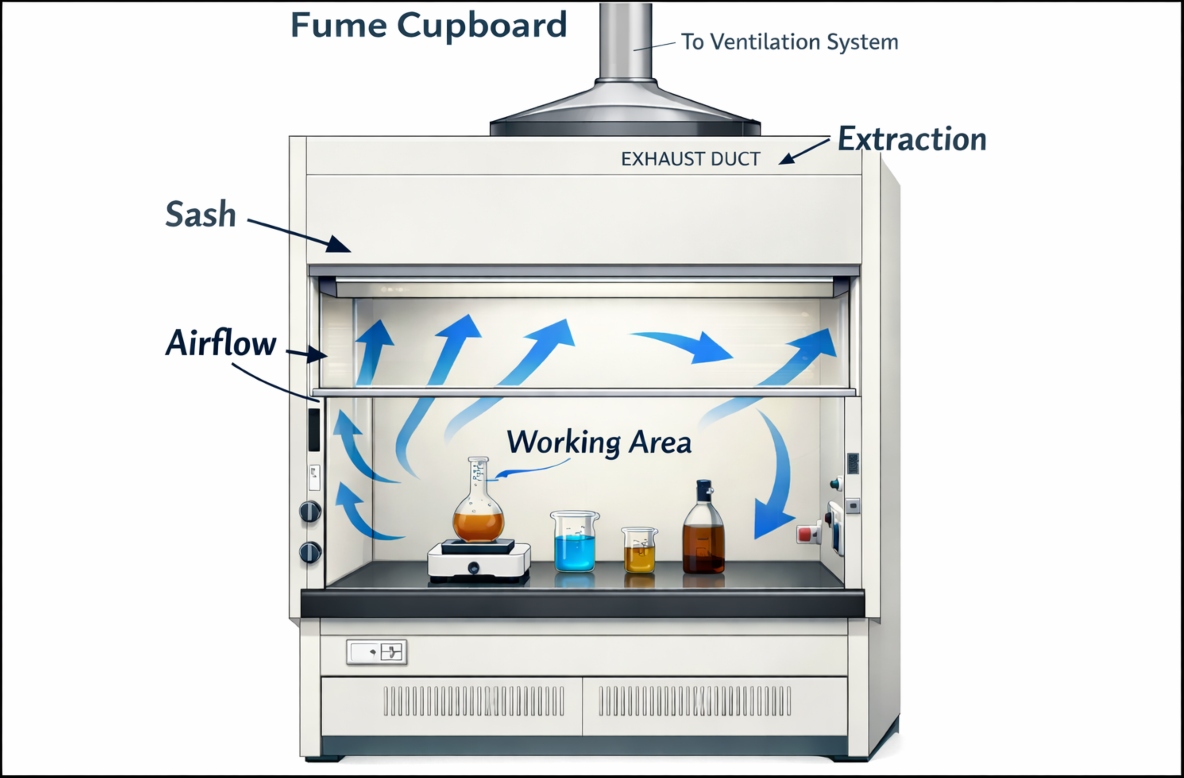
Do schools need a fume cupboard in the UK?
This is one of the most common search queries we hear at Safelab, and the answer needs a little care.
There is no simple rule saying every school must have a fume cupboard regardless of what it teaches. The real requirement is that schools must control exposure to hazardous substances and provide safe working conditions. HSE guidance on COSHH risk assessment makes clear that exposure should be prevented or adequately controlled, and that a properly designed LEV system is one of the ways to reduce exposure to harmful gases, vapours, mist, dust, or fumes. In other words, the legal duty is about control of risk. Whether that means a fume cupboard will depend on the activities taking place.
In practical terms, most secondary schools carrying out a standard range of chemistry teaching will need access to an appropriate fume cupboard. The more useful question is not “Does a school need a fume cupboard?” but “Do the experiments and demonstrations being carried out require one?” For many schools, the answer is yes.
That distinction is important because it helps schools focus on the activities taking place and the risks they need to control, rather than assuming that the same answer applies to every setting.
- does my school need a fume cupboard?
- school laboratory fume cupboard requirements
- fume cupboard for chemistry classroom
- CLEAPSS G9 explained
- school science lab compliance fume cupboard
Those are intent-rich questions, and this guide is designed to answer them clearly.
When is a fume cupboard required in school science?
A school fume cupboard is generally needed when practical work may generate harmful fumes, vapours, gases, or aerosols that should not be released into the room. That can include demonstrations, heating processes, acid use, volatile substances, or experiments where inhalation exposure needs to be controlled.
This is where schools need to be practical rather than theoretical. The question is not whether a fume cupboard sounds useful. It is whether the actual curriculum and practical activities require containment. Good decision-making starts with a simple review:
- What experiments are taught?
- What substances are used?
- How often are those activities performed?
- Are they teacher demonstrations or student practicals?
- Do they release fumes, vapours, or other airborne hazards?
- Is the existing control measure still suitable?
Schools sometimes discover the opposite problems at the same time. One school may have a cupboard that is rarely needed and poorly understood. Another may rely heavily on an ageing cupboard that has not been reviewed in years. Both situations create risk, just in different ways.
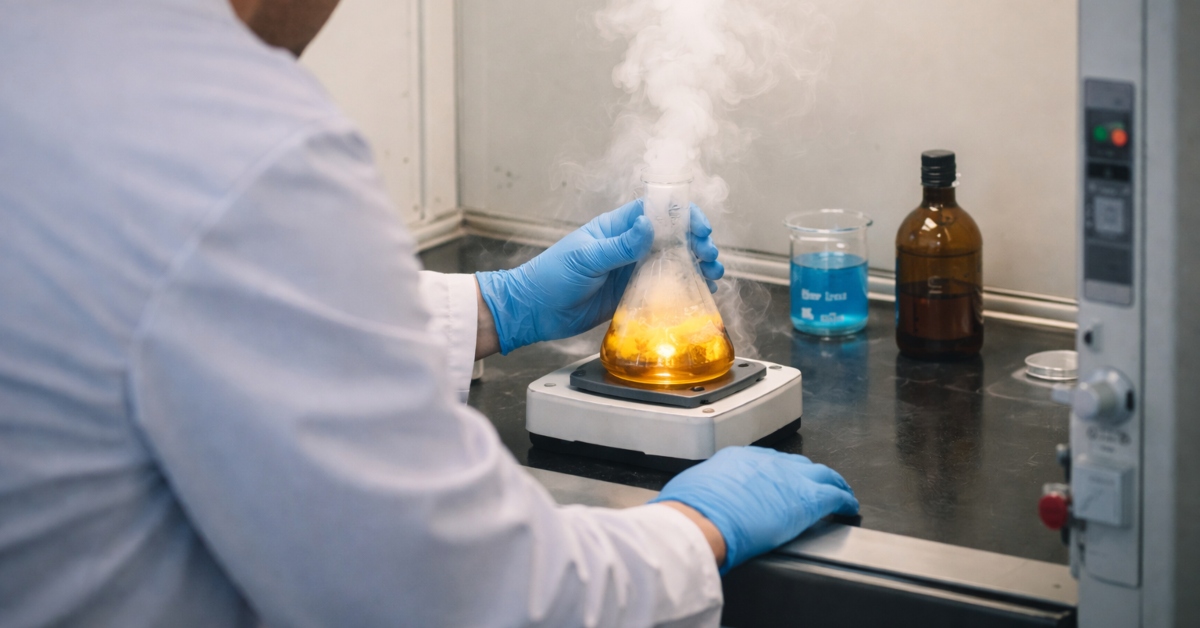
Why are school fume cupboards different from other laboratories?
A school fume cupboard should not be specified in the same way as a cupboard for a university research lab or an industrial process area. The environment is different. The users are different. The pattern of use is different too.
Teaching and visibility
In many school labs, the fume cupboard is used by a teacher for demonstrations. Visibility matters. Students need to see what is happening, and the teacher needs enough working space to demonstrate safely without awkward posture or restricted movement. A cupboard that works on paper but obstructs sightlines or is uncomfortable to use may be used less often, or used badly.
Where demonstration work and visibility are important, the Airone 1000DS provides a semi-mobile ducted fume cupboard option for school science environments.
Simplicity of operation
School labs are busy environments. A system that relies on complex controls or specialist knowledge may not be the best fit. HSE’s LEV user guidance stresses that systems should be easy to use properly and that users should receive training. In a school context, simple, understandable operation is not a nice extra. It is part of making safe use realistic day to day.
Multiple users and changing classes
A single school fume cupboard may be used by different teachers, technicians, and classes over the course of a week. That means the system has to support consistent performance and predictable use. It also increases the value of clear procedures, signage, checks, and logbook records.
Space and layout constraints
School laboratories often have legacy layouts, limited service routes, and tight positioning options. A cupboard placed too close to a doorway, circulation route, or disruptive airflow source may underperform even if the unit itself is in good condition. That is one reason installation and room conditions matter so much.
See also: UK Fume Cupboard Buyer's Guide: How to Choose and Specify the Right System
Related: Reducing Fume Cupboard Energy Costs (VAV & Airflow Guide)
Ducted vs ductless fume cupboards in schools: Which is right?

One of the biggest school-related search themes is whether a school should choose a ducted or ductless fume cupboard.
Ducted fume cupboards for schools
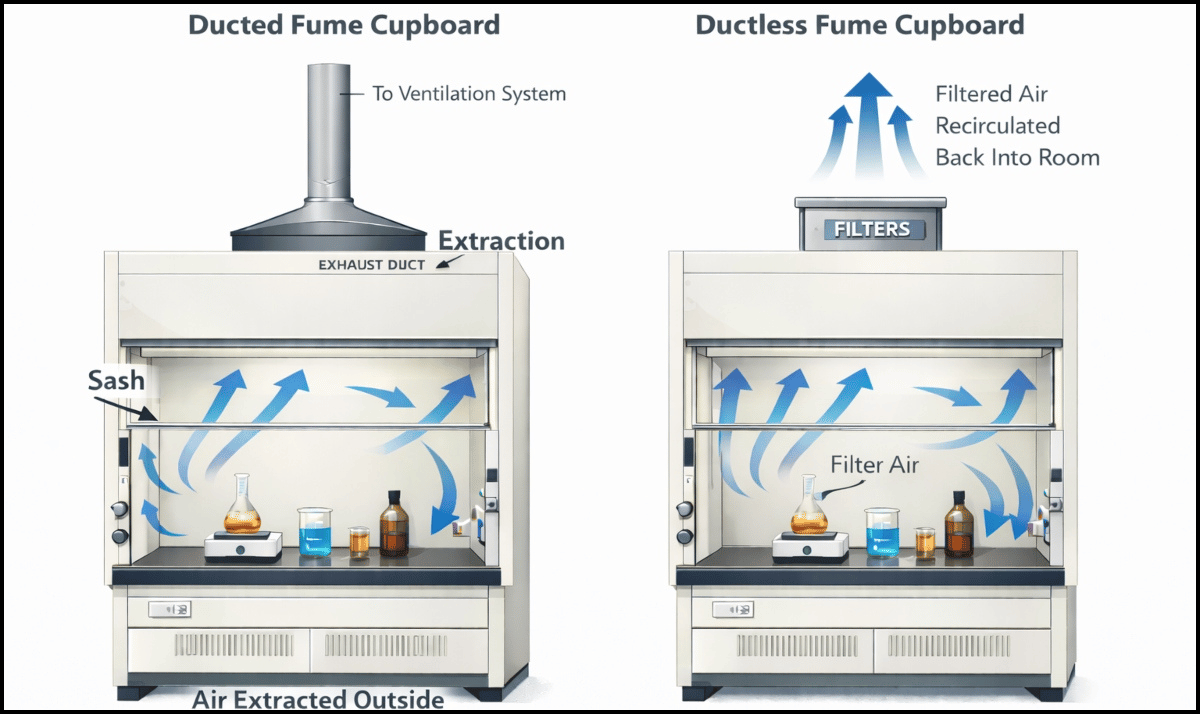
Ducted fume cupboards extract contaminated air and discharge it outside via ductwork. In schools, they are often the default option because they are familiar, broadly applicable, and do not rely on filter selection for control.
They are often the stronger fit where:
- chemical use varies
- the cupboard supports a broad curriculum
- long-term flexibility matters
- the school wants a robust, established approach
That does not make them automatically right in every case. Installation quality, extract routes, room airflow, and ongoing maintenance still matter. For schools planning a new or replacement system, our guide to fume cupboard installation requirements in the UK explains the practical factors that should be reviewed before installation.
In practice, many schools opt for a ducted system designed specifically for teaching environments, where visibility, ease of use, and reliable airflow are prioritised alongside compliance.
If you are considering a replacement, you can explore Safelab’s range of school fume cupboards.
Ductless fume cupboards for schools
Ductless or recirculating fume cupboards filter air and return it to the room. They can be useful in some situations, especially where ducting is difficult or where the application is tightly defined.
They are sometimes considered in schools where:
- installation constraints limit ductwork
- only specific, low-risk substances are used
- flexibility or relocation is required
However, they need careful assessment. CLEAPSS’s buying material covers both ducted and recirculatory filtration cupboards, and its evidence-based guidance notes that initial savings on filter cupboards can be offset by ongoing filter replacement and testing requirements.
Where ductless systems are used, it is important that:
- the chemical application is clearly understood
- the correct filtration is specified
- maintenance and filter management are planned from the outset
Some schools choose education-focused ductless systems where the use case is tightly controlled, but these should always be selected with a clear understanding of their limitations.
For defined school applications where external ductwork is not practical, the Airone 1000RS provides a mobile ductless fume cabinet option.
For more on this, explore Safelab’s ductless fume cupboard options.
The practical answer
For many schools, a ducted school fume cupboard remains the more straightforward and flexible option. It supports a wider range of teaching activities and is often easier to manage over time.
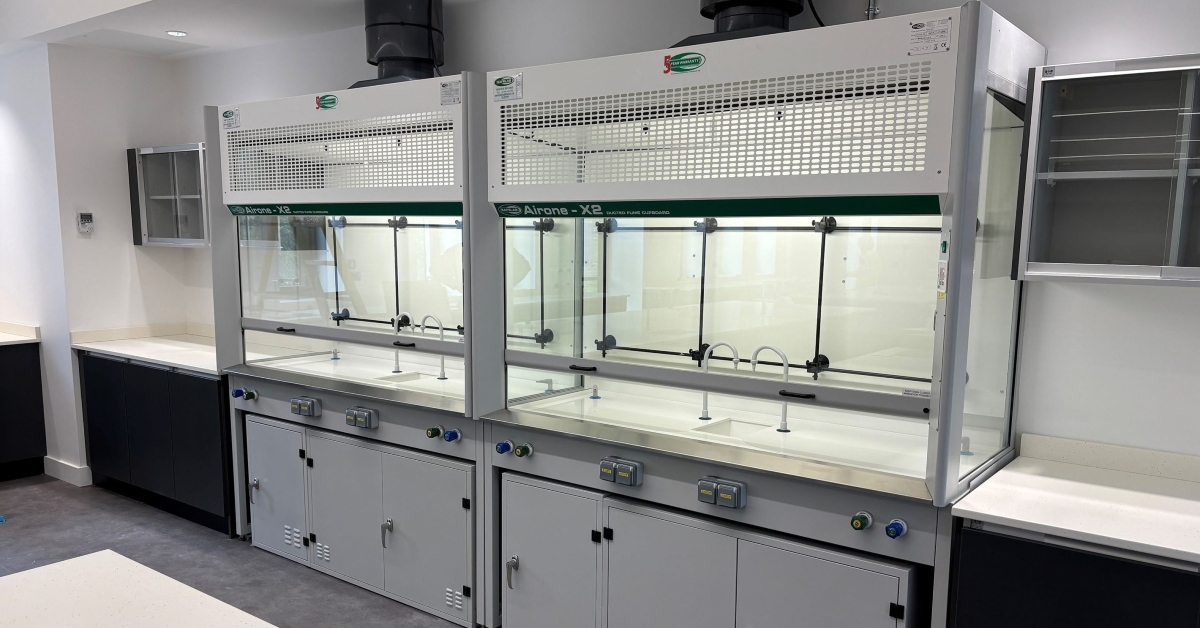
For fixed school laboratory or prep-room installations, the Airone X is a school ducted fume cupboard designed for regular education use.
Ductless systems may still be appropriate, but only where the application is clearly defined and the school understands the operational responsibilities that come with them.
The right choice depends on the curriculum, the room, and how the cupboard will actually be used day to day.
See also: BS EN 17242 Ductless Fume Cupboards Guide
Related: Ducted vs Ductless Fume Cupboards Guide
How to choose the right fume cupboard for a school laboratory
When schools search for “best fume cupboard for school lab” or “how to choose a school fume cupboard,” what they usually need is not a product list. They need a decision framework.
1. Start with the curriculum and actual use
Define the practical work the cupboard needs to support. Think about chemicals, frequency, whether activities are teacher-led or student-led, and whether the use may change over time.
2. Review the existing room
A replacement is not always just a swap. Ask:
- Is the current cupboard in the right position?
- Are there doorways, draughts, or walkways affecting performance?
- Is the extract arrangement still suitable?
- Is there enough room for safe operation and visibility?
3. Decide what matters most
For schools, that often includes:
- safe demonstration use
- reliability
- ease of operation
- robustness
- straightforward servicing
- suitability for teaching spaces, not just technical compliance
4. Think beyond purchase cost
A cheaper option is not automatically better value. Schools should consider whole-life factors such as installation, servicing, testing, replacement filters where relevant, disruption, and future adaptability.
5. Plan for handover and ongoing management
The right purchase is only part of the job. A school also needs clear documentation, a practical operating approach, and a workable testing and record-keeping process.
See also: UK Fume Cupboard Buyer's Guide
Related: Fume Cupboard Commissioning Guide
Key specification points for school fume cupboards
When replacing or specifying a school fume cupboard, the brief should reflect how the cupboard will actually be used.
Size and working space
The cupboard should provide enough internal space for demonstrations and practical processes without encouraging unsafe working close to the face opening. It should also suit the room and preserve good sightlines where teaching visibility matters.
Positioning
Avoid locations where performance may be compromised by:
- doors
- windows
- high traffic routes
- strong general ventilation flows
- awkward access constraints
Sash and usability
The sash arrangement should support safe use, visibility, and practical day-to-day operation. For education settings, ease and clarity often matter more than complexity.
Services
Consider what the cupboard really needs. That may include gas, water, power, or service isolation. Keep the focus on what supports safe teaching use rather than overcomplicating the specification.
Durability and maintainability
School equipment needs to stand up to real use. Robust finishes, easy-clean surfaces, accessible servicing, and sensible replacement-part support all matter more than they may seem at procurement stage.
Testing, servicing, and record-keeping
This is one of the most important areas for schools.
HSE’s LEV guidance stresses the need to commission systems properly and keep them working effectively through maintenance and examination. CLEAPSS also provides school-specific testing and contractor guidance, and a model fume cupboard logbook designed for school science departments because generic industrial logbooks are often not a good fit for schools.
That means a school should not think in terms of “buy it and forget it.” A school fume cupboard should be part of an active management process, including:
- routine checks
- planned servicing
- periodic testing
- records of findings and actions
- follow-up where performance concerns arise
Safelab also provides school fume cupboard servicing and testing to help schools, trusts, and responsible bodies maintain compliant systems over time.
CLEAPSS’s buying guidance also notes evidence-based testing intervals for filter cupboards in schools and prep rooms, which reinforces the point that school settings need a practical, documented approach rather than an assumption that all cupboards can be treated the same way.
How often should a school fume cupboard be tested?
This is a very common search query and something we hear regularly at Safelab. The exact approach depends on the type of cupboard, its use, and the applicable testing regime, but the important message is that testing should be planned, recorded, and treated seriously. A school should know when the last test took place, what was found, whether actions were needed, and when the next review is due.
What if a school fume cupboard fails testing?
If a cupboard is not performing properly, that is not just a paperwork issue. It is a safety issue. The school should understand the cause, record the finding, and take appropriate action before relying on the cupboard for hazardous work again.
See also: Fume Cupboard Testing Requirements in the UK (COSHH Compliance Guide)
Common problems with school fume cupboards (and how to fix them)
A lot of school-related searches come from a simple concern: “Our cupboard is old. What should we do?”
Typical issues include:
- poor containment performance
- outdated design
- awkward classroom positioning
- unreliable fans or services
- unclear records
- lack of recent testing
- cupboards being used for storage rather than active science work
- systems that no longer match the curriculum or room layout
Some schools also inherit cupboards installed under older assumptions, with incomplete documentation or a limited understanding of what the system can safely support. In those cases, the right next step is often a proper review rather than a guess.
School fume cupboard checklist for compliance and safety
If you are reviewing one cupboard or surveying multiple sites across a trust, start here.
Questions about suitability
- What activities is the cupboard used for?
- Is that still the right use?
- Does the current system match the science curriculum?
Questions about condition
- Is the cupboard physically in good condition?
- Are services and controls working properly?
- Is there evidence of neglect, poor repair, or misuse?
Questions about room environment
- Is the cupboard positioned sensibly?
- Are there obvious airflow disturbances?
- Does the room layout create avoidable risk?
Questions about management
- When was it last tested?
- Are records easy to find?
- Is there a departmental logbook or equivalent record?
Questions about replacement planning
- Is like-for-like replacement appropriate?
- Would a different configuration be better?
- Does the school need advice before writing a specification?
When should a school seek specialist fume cupboard advice?
Schools often wait too long. In reality, specialist advice is useful much earlier than many people think.
It is especially worth seeking help when:
- an old cupboard may need replacement
- performance is uncertain
- documentation is poor
- the school is considering ductless options
- a refurbishment is planned
- a trust is reviewing multiple schools
- the science team wants clarity on what is actually required
Early advice can prevent expensive mistakes, reduce disruption, and help the school specify a cupboard that fits its real needs rather than copying an outdated solution.
Need help with school fume cupboards and CLEAPSS G9?
For schools, compliance is not just about having a document on file. It is about making sure the equipment in the room is appropriate, working properly, and manageable in day-to-day use.
Safelab can support schools, colleges, and trusts with:
- reviewing existing school fume cupboards
- advising on replacement and specification
- helping assess ducted vs ductless suitability
- supporting testing, servicing, and compliance planning
- helping science departments and estates teams make practical decisions
If you are unsure whether your current cupboard is still suitable, or you need help choosing the right next system, this is the right point to start the conversation.
Frequently Asked Questions
What is CLEAPSS G9?
CLEAPSS G9 is guidance for those using, buying, or designing fume cupboards for schools and colleges. It covers common problems, choosing and installing suitable cupboards, and maintaining and testing them.
Do schools in the UK need a fume cupboard?
Many do, because schools must control exposure to hazardous substances during practical work. Whether a cupboard is needed depends on the activities being carried out and the risks they create.
How often should a school fume cupboard be tested?
Schools should work to a planned testing and maintenance regime with clear records. CLEAPSS also publishes school-specific supporting guidance on testing and contractors, and model logbooks to support record-keeping.
Can a school use a ductless fume cupboard?
Possibly, but only where the application is suitable and the school can manage the operational requirements that come with filtration. CLEAPSS buying guidance covers both ducted and recirculatory filtration cupboards.
What should a school do if a fume cupboard is old or underperforming?
Do not assume it is acceptable because it is still in place. Review its suitability, condition, records, testing history, and actual use. If there is uncertainty, get specialist advice before relying on it for hazardous work.