

UK fume cupboard buyer’s guide: How to choose and specify the right system
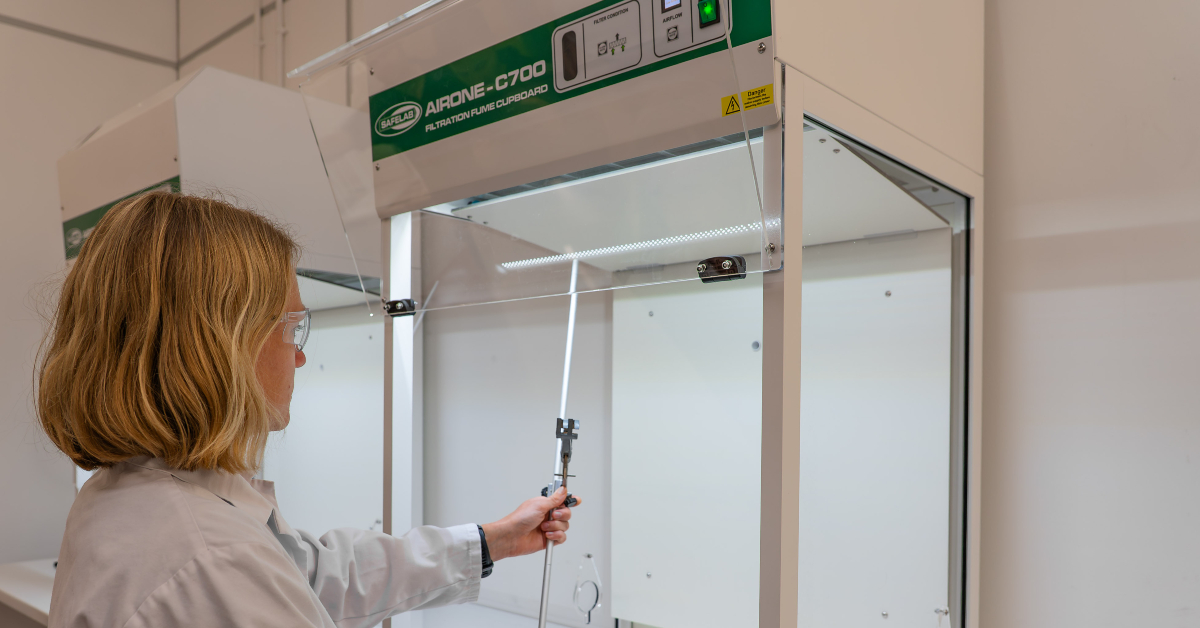
Choosing a fume cupboard is not just about selecting a unit that fits the available space or meets a budget. The right system depends on what substances are being handled, how the laboratory is used, what level of containment is required, and how the unit will perform over time within the wider ventilation strategy.
Across UK laboratories, including schools, universities, research facilities, and industrial environments, specifying the wrong fume cupboard can lead to poor containment, higher energy costs, compliance risks, and expensive remedial work.
This guide provides a practical, UK-focused framework for choosing and specifying the right fume cupboard system. It is designed to help you make confident, informed decisions based on real-world use, not just product specifications.
Quick answer: How do you choose the right fume cupboard?
To choose the right fume cupboard, you should:
- define the substances being used (type, volume, and risk)
- determine whether ducted or ductless containment is appropriate
- understand how often and how intensively the cupboard will be used
- assess room conditions, airflow, and building constraints
- specify the correct size, sash configuration, and internal working area
- ensure the system can be properly commissioned, tested, and maintained
- consider long-term factors such as energy use, flexibility, and lifecycle cost
The most important principle is this:
the correct fume cupboard is determined by the application and environment, not by the product alone.
With Safelab's decades of experience and fume cupboard expertise, we're well placed to advise you on everything you need to consider.
In this guide
- What a fume cupboard is designed to do
- How to define your application before specifying a system
- Ducted vs ductless fume cupboards explained
- Key specification criteria for UK laboratories
- Compliance, standards, and testing considerations
- How requirements differ across sectors
- Common specification and buying mistakes
- A practical checklist for writing your specification
- Where to get specialist advice
- Need help selecting a new fume cupboard?
What is a fume cupboard designed to do?
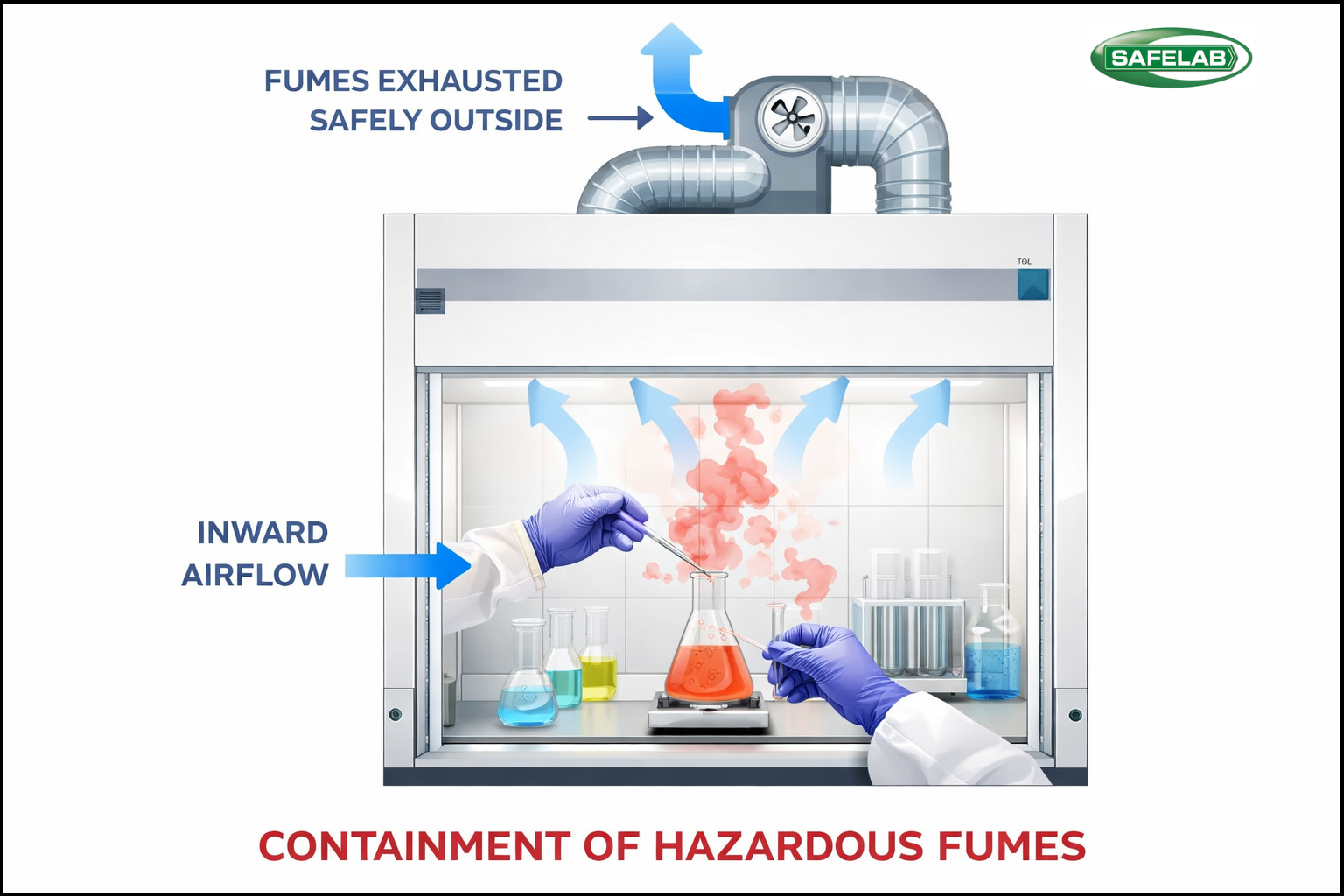
A fume cupboard is a form of local exhaust ventilation (LEV) designed to contain and remove hazardous airborne contaminants generated during laboratory processes.
Its role is not simply to extract air, but to:
- protect the user from exposure
- prevent contaminants entering the room
- support safe and repeatable working practices
- maintain stable airflow under real operating conditions
- remain suitable for the substances and processes involved
This is why choosing the right system is not a product selection exercise: it is a risk-based specification decision.
👉 See also: What Is a Fume Cupboard? How It Works, Types, and Uses(opens in new tab)
Start with the application, not the product

One of the most common causes of poor performance is starting with a product rather than the application. A structured approach helps ensure the system is appropriate from the outset.
What substances will be used?
You should clearly define:
- whether substances are toxic, corrosive, volatile, or flammable
- whether multiple chemicals will be used together
- whether the process produces heat, vapours, dust, or aerosols
- whether filtration is suitable (critical for ductless systems)
This step is often the deciding factor between ducted and ductless systems.
How will the cupboard be used?
Usage patterns affect everything from size to airflow requirements.
Consider:
- frequency of use
- duration of tasks
- number of users
- level of supervision
- consistency vs variability of processes
A cupboard used occasionally for teaching is fundamentally different from one used continuously in a research or industrial setting.
What are the room constraints?
Fume cupboard performance is heavily influenced by the surrounding environment.
Key factors include:
- air supply and extract balance
- draughts from doors, windows, or movement
- ceiling height and service routing
- available extract infrastructure
- noise and positioning constraints
- access for maintenance
Even a well-specified cupboard can fail if placed in the wrong environment.
For a fuller breakdown of what needs to be considered before installation, see our guide to fume cupboard installation requirements in the UK.
What is the project objective?
Clarify whether you are:
- replacing an existing unit
- upgrading for compliance
- refurbishing a lab
- improving energy efficiency
- standardising across multiple spaces
This helps guide specification decisions and avoid unnecessary cost or complexity.
For a deeper breakdown of those budget factors, our guide to fume cupboard costs in the UK explains what affects purchase, installation, and whole-life costs.
Ducted vs ductless: Which type of fume cupboard is right?
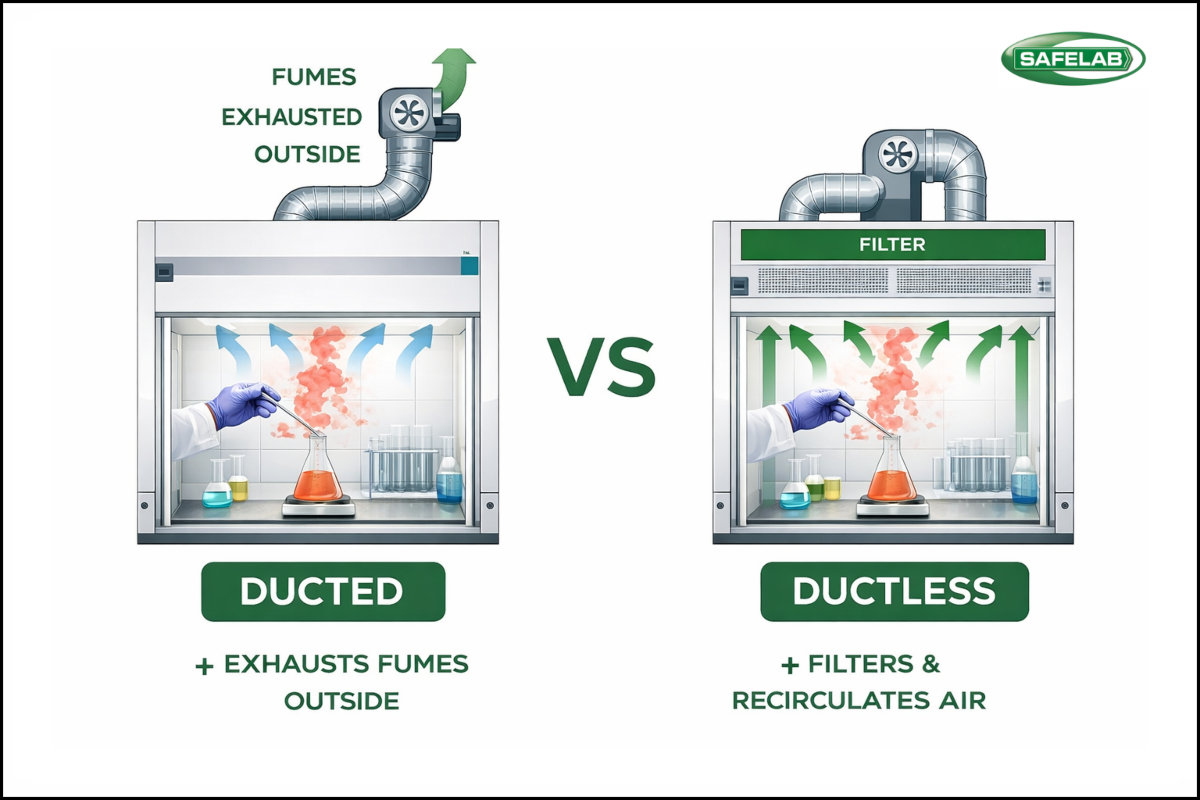
One of the most important decisions is whether to use a ducted or ductless system. These are not interchangeable solutions.
Ducted fume cupboards
Ducted fume cupboards extract contaminated air and discharge it safely outside the building via ductwork.
Best suited to:
- variable or unknown chemical use
- higher-risk applications
- processes with significant contaminant loads
- laboratories requiring long-term flexibility
Advantages:
- suitable for a wide range of applications
- does not rely on filters for containment
- adaptable to future changes in use
- widely used in traditional laboratory design
For research, university and industrial laboratories, Safelab’s Airone XP4 is a high-specification ducted fume cupboard designed for demanding applications where containment, durability and long-term flexibility are important.
Considerations:
- requires ductwork and external discharge
- more complex installation
- must be integrated with room ventilation design
- higher upfront infrastructure requirements
Ductless fume cupboards
Ductless (recirculating) fume cupboards filter air and return it to the room.
Best suited to:
- clearly defined, controlled applications
- compatible chemical use
- environments where ducting is impractical
- projects requiring flexibility or mobility
For defined applications where external ductwork is not practical, Safelab’s ductless fume cupboards provide a recirculating alternative when filtration suitability has been properly assessed.
Advantages:
- simpler installation
- no external ductwork
- useful in some retrofit scenarios
- potentially lower initial disruption
Considerations:
- only suitable for appropriate substances
- requires correct filter selection and management
- ongoing maintenance is critical
- less adaptable to future changes
 See also: BS EN 17242 Ductless Fume Cupboards Guide
Related: Ducted vs Ductless Fume Cupboards: Which Should You Choose?
How to choose between ducted and ductless
The decision should be based on risk, not convenience.
In general:
- choose ducted where applications are broad or uncertain
- use ductless only where suitability is clearly confirmed
- consider lifecycle cost, not just installation
- think about future flexibility, not just current needs
Making the right choice here avoids costly redesign later.
Key specification criteria: What to include in your brief
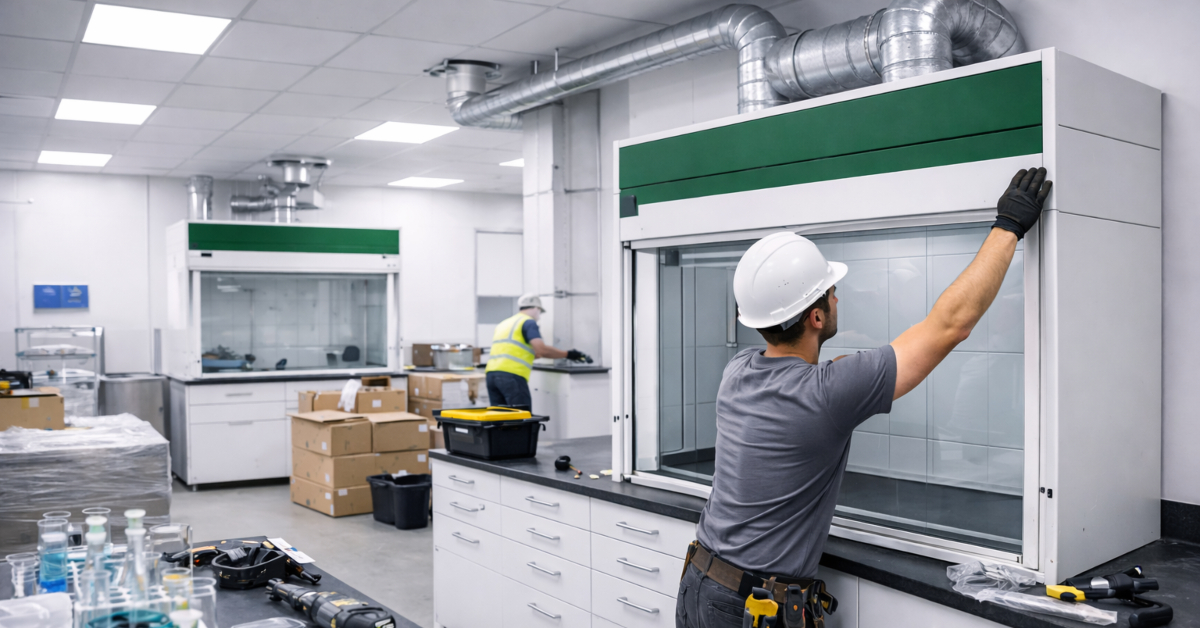
A detailed brief ensures accurate pricing and appropriate solutions.
Intended use
Define:
- substances and processes
- usage patterns
- potential future changes
Cupboard type
Specify configuration clearly (ducted, ductless, walk-in, etc.).
Size and working area
Ensure adequate internal space for safe operation.
Sash configuration
Affects containment, ergonomics, and usability.
Services
List all required utilities and their positioning.
Materials
Ensure compatibility with chemical use and durability requirements.
Ventilation and controls
Define airflow approach, monitoring, alarms, and integration.
See also: Fume Cupboard Energy Costs (VAV & Airflow Guide)
Related: Fume Cupboard Commissioning Guide
Testing and maintenance
Specify expectations early.
UK standards, compliance, and testing considerations
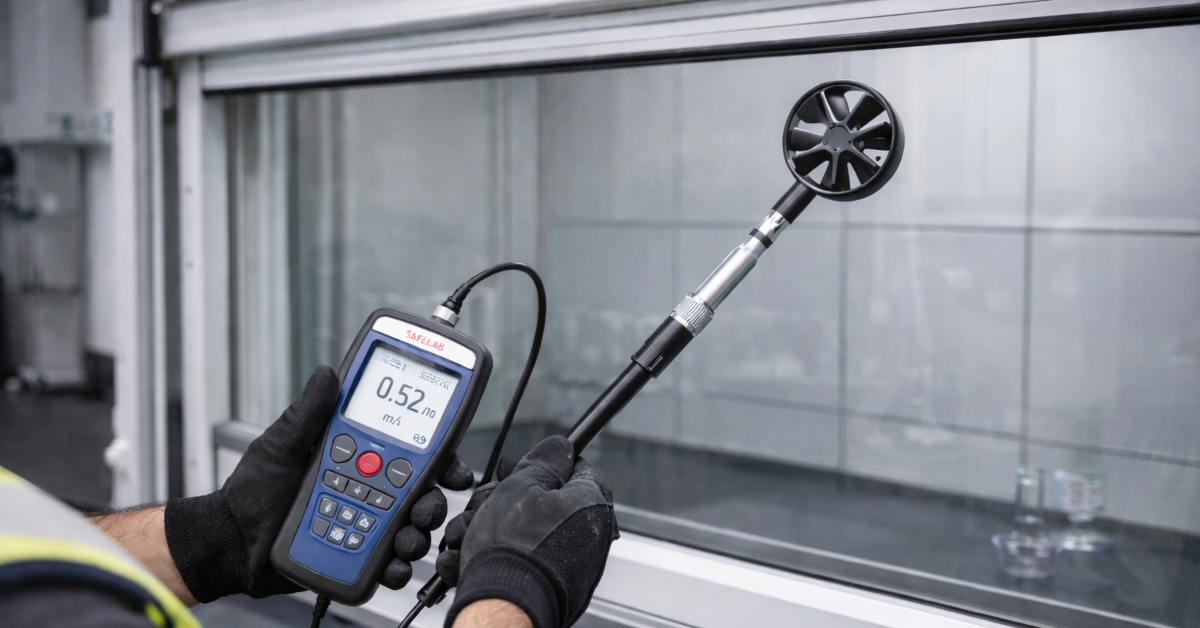
A fume cupboard must remain suitable and compliant throughout its lifecycle.
Buyers should ensure:
- correct installation and commissioning
- appropriate documentation and handover
- routine testing is planned and achievable
- maintenance access is practical
Compliance depends on continued performance, not just initial installation.
See also: Fume Cupboard Testing Requirements in the UK (COSHH Compliance Guide)
Related: BS EN 14175 Guide for UK Laboratories
Buying by sector: Different environments, different priorities
Schools and colleges
Priorities include:
- safe use by non-specialists
- ease of operation
- supervision and visibility
- suitability for teaching
Safelab’s fume cupboards for schools and colleges are designed around teaching environments, technician use, visibility, safe operation and long-term maintenance.
Universities and higher education
Focus on:
- flexibility
- varied research applications
- long-term durability
- integration with building systems
Safelab’s industrial and higher education fume cupboard range supports universities, research facilities and technical laboratories where specification requirements are more varied or demanding.
Related: Reducing Fume Cupboard Energy Costs (VAV & Airflow Guide)
Industrial laboratories
Focus on:
- process reliability
- durability
- uptime
- lifecycle cost
Related: Fume Cupboard Commissioning Guide
Common fume cupboard buying mistakes to avoid
- choosing based on price rather than suitability
- deciding ducted vs ductless too early
- ignoring room airflow conditions
- focusing only on size
- failing to plan for future changes
- treating testing as an afterthought
- writing a vague or incomplete specification
Avoiding these mistakes significantly improves outcomes.
A practical specification checklist
Project overview
- scope and objectives
- users
- timeline
Application
- substances
- quantities
- usage patterns
Cupboard type
- ducted or ductless
Physical requirements
- size
- sash
- materials
Services
- utilities
Room considerations
- airflow
- constraints
Controls
- monitoring and alarms
Compliance
- commissioning
- testing
When should you involve a specialist?
The earlier, the better.
You should seek advice when:
- applications are complex or unclear
- choosing between ducted and ductless
- multiple cupboards are involved
- room conditions may affect performance
- writing a formal specification
Early input helps reduce risk, improve performance, and avoid costly changes.

Need help specifying the right fume cupboard?
Choosing the right system starts with understanding your application, environment, and compliance requirements — not just comparing product specifications.
Safelab Systems provides practical, UK-focused support to help you:
- select the right type of system
- design around real laboratory use
- meet compliance requirements
- achieve long-term performance and value
Speak to a specialist or request specification advice to discuss your project.
Frequently Asked Questions
How do I choose the right fume cupboard?
Start with the application — substances, processes, and usage — then assess room conditions and determine whether ducted or ductless containment is appropriate.
What is the difference between ducted and ductless fume cupboards?
Ducted systems remove contaminated air from the building. Ductless systems filter air and return it to the room.
Are ductless fume cupboards cheaper?
They can reduce installation costs in some cases, but lifecycle costs depend on maintenance, filter replacement, and suitability.
What should a fume cupboard specification include?
Application details, cupboard type, size, services, ventilation, controls, and testing requirements.
Do different sectors require different fume cupboards?
Yes. Requirements vary significantly between schools, universities, and industrial laboratories.