

Why fume cupboards fail testing: Common causes explained
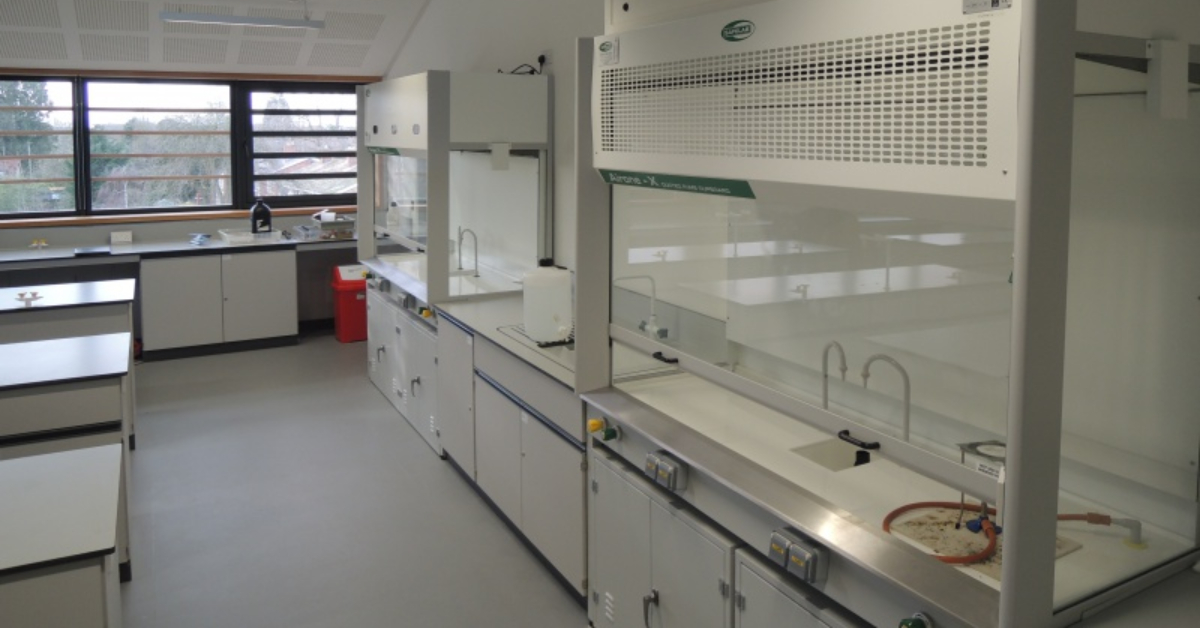
Fume cupboard testing failures are more common than many laboratories expect.
In the UK, fume cupboards must be tested regularly under COSHH Regulation 9 to ensure they continue to operate safely. These tests are designed to confirm that systems are effectively containing hazardous substances and protecting users. When a system fails, it raises an immediate concern—not just about compliance, but about safety.
For schools, universities, and commercial laboratories, a failed test can disrupt work, delay teaching, and require urgent remedial action. In some cases, it can also reveal underlying issues that have been present for some time.
Understanding why fume cupboards fail testing is therefore essential. It helps identify risks early, supports better maintenance decisions, and ensures systems remain reliable in day-to-day use.
This guide explains the most common reasons fume cupboards fail testing, what those failures mean, and what should happen next.
Quick answer: Why do fume cupboards fail testing?
Fume cupboards typically fail testing due to:
- insufficient airflow or unstable face velocity
- poor containment performance
- issues with ductwork or extraction systems
- environmental factors such as draughts
- lack of maintenance or system degradation
In most cases, failure is not caused by a single issue, but a combination of factors affecting overall performance.
In this guide
What does a fume cupboard test failure mean?
A failed test indicates that the fume cupboard is not performing as required.
This may mean:
- airflow is outside acceptable limits
- containment is insufficient
- the system is not operating consistently
Under COSHH Regulation 9, this has clear implications. The system may not be safe to use until issues are addressed and performance is verified.
 See also: Fume Cupboard Testing Requirements in the UK (COSHH Compliance Guide)
It is important to understand that a failure does not always mean the cupboard is completely unusable. However, it does mean that the system cannot be relied upon without further investigation.
The most common causes of failure
Fume cupboard testing failures are rarely caused by a single issue. In most cases, they result from a combination of airflow, containment, environmental, and system-related factors.
Understanding these causes helps identify where performance is being affected and what needs to be addressed.
Airflow and face velocity issues
One of the most common causes of failure is incorrect airflow.
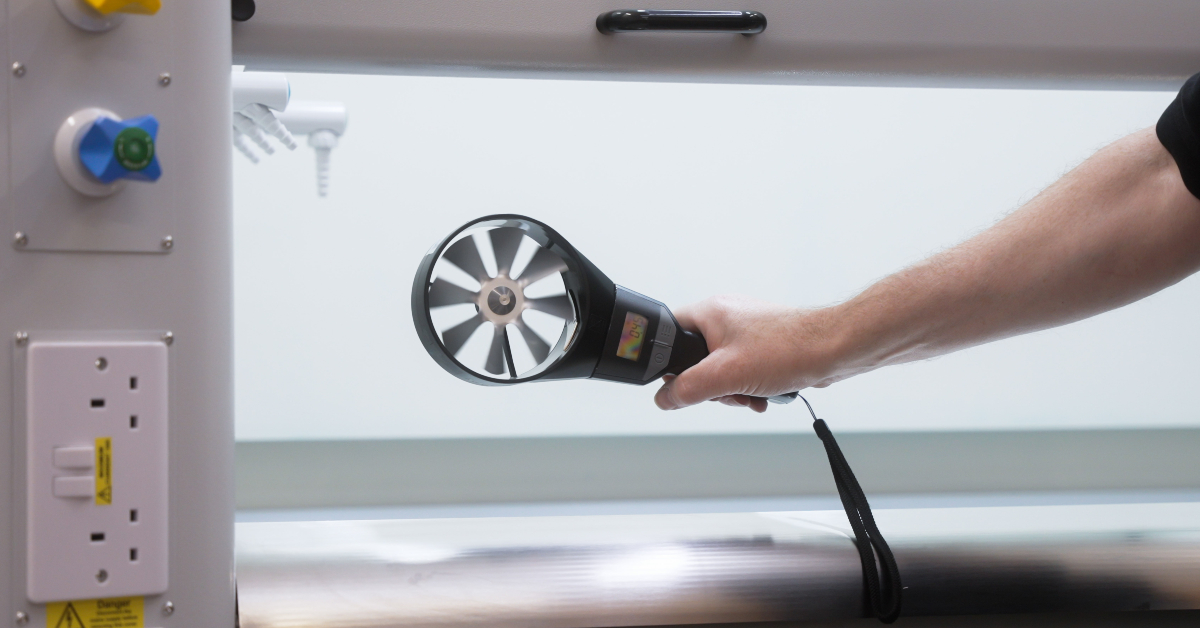
Fume cupboards rely on maintaining a consistent face velocity—the speed at which air is drawn into the cabinet. If this is too low, contaminants may escape. If it is unstable, performance becomes unpredictable.
Common airflow-related issues include:
- reduced extraction due to fan problems
- blockages or restrictions in ductwork
- incorrect system balancing
- wear and tear affecting performance over time
Even relatively small deviations can lead to failed test results.
Containment failures
A fume cupboard may achieve acceptable airflow readings but still fail containment testing.
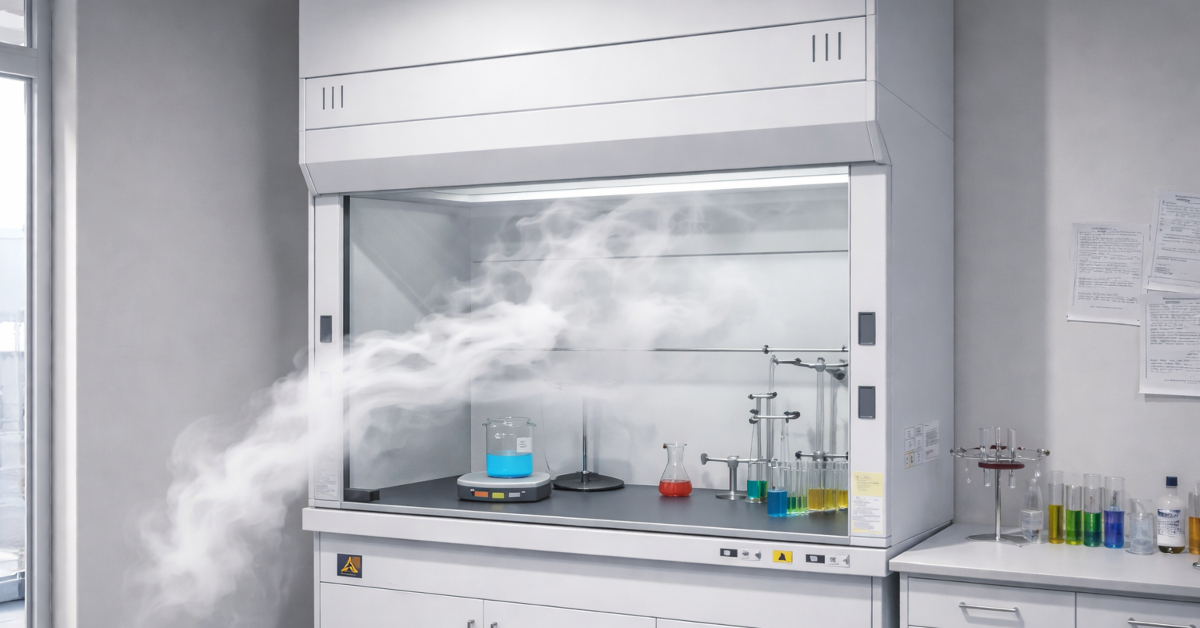
Containment testing assesses whether contaminants are effectively captured and retained within the cupboard. Failures can occur when airflow patterns are disrupted or inconsistent.
This can be caused by:
- poor internal airflow design
- turbulence at the front of the cupboard
- incorrect sash height during operation
- interaction with external airflow
Containment is often more sensitive than airflow alone, which is why both are tested.
Environmental and room-related factors
Fume cupboards do not operate in isolation. The surrounding environment plays a significant role in performance.
Common environmental causes of failure include:
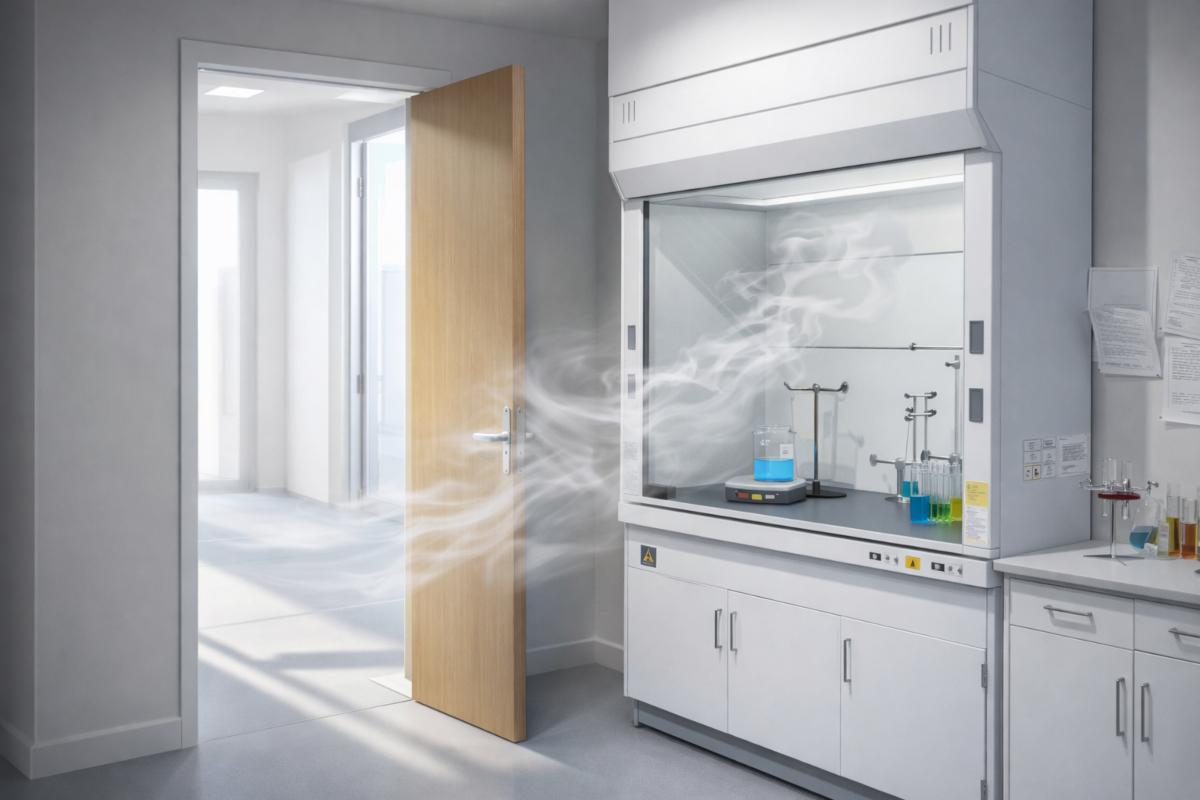
- open doors creating draughts
- nearby walkways with frequent movement
- supply air systems introducing turbulence
- poorly positioned cupboards
These factors can disrupt airflow at the face of the cupboard and reduce containment effectiveness.
In many cases, the cupboard itself is functioning correctly, but the environment is undermining performance.
System and ductwork issues
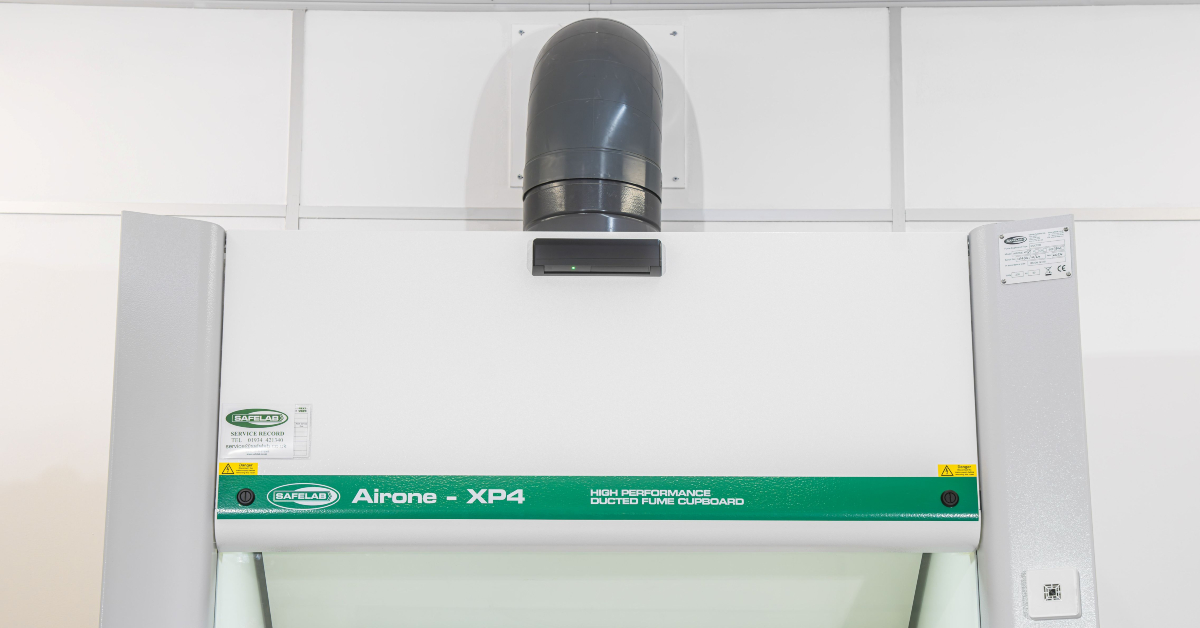
Problems within the extraction system can also lead to failures.
These may include:
- damaged or poorly installed ductwork
- leaks within the system
- inadequate fan capacity
- changes to the system since installation
Over time, systems may drift away from their original performance if they are not maintained or if modifications are made.
Lack of maintenance and system degradation
Like any mechanical system, fume cupboards require regular maintenance.
Without it, performance can deteriorate.
Common maintenance-related issues include:
- worn components
- build-up of contaminants
- filter degradation (in ductless systems)
- calibration drift in control systems
These issues may develop gradually and only become apparent during formal testing.
Commissioning and specification issues
In some cases, failures can be traced back to the original installation.
If a cupboard was not properly commissioned, or if it was not correctly specified for its intended use, problems may emerge later.
Where repeated failures are linked to the original specification, Safelab’s fume cupboard design and manufacture capability can help assess whether repair, replacement, or redesign is the right route.
Where failures relate to installation, our guide to fume cupboard installation requirements in the UK explains the ductwork, positioning, service, and airflow factors that can affect performance.
This can include:
- incorrect airflow design
- unsuitable system selection
- poor integration with the room environment
This is why commissioning is such a critical stage—it establishes the baseline for future performance.
What happens after a failed test?
When a fume cupboard fails testing, the next steps depend on the nature of the issue.
Typically, this involves:
- reviewing test results in detail
- identifying the root cause of failure
- carrying out corrective actions
- retesting to confirm performance
In some cases, the cupboard may need to be taken out of service until issues are resolved.
Safelab provides fume cupboard testing and servicing support to help identify the cause of failures, carry out corrective work, and restore systems to safe, compliant operation.
It is important that failures are not treated as isolated events. They should be seen as an opportunity to understand how the system is performing and whether broader improvements are needed.
How to reduce the risk of failure
While not all failures can be avoided, many can be reduced through proactive measures.
Ensure proper commissioning
A well-commissioned system is more likely to perform consistently over time.
Maintain systems regularly
Routine maintenance helps prevent gradual performance decline.
Review laboratory layout
Consider how doors, airflow, and movement affect performance.
Train users
Correct sash use and good practices can significantly improve outcomes.
Monitor performance
Identify issues early before they result in failed tests.
Safelab works with laboratories across the UK to identify performance issues, support testing, and ensure fume cupboards continue to operate safely and effectively.
Need help with a failed fume cupboard test?
A failed test can be disruptive, but it is also an opportunity to understand what is happening and put the right solution in place.
Safelab can support:
- investigation of failed test results
- identification of underlying issues
- recommendations for corrective action
- ongoing testing and compliance support
If your fume cupboard has failed testing—or you want to reduce the risk of future failures—it is worth taking a closer look at how your system is performing.
Frequently Asked Questions
How do I choose the right fume cupboard?
Start with the application — substances, processes, and usage — then assess room conditions and determine whether ducted or ductless containment is appropriate.
What is the difference between ducted and ductless fume cupboards?
Ducted systems remove contaminated air from the building. Ductless systems filter air and return it to the room.
Are ductless fume cupboards cheaper?
They can reduce installation costs in some cases, but lifecycle costs depend on maintenance, filter replacement, and suitability.
What should a fume cupboard specification include?
Application details, cupboard type, size, services, ventilation, controls, and testing requirements.
Do different sectors require different fume cupboards?
Yes. Requirements vary significantly between schools, universities, and industrial laboratories.