
Fume cupboard commissioning: UK guide
Fume cupboard commissioning is one of the most important—and often misunderstood—stages in the lifecycle of a laboratory ventilation system.
It sits between installation and ongoing use. When done properly, commissioning confirms that the system is safe, functioning as intended, and suitable for the environment it has been installed in. When it is rushed, incomplete, or poorly documented, it can leave laboratories operating with systems that appear compliant but do not perform reliably in practice.
For schools, universities, and commercial laboratories, this matters. A fume cupboard is a safety-critical device. It is relied upon to control exposure to hazardous fumes, vapours, and airborne contaminants. If it is not working correctly from the outset, everything that follows—testing, servicing, and day-to-day use—is built on weak foundations.
This guide explains what fume cupboard commissioning involves, when it takes place, and what should be checked before a system is put into use.
Quick answer: What is fume cupboard commissioning?
Fume cupboard commissioning is the process of verifying that a newly installed or modified fume cupboard system:
- has been installed correctly
- operates safely and as designed
- provides effective containment
- is suitable for its intended use
It typically includes airflow checks, containment testing, system verification, and documentation.
In simple terms:
Commissioning confirms that the system works properly before it is relied on for hazardous work.
👉 Related: What Is a Fume Cupboard? How It Works, Types, and Uses(opens in new tab)
In this guide
What is fume cupboard commissioning?
Commissioning is the formal process of checking and validating a fume cupboard system before it is handed over for use.
It applies to:
- new installations
- replacement cupboards
- refurbished laboratories
- systems that have been significantly modified
Before commissioning can confirm performance, the installation itself needs to be planned correctly; our guide to fume cupboard installation requirements in the UK explains what should be considered before handover.
Early fume cupboard design and manufacture input can also reduce commissioning risk by ensuring the cupboard, services, controls, and intended use are aligned before installation.
The aim is not just to confirm that the cupboard turns on or that air is moving. It is to verify that the system performs correctly under real conditions and that it meets the expectations of the design and relevant guidance.
This includes looking at:
- airflow performance
- containment effectiveness
- interaction with the room environment
- control systems and alarms
- usability in practice
Commissioning is therefore both a technical and practical process.
When does commissioning take place?
Commissioning typically takes place:
- after installation is complete
- before the cupboard is used for hazardous work
- as part of project handover
In a new build or refurbishment, commissioning is one of the final stages before the laboratory becomes operational.
It may also be required:
- after relocation of a cupboard
- after major repairs or system changes
- when airflow systems or HVAC have been modified
The key point is that commissioning should always happen before the system is relied on.
What is included in fume cupboard commissioning?
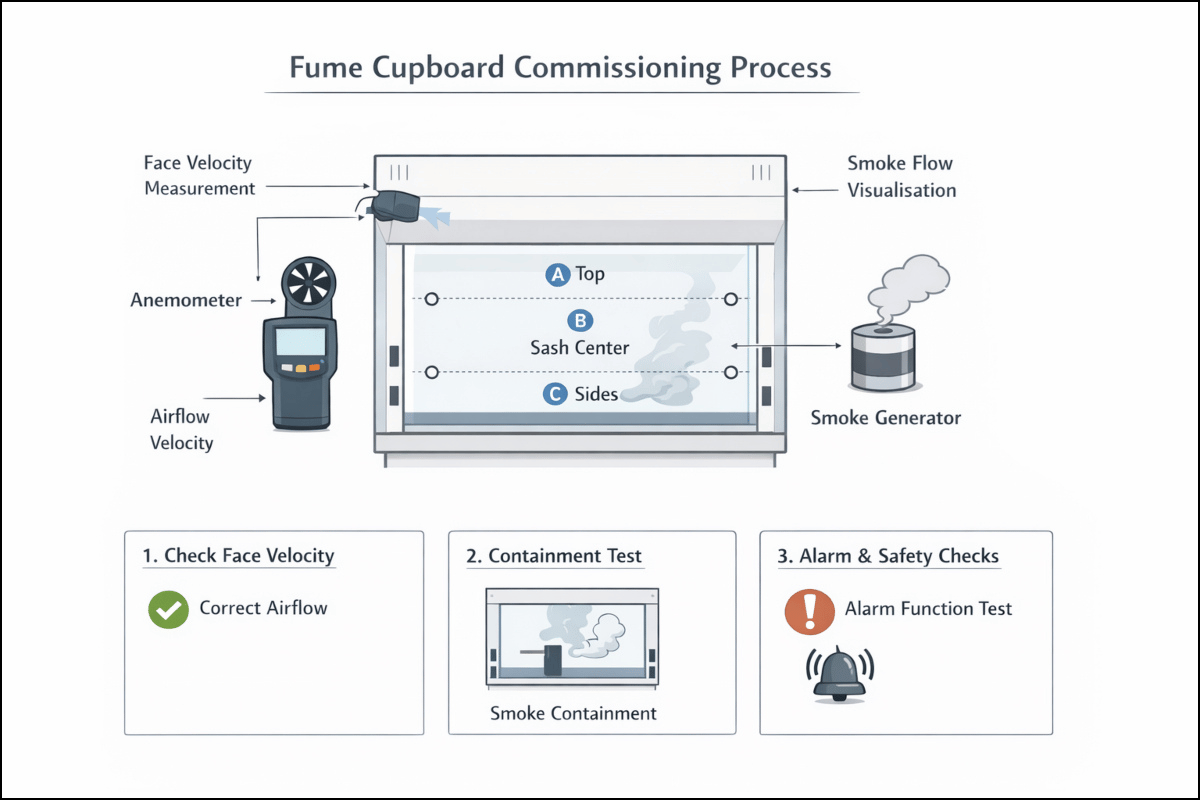
While the exact process can vary depending on the system and environment, commissioning usually includes several core elements.
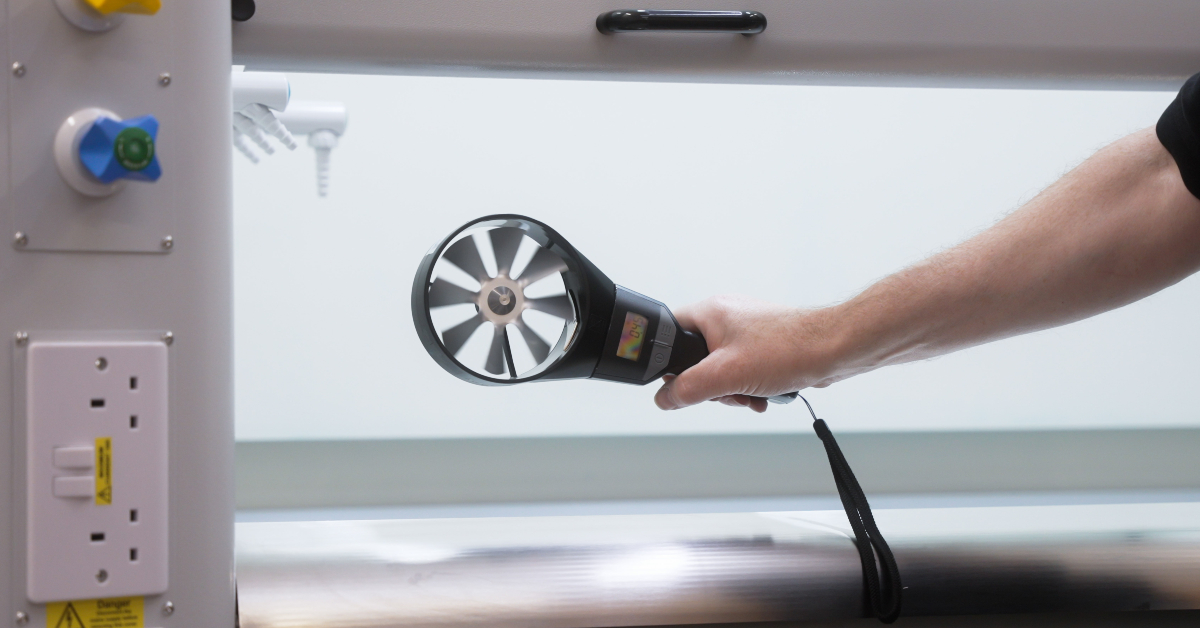
Airflow verification
This checks that the cupboard is achieving the intended airflow performance.
This may include:
- face velocity measurements
- airflow stability checks
- verification against design parameters
For higher-specification ducted systems such as the Airone XP4, commissioning helps verify that airflow performance, containment expectations, and control settings are being achieved in the installed laboratory environment.
Containment testing
Containment testing assesses how effectively the cupboard prevents contaminants from escaping into the room.
This is one of the most critical aspects of commissioning.
System checks
The system as a whole is reviewed to ensure it is operating correctly.
This can include:
- fan operation
- control systems
- alarms and indicators
- sash movement and usability
Interaction with the room
A fume cupboard does not operate in isolation. Commissioning should consider:
- room airflow
- nearby doors and walkways
- ventilation supply
- potential draughts
Poor positioning or room conditions can undermine performance even if the cupboard itself is functioning correctly.
Documentation and handover
Commissioning should result in clear documentation, including:
- test results
- system performance data
- any limitations or recommendations
- operating guidance
This information forms the basis for ongoing testing and maintenance.
Why commissioning is critical for safety
It is easy to assume that a new system will work as expected. In practice, that is not always the case.
Commissioning is critical because it identifies issues before the system is used.
Without proper commissioning:
- airflow may be incorrect
- containment may be compromised
- systems may not respond as expected
- users may rely on a cupboard that is not performing safely
In a laboratory environment, these are not minor issues.
They can lead to:
- exposure to hazardous substances
- failed compliance checks
- disruption to teaching or operations
Commissioning reduces these risks by ensuring the system is verified from the outset.
Commissioning vs testing: What’s the difference?
This is one of the most common areas of confusion.
Commissioning
- takes place at installation or after major change
- confirms the system is working correctly
- forms part of initial setup
Testing (under COSHH Regulation 9)
- takes place periodically during use
- confirms the system continues to perform
- forms part of ongoing compliance
In simple terms:
Commissioning is the starting point.
Testing is the ongoing check.
 See also: Fume Cupboard Testing Requirements in the UK (COSHH Compliance Guide)
Common commissioning issues
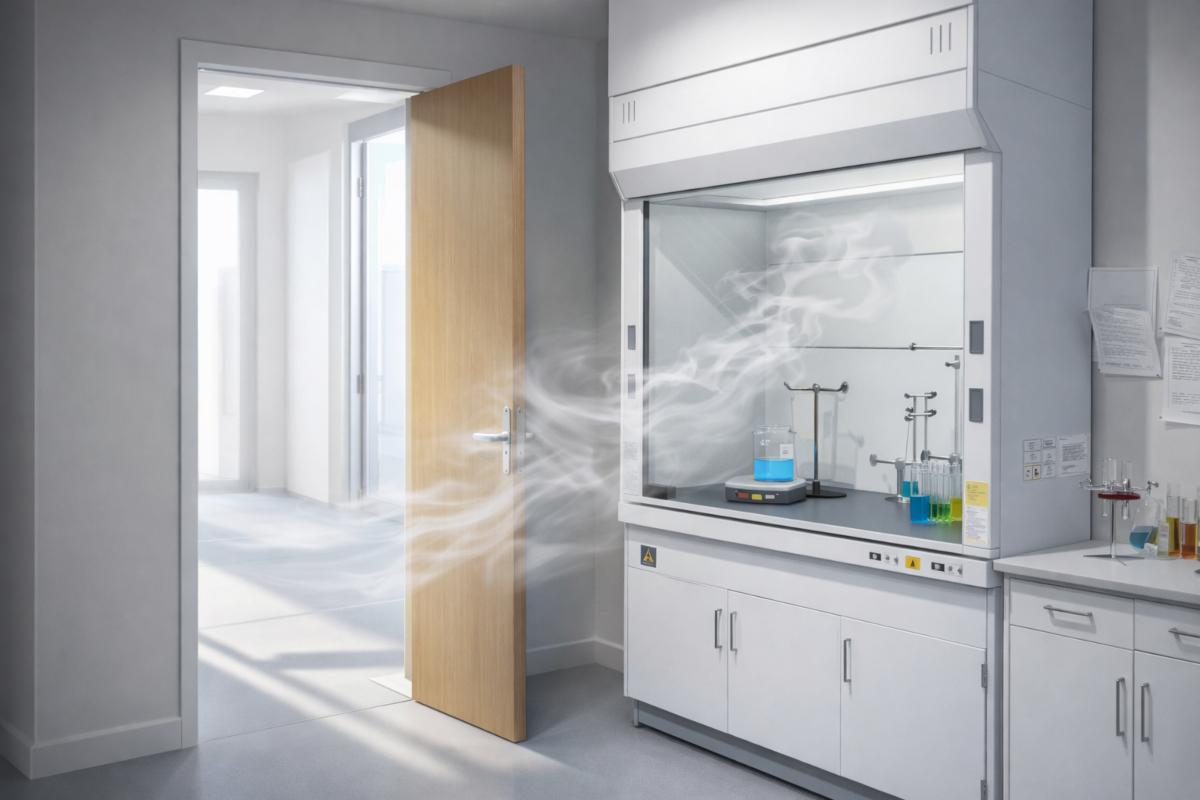
In practice, commissioning does not always go smoothly. One common issue is that airflow performance can be affected by room conditions, such as open doors, nearby movement, or draughts within the laboratory.
Poor airflow performance
This may be due to:
- incorrect installation
- ductwork issues
- fan performance problems
Inadequate containment
Even if airflow appears acceptable, containment may be affected by:
- room draughts
- poor positioning
- nearby movement
Mismatch between design and use
A cupboard may have been specified for one type of use but is being used differently in practice.
Lack of clear documentation
Without proper records, it becomes difficult to:
- understand system performance
- plan testing and maintenance
- demonstrate compliance
Usability issues
If a cupboard is difficult to use, it may be used incorrectly. This can undermine safety even if the system itself is technically compliant.
What should you check after commissioning?
Once commissioning has been completed, it is important to review what has been provided.
Key questions include:
Is there clear documentation?
- Are test results available?
- Are performance parameters defined?
Does the system match expectations?
- Is airflow consistent?
- Are controls working as intended?
Are users informed?
- Do staff understand how to use the cupboard safely?
- Are any limitations clearly explained?
Are there any recommendations?
- Has the commissioning identified anything that needs follow-up?
Taking time to review this information helps ensure that the system is not only compliant, but usable in practice.
When is recommissioning required?
Recommissioning is often overlooked, but it can be just as important as initial commissioning.
It may be required when:
- a cupboard is relocated
- ductwork or extraction systems are altered
- significant repairs are carried out
- laboratory layout changes
- performance concerns arise
In these situations, the original commissioning may no longer reflect current conditions.
Commissioning in schools and education environments
In schools, commissioning needs to reflect how laboratories are actually used.
This includes:
- teacher-led demonstrations
- varying room conditions
- multiple users over time
Guidance such as CLEAPSS G9 highlights the importance of ensuring that school fume cupboards are suitable, usable, and properly maintained.
See also: Fume Cupboards for Schools: CLEAPSS G9 Compliance Guide
The role of specialist support
Commissioning is not just a technical formality. It requires an understanding of:
- laboratory environments
- airflow behaviour
- user interaction
- compliance requirements
Working with experienced providers helps ensure that commissioning is carried out properly and that any issues are identified early.
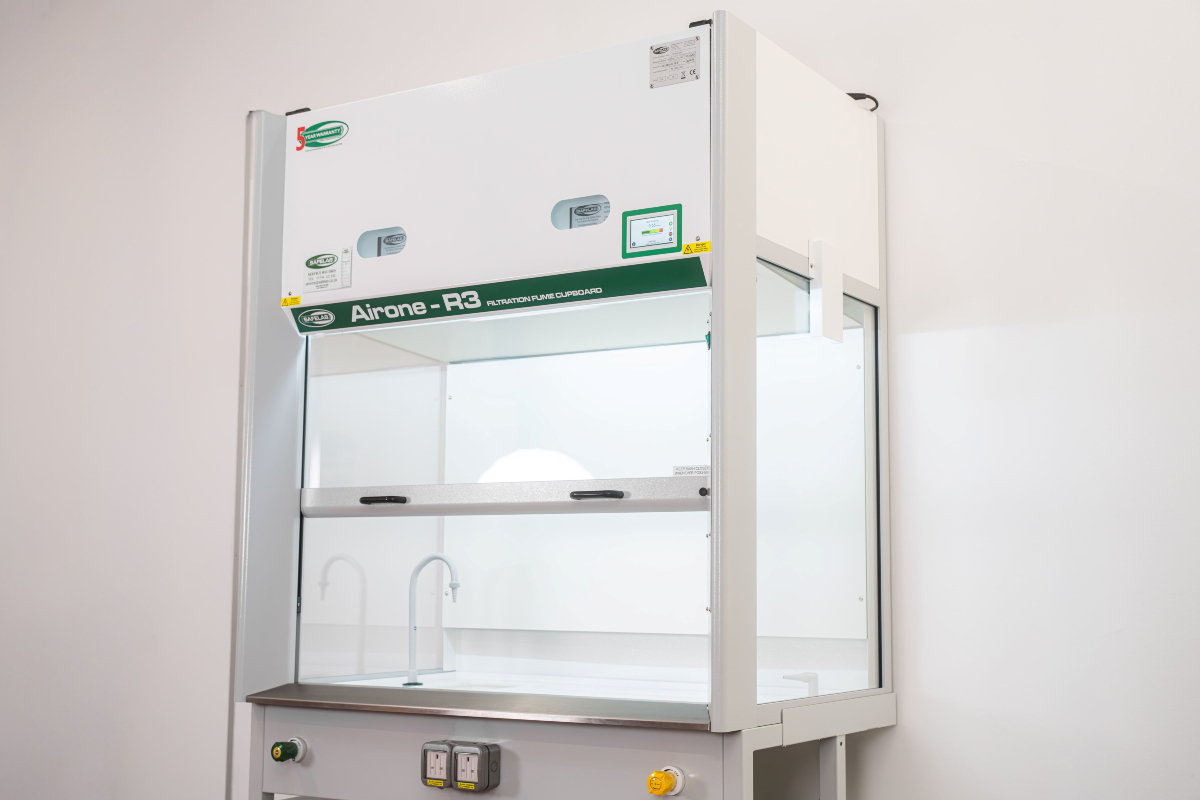
Safelab supports laboratories, schools, and organisations across the UK with commissioning, testing, and system review, helping ensure that fume cupboards are safe, compliant, and fit for purpose from the outset.
Need help with fume cupboard commissioning?
If you are installing a new system, refurbishing a laboratory, or reviewing an existing cupboard, commissioning is the right place to start.
Safelab can support:
- commissioning of new fume cupboard systems
- review of existing installations
- identification of performance issues
- advice on compliance and testing
If you are unsure whether your system has been properly commissioned—or you need support with a new installation—it is worth getting clarity early.
Frequently Asked Questions
What is fume cupboard commissioning?
The process of verifying that a fume cupboard system has been installed correctly and is safe to use.
Is commissioning a legal requirement?
It forms part of good practice and supports compliance with wider health and safety requirements.
How is commissioning different from testing?
Commissioning happens at installation. Testing happens regularly during use.
Who carries out commissioning?
Typically a specialist contractor or provider with experience in laboratory ventilation systems.
When should a system be recommissioned?
After relocation, major changes, or if performance is uncertain.