
BS EN 17242 Ductless Fume Cupboards: UK Guide
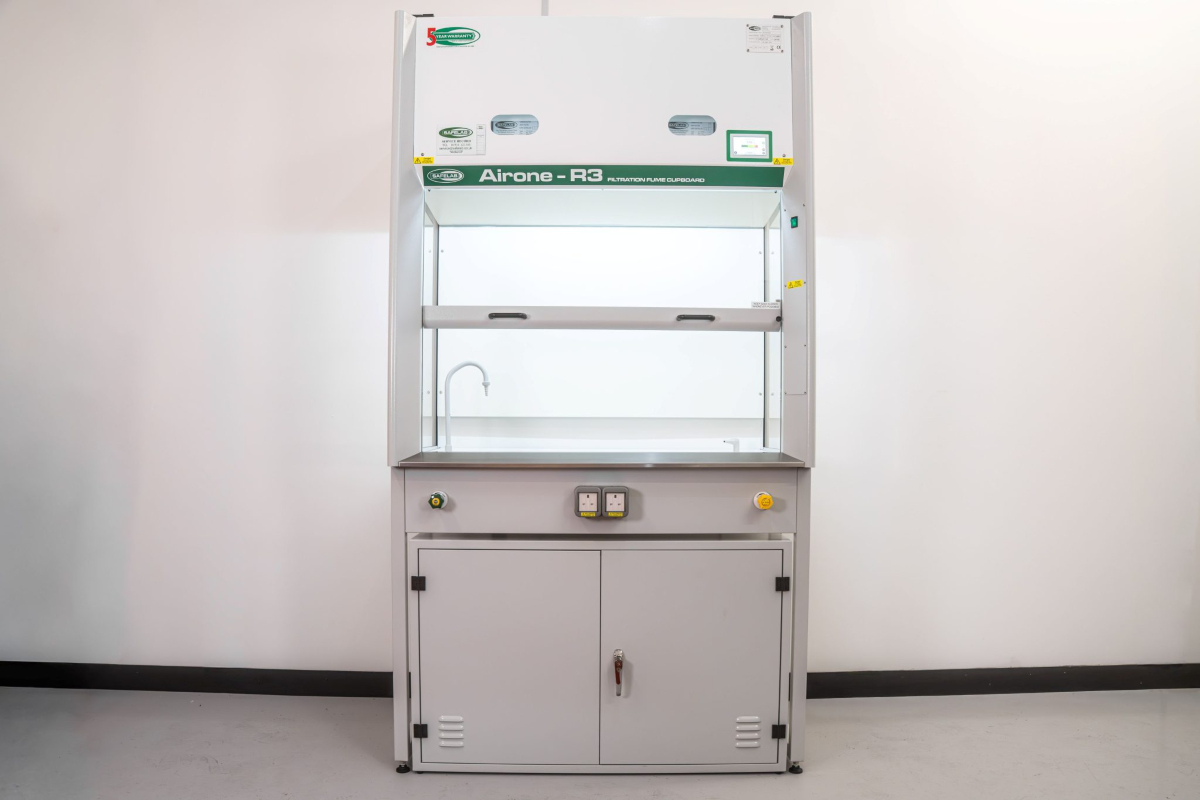
Ductless fume cupboards (or fume cabinets), including recirculating systems used in UK laboratories and education settings, are becoming more common across schools, universities, and specialist environments. In the right situation, they can solve real problems. They remove the need for ductwork, they can be installed more easily, and they offer flexibility where traditional extraction is difficult.
But they also change how safety is managed.
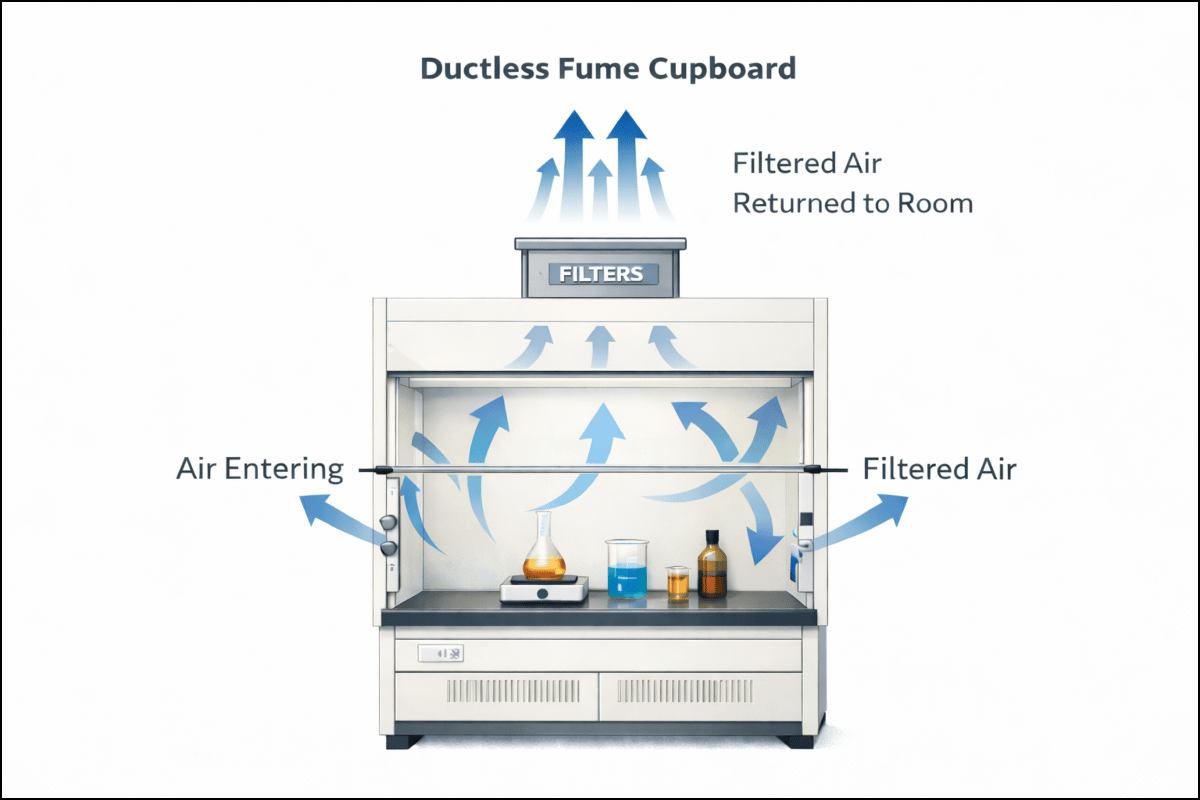
A ducted fume cupboard removes contaminated air from the room. A ductless system filters that air and returns it back into the space. That shift is important. It means the performance of the system depends on filtration, monitoring, and ongoing management rather than simple extraction.
This is where BS EN 17242 comes in.
The standard sets out how recirculating filtration fume cupboards should be designed, tested, and used. It replaces older guidance and reflects a more practical understanding of how these systems are actually used in real environments.
This Safelab guide explains what BS EN 17242 requires, how ductless systems work in practice, and what you need to consider before specifying one.
👉 Related: What Is a Fume Cupboard? How It Works, Types, and Uses(opens in new tab)
Quick answer: What is BS EN 17242?
BS EN 17242 is the UK and European standard for ductless (recirculating) fume cupboards.
In practical terms, it requires that:
- contaminants are contained effectively during use
- air is filtered before being returned to the room
- filters are suitable for the chemicals involved
- performance can be tested and verified
- users understand what the system can and cannot do
The key point is simple:
A ductless fume cupboard is only safe when the filtration system is correctly matched to the application and properly maintained over time.
In this guide
What is BS EN 17242 and why was it introduced?
BS EN 17242 was introduced to bring more consistency and clarity to ductless systems.
For years, recirculating cupboards were used in situations where they were not always well understood. In some cases they were treated as a direct alternative to ducted systems, without fully considering the limitations of filtration.
BS EN 17242 was introduced to bring more consistency and clarity to ductless systems.
For years, recirculating cupboards were used in situations where they were not always well understood. In some cases they were treated as a direct alternative to ducted systems, without fully considering the limitations of filtration.
Ducted vs ductless fume cupboards: What’s the difference?
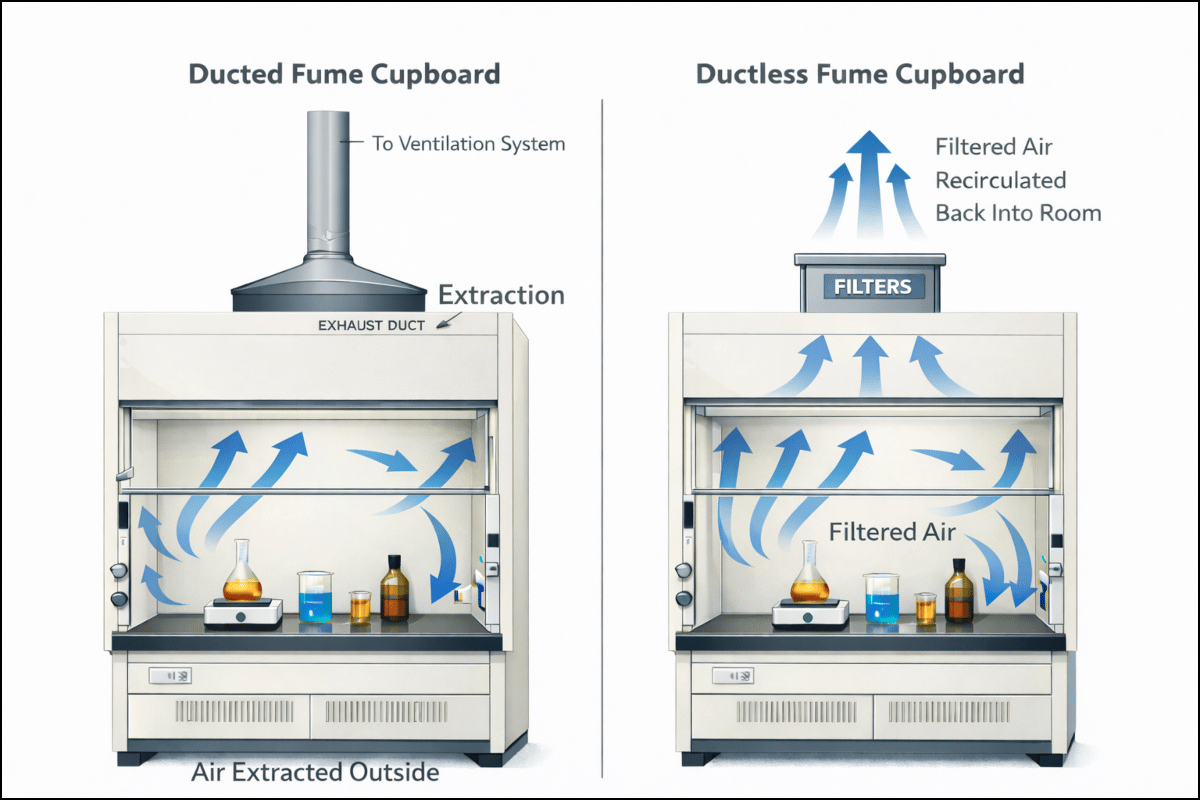
At a glance, both systems look similar. In practice, they behave very differently.
Ducted fume cupboards
A ducted system pulls contaminated air away from the user and discharges it outside the building. The safety mechanism is straightforward. The hazard is removed from the room entirely.
These systems are typically:
- more forgiving in mixed-use environments
- suitable for a wide range of chemicals
- governed by BS EN 14175
Ductless fume cupboards
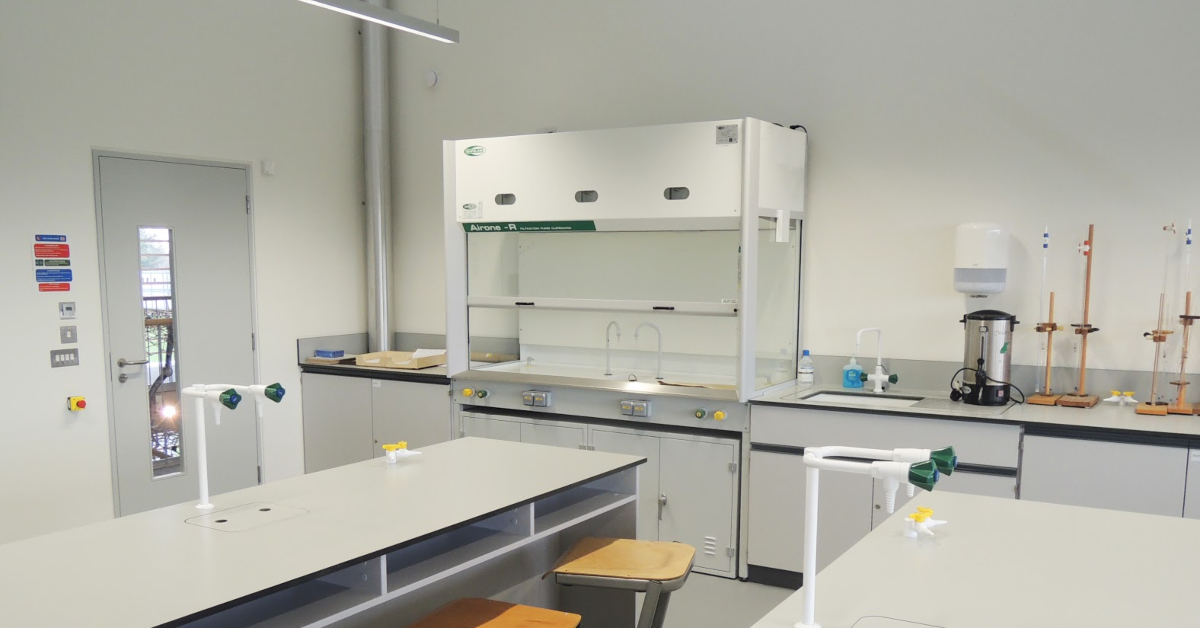
A ductless system draws air into the cabinet, passes it through filters, and then returns it to the room. This is the approach used in recirculating systems such as Safelab’s Airone R ductless fume cupboards.
This means:
- safety depends on filtration performance
- filters must match the chemicals being used
- ongoing monitoring becomes important
In other words, a ducted cupboard removes the problem. A ductless cupboard manages it.
 See also: Ducted vs Ductless Fume Cupboards: Which Should You Choose
Related: BS EN 14175 Ducted Fume Cupboards: UK Guide
When is a ductless fume cupboard appropriate?
Ductless systems can work well, but only when the conditions are right.
They are often used where:
- installing ductwork is difficult or not possible
- the application is clearly defined
- the same substances are used consistently
- flexibility or relocation is needed
For defined applications like these, Safelab’s Airone R ductless fume cupboards can provide a recirculating option where chemical suitability, filtration, and ongoing maintenance requirements have been assessed.
If ductwork limitations are part of the decision, our guide to fume cupboard installation requirements in the UK explains how building constraints can influence whether ducted or ductless systems are practical.
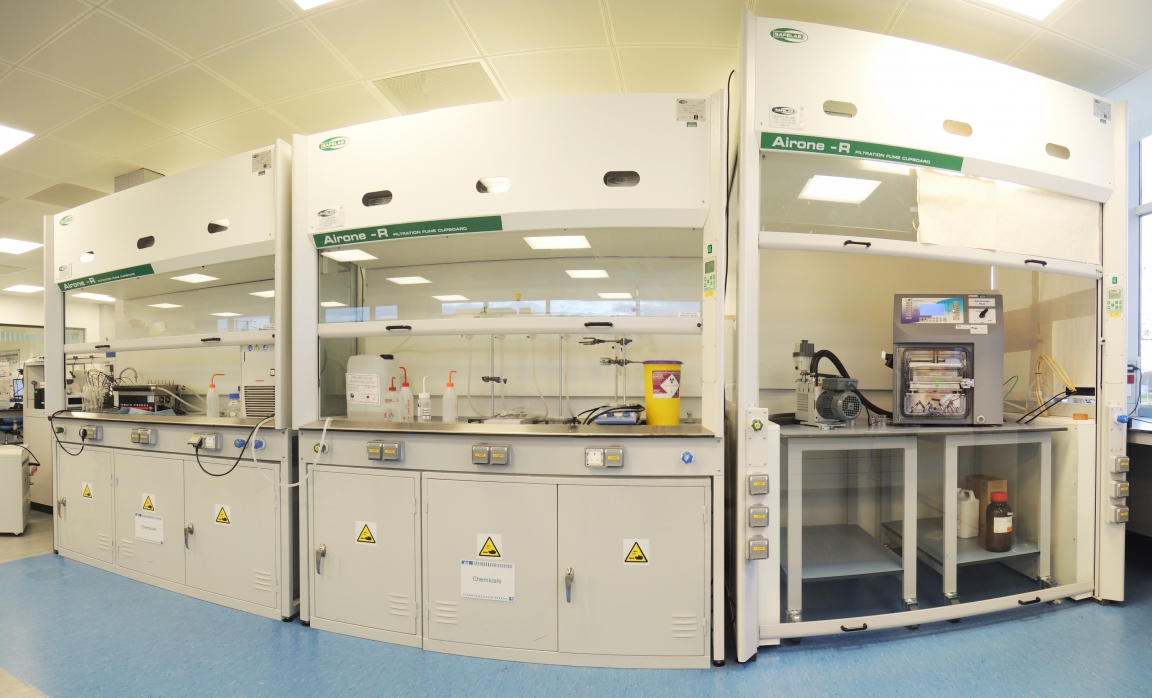
You will often see them in:
- school laboratories
- small labs with specific processes
- temporary or mobile setups
Where they tend to struggle is in environments where:
- chemical use varies widely
- substances change frequently
- long-term management is uncertain
In those situations, a ducted system is usually the safer option.
How ductless fume cupboards work
The basic process is simple, but the detail matters.
1. Air is drawn into the cabinet
This helps contain fumes and prevent them escaping into the room
2. Air passes through filters
These may include carbon filters for gases and vapours, or HEPA filters for particulates
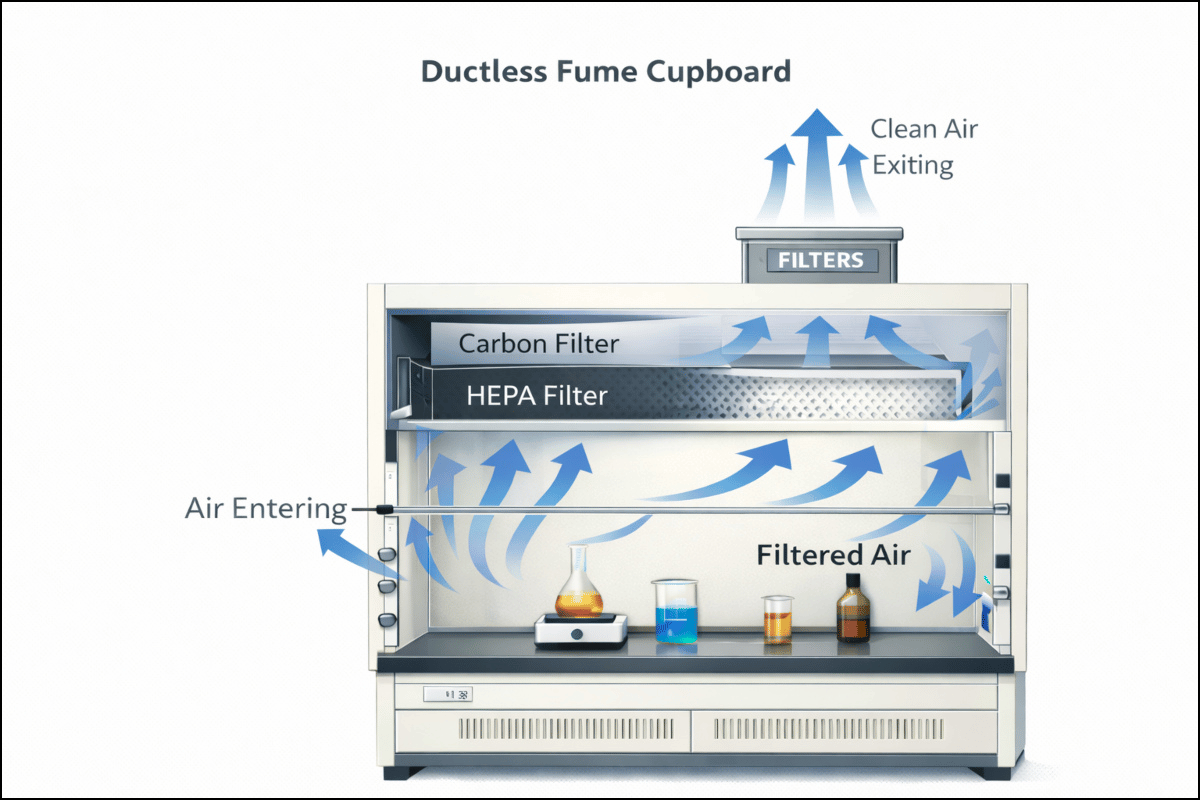
3. Filtered air is returned to the room
Everything depends on that middle step.
If the filter is not suitable, or if it is no longer effective, contaminants can pass straight through the system.
Why filtration is the critical factor
Filtration is where most of the risk sits with ductless systems.
Different chemicals behave in different ways. A filter that works well for one substance may be ineffective for another. Over time, filters also become saturated and lose performance.
Ongoing filter replacement and suitability checks are therefore essential for maintaining ductless fume cupboard performance, protecting users, and supporting safe recirculation.
This creates a situation where:
- performance is not always visible
- failure is not always obvious
- incorrect specification can go unnoticed
BS EN 17242 addresses this by requiring:
- clear information on filter suitability
- defined testing methods
- the ability to verify performance
The takeaway is straightforward.
You cannot treat a ductless cupboard as a general-purpose solution unless you fully understand what it is being used for.
BS EN 17242 classification system explained
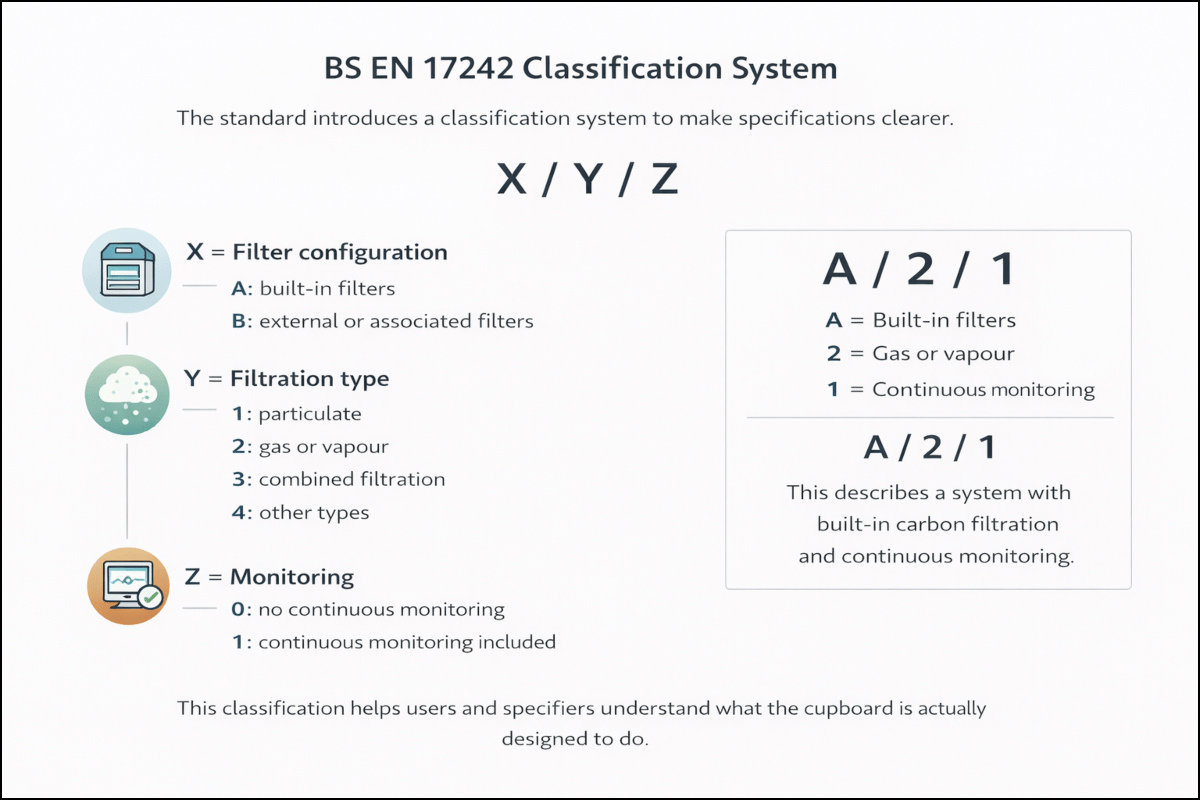
The standard introduces a classification system to make specifications clearer.
It is written as:
X / Y / Z
Where:
X = filter configuration
- A: built-in filters
- B: external or associated filters
Y = filtration type
- 1: particulate
- 2: gas or vapour
- 3: combined filtration
- 4: other types
Z = monitoring
- 0: no continuous monitoring
- 1: continuous monitoring included
For example:
A / 2 / 1
This describes a system with built-in carbon filtration and continuous monitoring.
This classification helps users and specifiers understand what the cupboard is actually designed to do.
Monitoring and filter performance
One of the more important changes in BS EN 17242 is the focus on monitoring.
Some systems include continuous monitoring. These detect when contaminants begin to pass through the filter and trigger an alarm.
Where continuous monitoring is not fitted, the system must still allow for testing. This is usually done through sampling ports that allow performance to be checked.
The aim is to move away from assumption and towards verification.
Testing requirements under BS EN 17242
The standard separates testing into two areas.
Filtration testing
This checks how well the filters remove contaminants. It is used to confirm that the system is performing as expected and to detect when filters are no longer effective.
Containment testing
This checks how well the cabinet prevents contaminants from escaping into the room during use.
Both matter. A system with good containment but poor filtration is still a problem, and vice versa.
What BS EN 17242 does not do
It is worth being clear about the limits of the standard.
BS EN 17242:
- does not replace COSHH risk assessment
- does not define safe use for every chemical
- does not guarantee suitability in all situations
The responsibility for assessing risk still sits with the user or organisation.
Common mistakes when specifying ductless systems
This is where things tend to go wrong.
Treating ductless as a direct replacement for ducted
They serve different purposes and are not always interchangeable
Not defining the application
If you do not know what chemicals will be used, you cannot specify filtration properly
Overlooking maintenance
Filters need to be replaced and systems need to be checked
Assuming performance is constant
Filtration changes over time
Choosing based on installation convenience
Ease of installation should not be the main driver
How to choose the right ductless fume cupboard
A practical approach helps avoid most of these issues.
Start with the application
What is being used, how often, and how consistent is that use?
Confirm that ductless is suitable
In some cases, it will not be
Match filtration to the chemicals
This is the most important step — detailed technical specifications and filter configurations should always be reviewed before selecting a system, particularly where compliance with BS EN 17242 is required
Consider monitoring
It provides an additional layer of assurance
Plan for ongoing management
Think about testing, filter replacement, and record keeping
Make sure users understand the system
Ductless fume cupboards in schools
Schools are one of the most common environments where ductless systems are considered. In these situations, schools often look at systems designed specifically for education environments, such as Safelab’s fume cupboards for schools and colleges.
They can work well where:
- experiments are predictable
- chemical use is limited
- installation constraints exist
Where external ductwork is not practical, a ductless fume cupboard for schools may be suitable if the curriculum, substances, usage pattern, and maintenance regime are clearly understood.
However, guidance such as CLEAPSS makes it clear that these systems must be chosen carefully.
The school needs to understand:
- what the cupboard will be used for
- whether filtration is appropriate
- how the system will be maintained
See also: Fume Cupboards for Schools: CLEAPSS G9 Compliance Guide
Ductless vs ducted: A practical view
In many UK settings, ducted systems remain the default because they are simpler to manage and more flexible.
Ductless systems are useful in more specific situations, where the application is controlled and well understood.
The question to ask is not “Which is better?” but:
Is this application suitable for filtration?
If the answer is uncertain, a ducted system is usually the safer choice.
When should ductless systems be avoided?
There are situations where ductless systems are not the right option.
These include:
- varied or unpredictable chemical use
- highly hazardous substances
- lack of monitoring or testing capability
- unclear responsibility for maintenance
In these cases, relying on filtration introduces unnecessary risk.
Safelab supports schools, universities, and laboratories across the UK with compliant fume cupboard systems, specification advice, and ongoing servicing. If you're considering a ductless system, it's important to ensure it is designed and tested in accordance with BS EN 17242. You can explore examples of compliant ductless fume cupboards to see how these requirements are applied in practice.
Need help with BS EN 17242 and ductless systems?
BS EN 17242 has raised the standard for ductless fume cupboards. It reflects how these systems are actually used and where the risks sit.
Ductless systems can be effective, but only when they are specified and managed properly.
Safelab works with schools, laboratories, and organisations to:
- assess whether ductless is appropriate
- specify systems in line with BS EN 17242
- support filtration selection
- plan testing and ongoing compliance
If you are unsure about your current system, or you are considering a new installation, it is worth getting clarity early. Safelab, in its position as an industry leader, is well-placed to help.
Frequently Asked Questions
What is BS EN 17242?
A UK and European standard covering the design, testing, and use of ductless fume cupboards.
Is BS EN 17242 mandatory?
It is not legislation, but it represents recognised best practice and is widely used in specifications.
Can ductless fume cupboards replace ducted systems?
In some cases, yes. But only where the application is clearly defined and suitable for filtration.
Are ductless systems safe?
They can be, provided they are correctly specified, monitored, and maintained.
What replaced BS 7989?
BS EN 17242 replaced BS 7989 and introduces stricter requirements around filtration and testing.